Trump Issues Ultimatum: 100% Tariffs on Canadian Imports Over China Deal
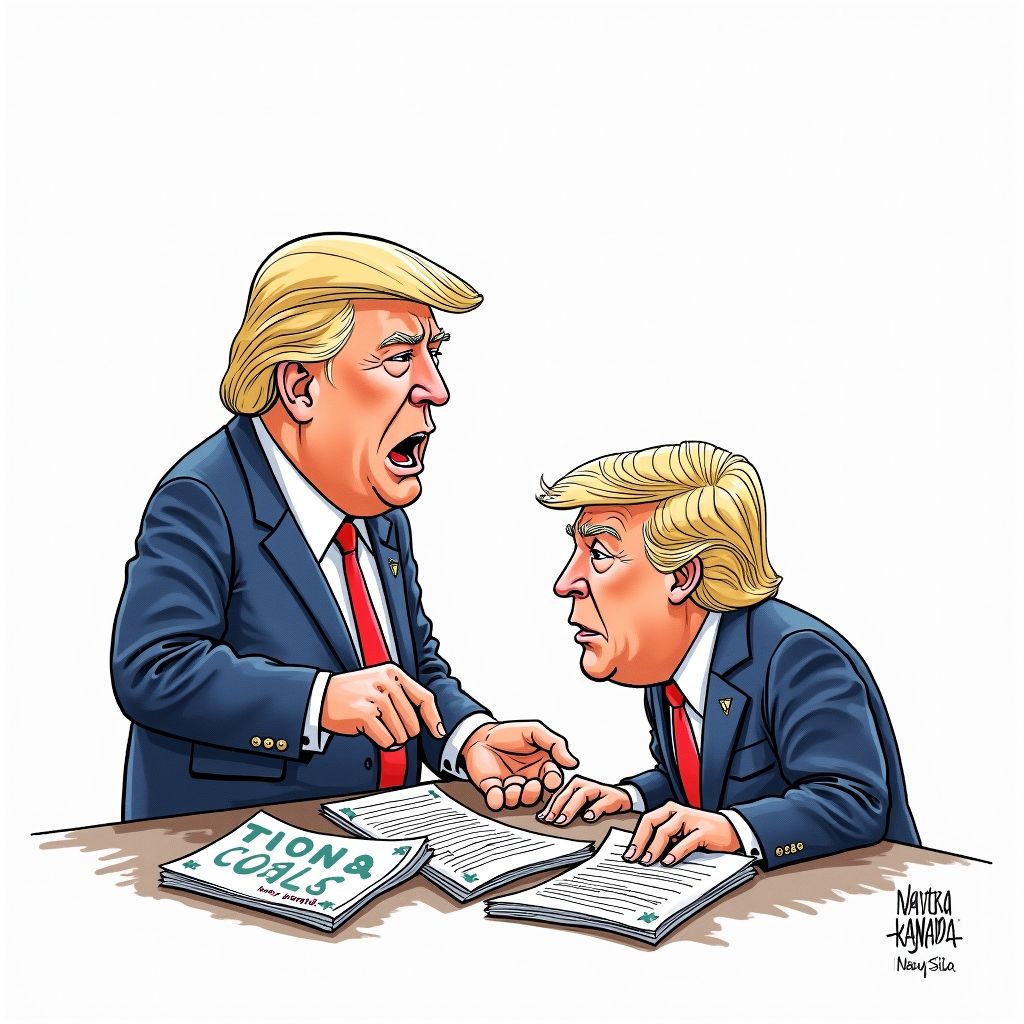
Washington D.C., Saturday, 24 January 2026.
President Trump issued a shocking ultimatum of 100% tariffs on all Canadian imports over a China deal, abruptly reversing his public support for the very same agreement days prior.
A Sudden Reversal in Trade Policy
On Saturday, January 24, 2026, President Donald Trump escalated North American trade tensions by threatening to impose a 100 percent tariff on all Canadian goods entering the United States [1][2]. This ultimatum, delivered via the President’s Truth Social platform, is contingent on whether Ottawa finalizes a trade agreement with Beijing [2][4]. The threat represents a stark geopolitical pivot; just one week prior, President Trump had explicitly stated that it “would be a good thing” for Prime Minister Mark Carney to sign a deal with Chinese President Xi Jinping [1]. However, the President’s stance has shifted aggressively, with Trump now warning that such a deal would allow China to “eat Canada alive” and destroy its social fabric [2][4].
Diplomatic Fallout from Davos
The abrupt change in tone appears to be fueled by deteriorating personal and diplomatic relations following the World Economic Forum in Davos earlier this week. In a speech delivered days before the tariff threat, Prime Minister Carney criticized American hegemony, stating that the “old order is not coming back” and asserting that “nostalgia is not a strategy” [2]. In response to what was perceived as a pushback against U.S. actions, President Trump withdrew Carney’s invitation to the “Board of Peace” initiative regarding the Gaza Strip on Thursday [1][4]. Furthermore, the President has reverted to addressing the Prime Minister as “Governor Carney,” a derogatory moniker implying that Canada is merely a subordinate territory rather than a sovereign nation [3].
The Economics of the China Deal
At the heart of the dispute is a specific trade arrangement between Canada and China reached on January 16, 2026 [2]. Under the terms of this agreement, Canada agreed to import a maximum of 49,000 Chinese electric vehicles at a tariff rate of 6.1 percent [1][2]. In exchange, Beijing committed to lowering tariffs on Canadian canola seeds by March 1 [1]. While Trump initially supported this exchange, he now claims it will turn Canada into a “Drop Off Port” for Chinese goods to bypass U.S. trade barriers and enter the American market surreptitiously [2][4]. This accusation comes despite the fact that the President has not criticized China directly for its role in the pact, focusing his ire solely on Canadian leadership [3].
Economic Stakes and Broader Instability
The implementation of 100 percent tariffs would have catastrophic implications for the North American economy. In 2025, Canada was the second-largest exporter to the United States, shipping over $300 billion in goods, which accounted for more than 11 percent of all U.S. imports [3]. These threats arrive at a precarious moment, as the United States, Canada, and Mexico are currently in the process of renegotiating the USMCA trade agreement [3]. The instability is further compounded by a broader shift in U.S. resource policy; simultaneous to the Canadian threats, President Trump announced on Saturday that the U.S. had seized 50 million barrels of oil from Venezuela to be processed by American refineries, declaring, “We take the oil” [5]. Within Canada, experts warn of a grim outlook, with political science professor Aaron Ettinger noting a growing realization that Ottawa is “not dealing with a reliable or maybe even a rational leader” [1].