The Economics of Exclusive Fashion: Supreme and MM6 Maison Margiela Launch Second Collection
New York, Thursday, 19 March 2026.
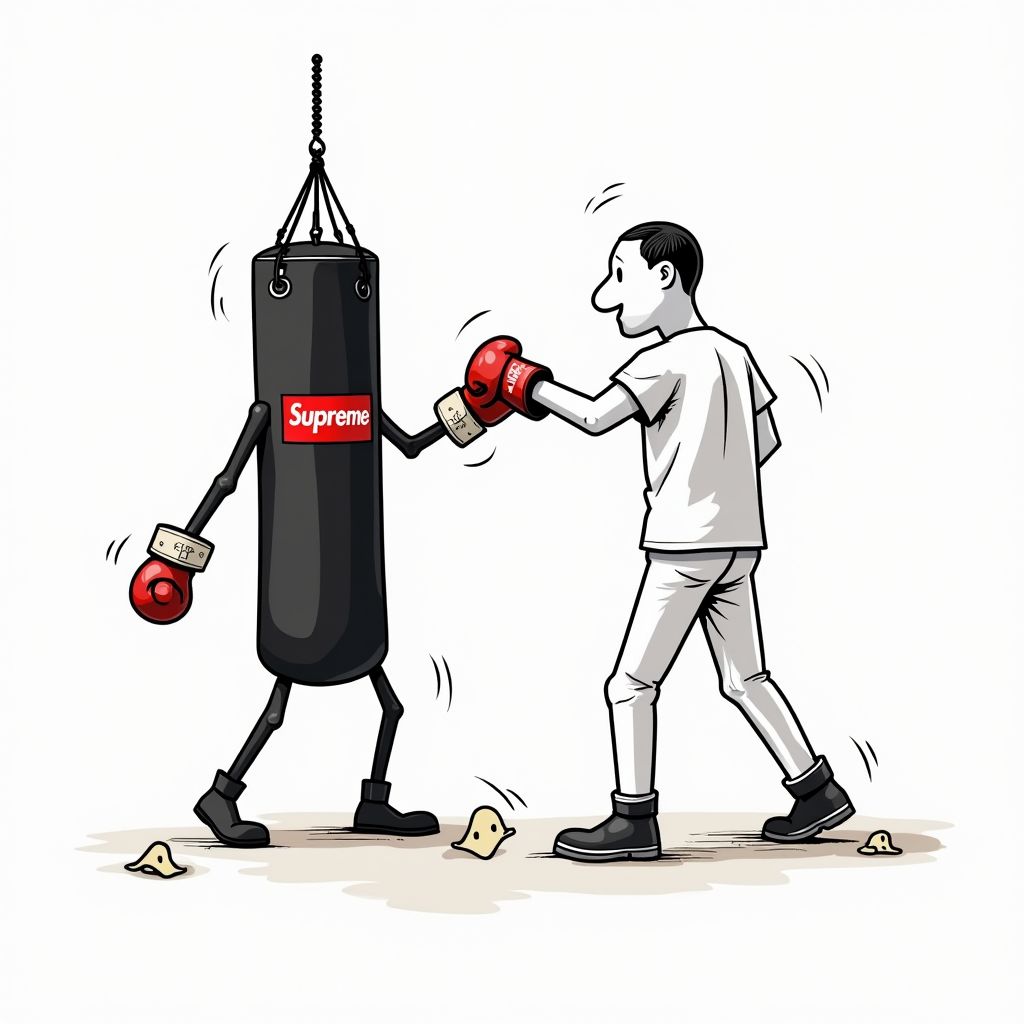
High-low fashion partnerships drive immense profitability. Supreme and MM6 Maison Margiela’s latest collection utilizes artificial scarcity to fuel demand, intriguingly highlighted by an exclusive $4,998 hairy punching bag.
Merging Archival High Fashion with Streetwear Staples
Releasing globally today, March 19, 2026, the comprehensive 35-piece spring collection marks the second collaboration between Supreme and MM6 Maison Margiela, following their initial partnership in the spring of 2024 [1][5]. Founded in 1988 by Martin Margiela, the MM6 diffusion line has long served as an accessible yet avant-garde extension of the primary fashion house [2]. By combining this high-fashion pedigree with Supreme’s signature New York streetwear aesthetic, the brands have engineered a collection that spans outerwear, knitwear, denim, and specialized sporting equipment [2][3]. The strategy relies heavily on referencing Margiela’s historical archives, updating past motifs like his 2008 dollar bill wallet and reconstructed vintage tees for a modern consumer base [5].
The Economics of Quirky Accessories and Footwear
Beyond traditional apparel, the profitability of this collaboration is anchored by highly unusual, limited-edition accessories that generate significant social media engagement and secondary market speculation [GPT]. The most expensive item in the collection is an Everlast heavy punching bag, encased entirely in faux hair, which retails for $4,998 [2][4][5]. This creates a massive pricing spectrum within the drop, with the flagship punching bag costing exactly 4700 dollars more than the highly anticipated Box Logo Zip Up hoodie [4]. Accompanied by matching hairy boxing gloves, these items are a direct homage to Martin Margiela’s long-standing artistic fascination with hair, previously seen in his 2020 BUS STOP faux-fur bus shelter and his 2024 BARRIER Sculpture [5]. This avant-garde approach to sporting goods demonstrates how luxury brands successfully monetize conceptual art by applying it to unexpected functional objects [GPT].