Energy Markets Reel as US-Israel Strikes on Iran Widen Middle East Conflict
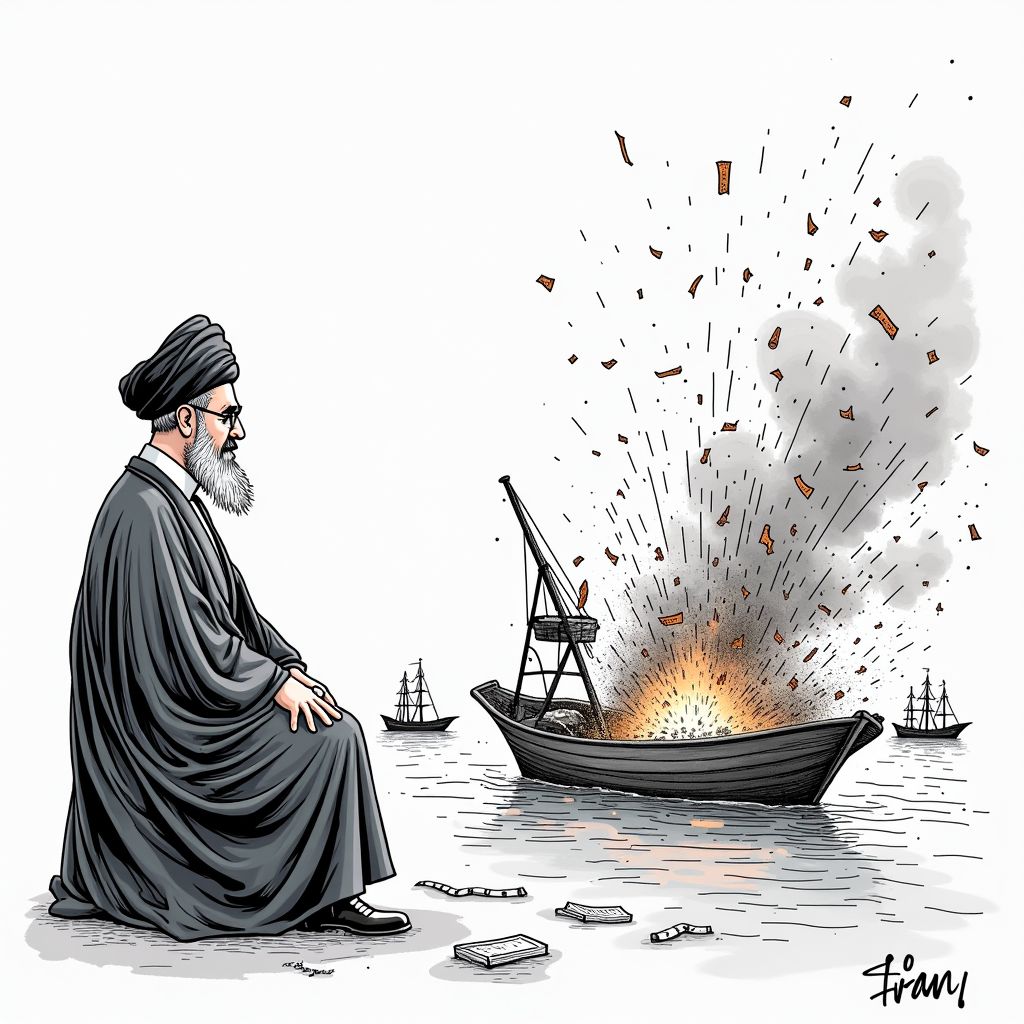
Tehran, Tuesday, 3 March 2026.
As of Tuesday, March 3, 2026, the geopolitical landscape has shifted violently following coordinated U.S. and Israeli airstrikes on Iran, dubbed “Operation Epic Fury.” The offensive, which reportedly eliminated Supreme Leader Ayatollah Ali Khamenei and damaged the Natanz nuclear facility, has triggered immediate economic shockwaves. Most alarmingly for global investors, transit through the critical Strait of Hormuz has plummeted by 70%, sending European natural gas futures spiking 42% and driving Brent crude near $79. With retaliatory drone strikes hitting energy infrastructure in the UAE and Saudi Arabia, and the U.S. ordering evacuations across the Gulf, the conflict threatens a prolonged disruption to global energy supply chains that extends far beyond a localized military engagement.
Global Energy Supply Chain Fractures
Building on the initial announcement of “Operation Epic Fury”—which saw President Trump confirm joint combat operations targeting the Iranian regime [1]—the conflict has rapidly metastasized into a broader regional war with severe economic consequences. As of Monday, March 2, the energy sector faced critical disruptions when QatarEnergy halted LNG production following military attacks on its facilities in Ras Laffan and Mesaieed Industrial Cities [2]. Compounding the supply shock, Saudi Aramco was forced to temporarily shut down its Ras Tanura oil refinery, which processes over 79,000 cubic meters of crude daily, after it was targeted by Iranian drones [2]. The physical danger to maritime logistics was underscored when a drone boat struck the oil tanker MKD VYOM in the Gulf of Oman, killing one mariner [2]. These events have driven a sharp reaction in the markets; European natural gas futures for April delivery surged 42% to €45.46 ($53.26), while Brent crude climbed to approximately $78.46 per barrel [2].
US Diplomatic and Military Assets Under Fire
The security situation for American personnel in the region has deteriorated significantly over the last 24 hours. On Tuesday, March 3, a drone struck the U.S. Embassy in Riyadh, Saudi Arabia [4]. This follows reports from Monday regarding fire and smoke rising from the U.S. Embassy compound in Kuwait after an apparent attack, leading the post to close until further notice [2][4]. In response to the widening threat radius, the U.S. State Department has expanded its evacuation orders for non-emergency personnel and their families to include the United Arab Emirates, adding to a list that already included Bahrain, Iraq, Jordan, Kuwait, and Qatar [3][4]. The human cost of the operation is also climbing; U.S. Central Command confirmed that as of 4 p.m. ET on March 2, six U.S. service members have been killed in action [5]. In a chaotic incident highlighting the complexity of the airspace, the U.S. military reported that Kuwaiti air defenses “mistakenly shot down” three American F-15E Strike Eagles during combat operations; fortunately, all six aircrew ejected safely and were recovered [2].
Strikes on Iranian Leadership and Nuclear Infrastructure
Inside Iran, the objective to dismantle the regime’s core capabilities continues with high-intensity airstrikes. Following the confirmation of Supreme Leader Ayatollah Ali Khamenei’s death by state media on March 1 [1], Israeli military forces struck Iran’s presidential office and the Supreme National Security Council building overnight into Tuesday, March 3 [4]. Concurrently, concerns regarding nuclear proliferation have resurfaced. On Tuesday, the International Atomic Energy Agency (IAEA) reported that the Natanz nuclear enrichment site sustained “some recent damage” from the airstrikes, though they expect no immediate radiological consequences [4]. This physical damage complicates an already opaque situation, as IAEA Director General Rafael Grossi stated on March 1 that the agency no longer knows the location of Iran’s stock of uranium enriched to 60% [3].
Civilian Toll and Regional Spillover
The humanitarian impact of the widening conflict is devastating. The Iranian Red Crescent Society reports that at least 787 people have been killed in Iran since the onset of strikes on February 28 [3][4]. Among the most tragic incidents reported is a strike on the Shajareh Tayebeh girls’ elementary school in Minab, where 168 deaths were reported; a mass funeral for the victims was held on Tuesday, March 3 [2][4]. The conflict has also spilled decisively into Lebanon. As of March 2, the Israeli military has deployed additional troops to southern Lebanon to conduct operations against Hezbollah infrastructure [4], following heavy missile exchanges that saw Hezbollah fire rockets into northern Israel [2]. With 131 Iranian cities attacked and internet blackouts hindering communication [1][2], the region faces a volatile period of instability that appears far from a resolution.