US Union Support Hits 70-Year High as 56 Million Workers Express Interest
Washington, Monday, 21 September 2026.
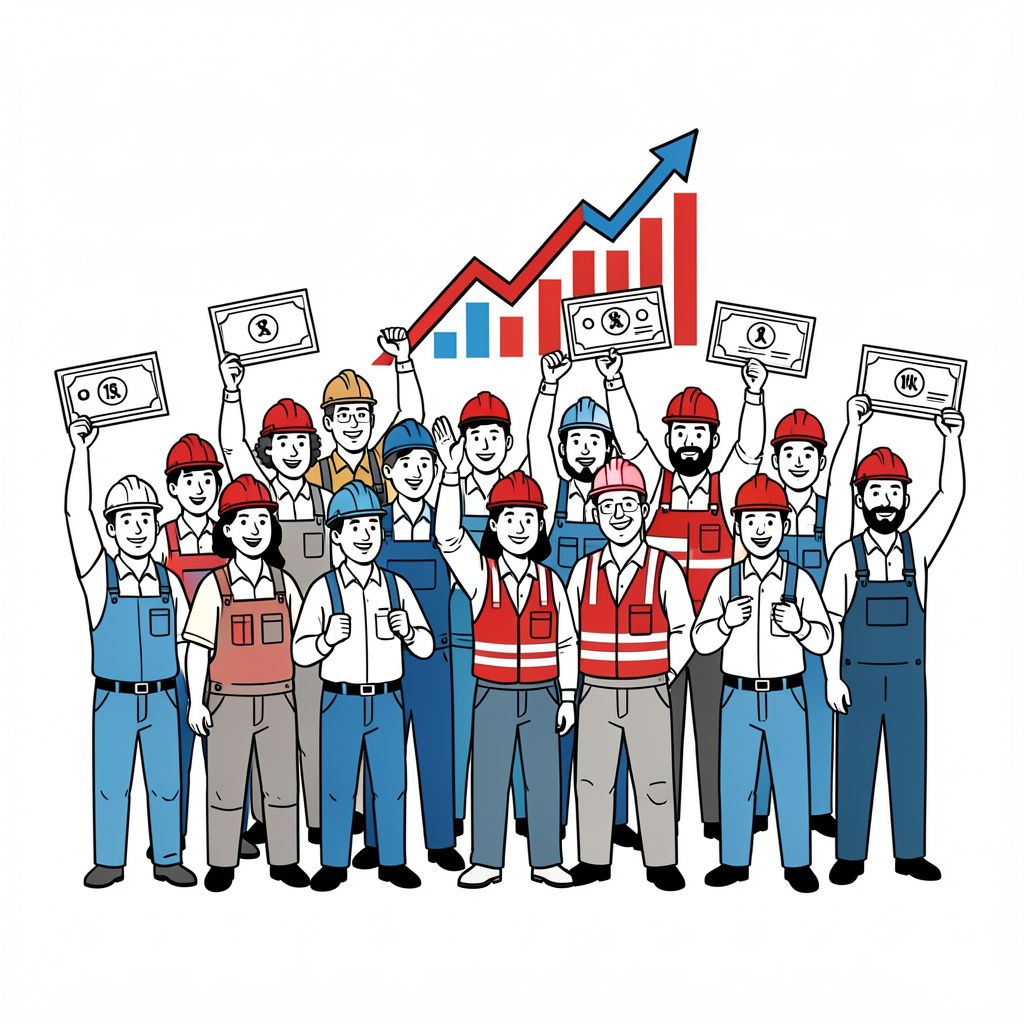
With American union approval reaching a decades-high 71%, an estimated 56 million non-unionized workers want to join, driving unprecedented labor influence ahead of the 2026 midterm elections.
Record-Breaking Approval Ratings and Demographics
Recent data indicates a significant shift in public sentiment regarding organized labor, with 71% of American adults now approving of labor unions [1][3]. This figure represents the highest level of labor favorability recorded in over 60 years, surpassing previous benchmarks set in the 1950s [1]. The surge in support is not isolated to specific political groups; 89% of Democrats, 70% of Independents, and 52% of Republicans express approval [1][6]. Among younger demographics, the support is even more pronounced, with 77% of adults ages 18–34 favoring organized labor [1]. This broad-based approval suggests a fundamental change in how the workforce perceives collective bargaining power in the modern economy [3].
The Economic Case for Unionization
The economic implications of this sentiment are substantial, particularly given that union density has declined from over 30% in the 1950s to 10% in 2025 [2]. This decline represents a percentage change of -66.667 in union density over the decades, correlating with rising income inequality [2]. Research suggests that tripling U.S. union membership could result in 14.5% wage increases for the typical worker, equating to more than $7,700 per year [1]. Over a 35-year career, this cumulative increase amounts to nearly $270,000, potentially shifting $1.2 trillion into workers’ pockets every year [1]. Furthermore, 60% of Americans believe the decline in union membership is bad for the country, indicating public awareness of these economic stakes [1].
Labor’s Role in the 2026 Midterms
As the nation approaches the November 2026 midterm elections, labor influence is extending into the political arena with more than three dozen union-affiliated candidates running for U.S. House and Senate seats [2]. Most of these nominees are Democrats, reflecting a strategic effort to rebuild support among working-class voters [2]. Working-class candidates comprise only 8–14% of Democratic and 5–8% of Republican congressional nominees, yet union candidates utilize pro-worker messaging 159% more frequently than non-union counterparts [2]. Notable candidates include Abdul El-Sayed in Michigan and Darializa Avila Chevalier in New York, who recently defeated an incumbent in the primary [2]. This influx of labor-backed candidates aims to address the fundamental lack of representation for working people in federal office [2].
Strikes, Legal Battles, and Future Plans
On the ground, labor actions remain active as of September 2026, with 150 Allina Health doctors in Minnesota conducting a strike beginning around September 14, 2026 [6]. Simultaneously, legal challenges are mounting, such as the National Right to Work Foundation initiating support for workers challenging union dues collection on expired contracts as of September 15, 2026 [6]. Looking further ahead, United Auto Workers President Shawn Fain has proposed a broad strike in May 2028 to advance a Workers’ Political Program [4]. These developments occur alongside ongoing lobbying efforts by groups like the National Education Association against proposed cuts to federal education aid scheduled for January 2026 [4]. The convergence of high approval ratings, political candidacies, and active labor disputes defines the current landscape for American workers [6].
Sources
- www.epi.org
- www.theguardian.com
- www.linkedin.com
- www.wnylabortoday.com
- journals.sagepub.com
- news.lrionline.com