Japan Navigates Economic Tightrope with Record Budget and Reduced Debt Reliance
Tokyo, Friday, 26 December 2025.
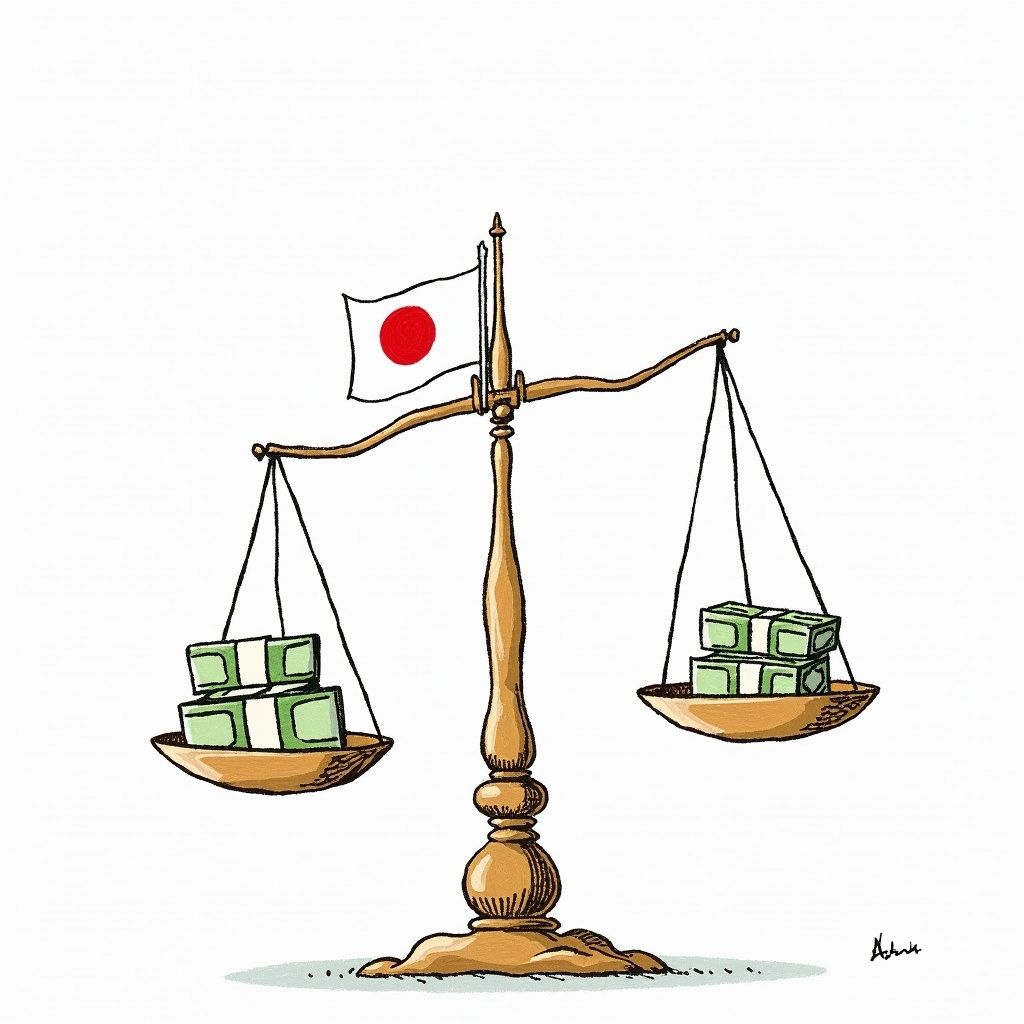
On Friday, Prime Minister Sanae Takaichi’s cabinet approved a historic 122.3 trillion yen ($785 billion) budget, attempting a complex fiscal maneuver: increasing spending while simultaneously cutting reliance on new debt to its lowest level since 1998. This proposal arrives as Tokyo struggles with persistent inflation of 2.3% and a weakened yen, forcing the administration to balance economic stimulus with market reassurance. Beyond economics, the budget underscores a dramatic shift in security policy, allocating a record 9 trillion yen to defense in response to escalating tensions with China. With the Bank of Japan recently hiking rates to a 30-year high, this fiscal package represents a critical test of whether Japan can sustain growth and bolster national security without destabilizing its fragile financial recovery.
Fiscal Discipline in an Era of Expansion
Prime Minister Sanae Takaichi’s administration has finalized a general account budget of 122.3 trillion yen ($785 billion) for the fiscal year beginning in April 2026, representing a roughly 6.163% increase from the current year’s initial allocation [2][3]. Despite this record-breaking expenditure, the government has successfully maneuvered to lower the debt dependence ratio—the proportion of the budget financed by new borrowing—to 24.2%, marking its lowest level since 1998 [1][4]. This reduction signals a concerted effort to maintain fiscal discipline even as the administration pursues what Takaichi describes as “proactive” fiscal policies to stimulate the economy [1][2].
Balancing Revenue and Rising Costs
To finance these aggressive outlays, the government is relying on a projected 7.6% increase in tax revenues, which are expected to reach a record 83.7 trillion yen [2]. However, this revenue boost does not fully eliminate the need for fresh debt; new government bond issuance is set to rise slightly to 29.6 trillion yen, up from 28.6 trillion yen in the current fiscal year [2][4]. A significant portion of the spending increase is driven by the rising cost of borrowing itself. Debt-servicing costs are projected to jump 10.8% to 31.3 trillion yen, exacerbated by the Bank of Japan’s recent pivot away from ultra-loose monetary policy [2]. The budget assumes an interest rate of 3.0%, the highest level in 29 years, following the central bank’s decision to raise its policy rate to 0.75% on December 18, 2025 [1][2].
A Historic Shift in Defense Strategy
Amid these fiscal constraints, the budget underscores a dramatic hardening of Japan’s security posture. The cabinet has approved a record defense budget exceeding 9 trillion yen ($58 billion), a 9.4% increase from the previous year [5][7]. This surge is integral to the government’s five-year program to double annual arms spending to 2% of GDP, a target the administration now aims to achieve by March 2026—two years ahead of the original schedule [5][7]. These moves come in direct response to what the Defense Ministry describes as the “most severe and complex security environment” since World War II, highlighted by escalating tensions with China [5].
Modernizing Military Capabilities
The defense allocation prioritizes advanced technology and counterstrike capabilities. Over 970 billion yen ($6.2 billion) is earmarked to bolster “standoff” missile capabilities, including funds for Type-12 surface-to-ship missiles scheduled for deployment in Kumamoto prefecture by March 2026 [6][7]. Furthermore, the budget allocates 100 billion yen for the “SHIELD” system to deploy unmanned aerial, surface, and underwater drones, and over 160 billion yen for the joint development of a next-generation fighter jet with Britain and Italy [6][7]. This military buildup follows recent provocations, including Chinese aircraft carrier drills near southwestern Japan earlier this month, where a Chinese jet reportedly locked its radar on a Japanese aircraft [5][7].
Economic Headwinds Persist
The execution of this budget will occur against a backdrop of persistent economic friction. While the government projects fiscal consolidation, inflation remains sticky; core consumer prices in Tokyo rose 2.3% in December, continuing to hover above the Bank of Japan’s 2% target [1]. Additionally, factory output fell 2.6% in November, suggesting underlying weakness in the industrial sector [1]. With the yen remaining weak and food inflation threatening to remain elevated, the Takaichi administration faces the delicate task of implementing this massive budget without triggering further market volatility or accelerating the cost of living [1].
Sources
- www.reuters.com
- www.reuters.com
- www.bloomberg.com
- www.reuters.com
- www.dw.com
- www.aljazeera.com
- abcnews.go.com