Machado Presents Nobel Medal to Trump in Strategic Bid for U.S. Backing
Washington D.C., Friday, 16 January 2026.
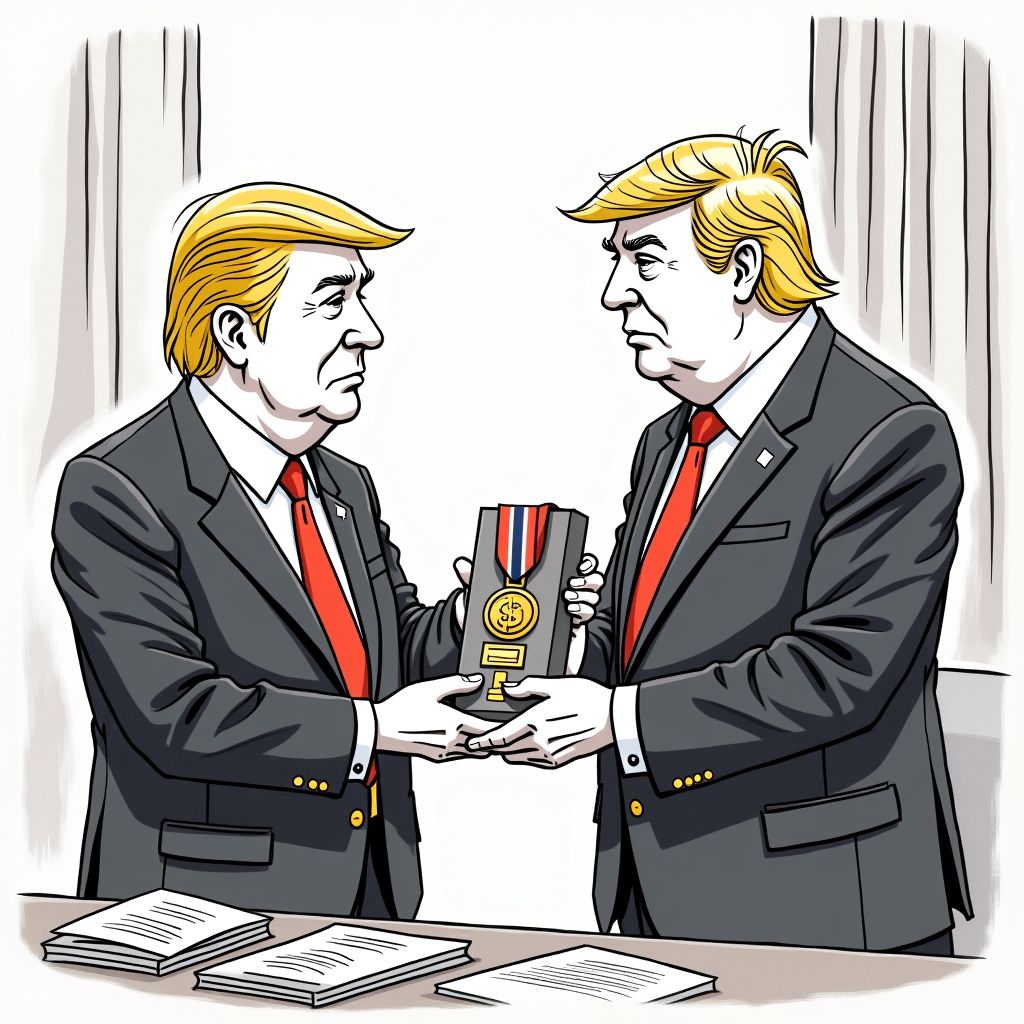
On January 15, 2026, Venezuelan opposition leader María Corina Machado executed a high-stakes diplomatic maneuver by presenting her Nobel Peace Prize medal to President Donald Trump during a White House meeting. This symbolic gesture aims to realign U.S. support behind the democratic opposition, challenging the administration’s current pragmatic pivot toward Delcy Rodríguez’s interim government. Despite the Nobel Committee’s assertion that the laureate title is non-transferable, the move directly targets President Trump’s known aspirations for the award. The encounter highlights the complex friction between democratic ideals and economic realities, as the U.S. simultaneously secures a $500 million energy deal and asserts control over Venezuelan oil assets following the forced removal of Nicolás Maduro.
A Symbolic Exchange Amidst Realpolitik
During the January 15 meeting, Machado described the presentation of her medal as a tribute to President Trump’s “unique commitment [to] our freedom,” though she did not confirm if he physically accepted the object [1]. The encounter, which Machado characterized as “excellent,” occurred nearly two weeks after U.S. special forces captured Venezuelan President Nicolás Maduro on January 3 [1][7]. While President Trump had previously remarked on January 9 that receiving the medal would be a “great honor,” the Norwegian Nobel Committee clarified that while the physical medal can change owners, the title of laureate cannot be transferred or shared [1][2]. This distinction complicates the optics of the exchange, particularly given Trump’s previous complaints that the committee had “foolishly” denied him the prize for his own foreign policy efforts [3].
The Crude Reality: Oil and Alliances
The diplomatic theater at the White House belies a significant shift in U.S. economic strategy regarding Venezuela’s vast energy reserves. Following the removal of Maduro, the Trump administration has pragmatically pivoted toward Vice President Delcy Rodríguez, whom the White House describes as “extremely cooperative” [6]. This cooperation has yielded immediate tangible results; as of January 14, the United States began selling Venezuelan oil, and a new $500 million energy deal has been struck, largely credited to Rodríguez’s compliance with U.S. demands [2][6]. President Trump has been explicit about the economic incentives driving this alignment, noting that his assessment is based on “realities on the ground” rather than purely ideological alignments [1].
Political Calculus and Future Stability
Despite Machado’s overtures and her subsequent meetings with over a dozen U.S. senators on Capitol Hill on January 15, the administration remains skeptical of her capacity to govern [4][7]. White House Press Secretary Karoline Leavitt stated that the President’s opinion—that Machado lacks the necessary support within Venezuela to lead in the short term—has not changed [1][7]. While Machado’s movement is widely believed to have won the 2024 election, the Trump administration appears to be prioritizing stability and immediate resource access through the “interim administration” of Rodríguez over the democratic transition represented by the Nobel laureate [1][6]. Consequently, while the medal may now reside in the White House, the political power in Caracas is being steered toward those who can guarantee the flow of oil.
Sources
- www.theguardian.com
- www.usatoday.com
- www.nytimes.com
- www.cbc.ca
- www.aljazeera.com
- www.nbcnews.com
- www.reuters.com
- www.bbc.com