How Direct Cash Payments Helped Amazon Communities Protect the Rainforest
Lima, Friday, 23 October 2026.
A University of Bath study reveals that giving Amazon communities basic cash payments reduced food insecurity from 73% to 26%, while driving nearly 90% of participants to adopt conservation practices.
Economic Stability and Food Security
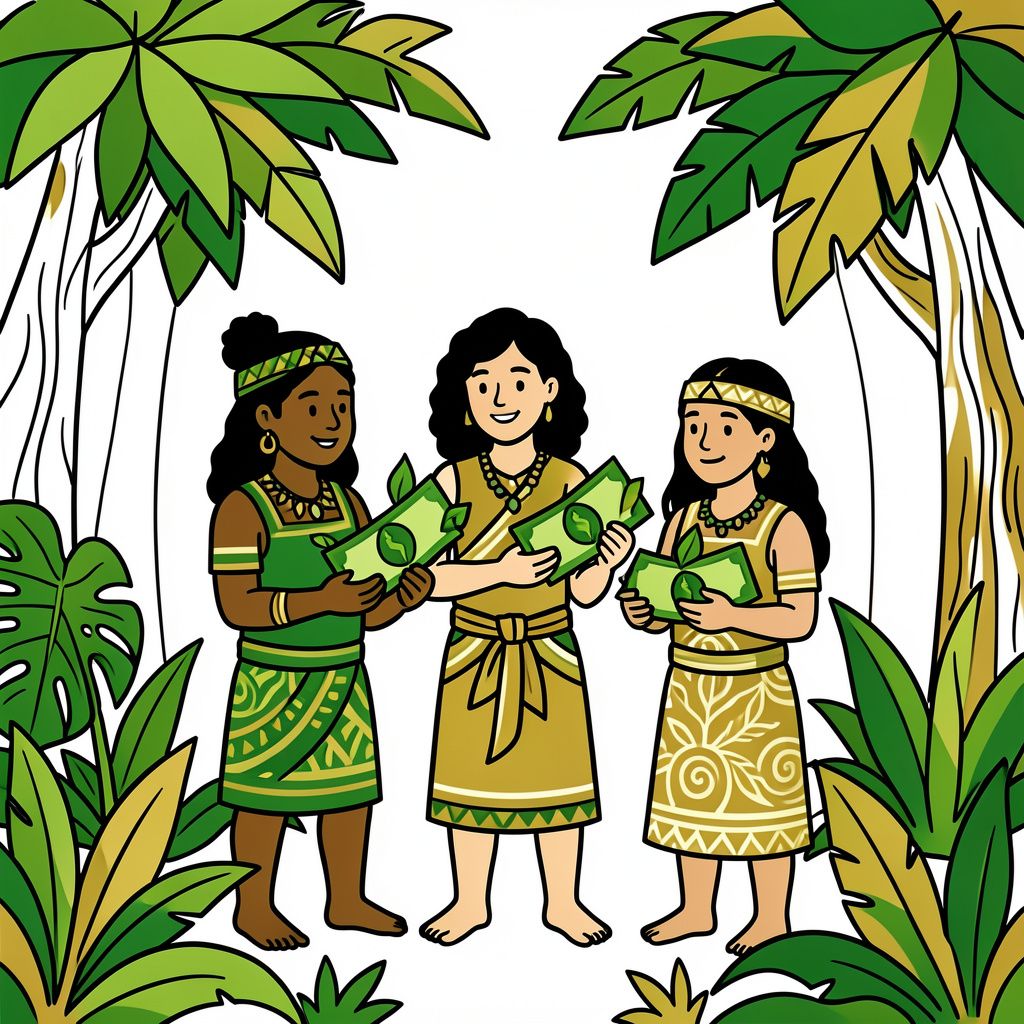
On 21 October 2026, the University of Bath released an analysis confirming that a two-year unconditional basic income pilot in the Peruvian Amazon significantly improved community well-being and rainforest protection [1]. The project, managed by climate charity Cool Earth, involved 211 Indigenous participants from the Asháninka and Yanesha communities receiving unconditional cash transfers [1][4]. Household food insecurity fell from 73% to 26% among participants during the trial period, representing a relative reduction of 64.384 percent [2][4]. Additionally, the share of participants forced to migrate for work decreased from 43% to 18%, a relative reduction of 58.14 percent [2]. Household savings rates also increased, with 70% of households able to save money by the end of the pilot, up from 49% at the start [4][8].
Environmental Stewardship and Conservation
Nearly 90% of participants adopted environmentally beneficial practices, such as reforestation and reduced forest burning [1][2]. Specific activities included planting native trees like cedar, mahogany, and bamboo, as well as protecting water sources [4]. The study covered a total area of 500 hectares, demonstrating that financial security without conditionality strengthens local leadership and land management capacity [2][4]. Researchers found that direct cash support, combined with community organisation, helped strengthen livelihoods and Indigenous communities’ ability to manage their ancestral lands [3]. Infrastructure improvements were also recorded, including solar panel adoption by 34% of households and increased use of cleaner gas stoves from 23% to 60% [4].
The ‘Cash Plus’ Methodology
Participants received six cash transfers of 1,032 Peruvian soles each, equivalent to approximately £2 per day [2][4]. This “Cash Plus” model combined unconditional cash with community-led education regarding finance, conservation, and climate change [2]. The initiative was co-developed with Indigenous-led organizations Onamiap and Omiaasec, utilizing technology from AidKit for cash delivery [1]. Unlike previous conditional payment schemes, this project is identified as the first to offer an unconditional basic income to an Indigenous community in the Amazon [2]. The pilot programme began in November 2023 and ran until late 2025 [3][4].
Future Expansion and Policy Implications
Cool Earth is scheduled to enter a project design phase later in 2026 to expand the model to new communities in the central Amazon region of Peru and Colombia [1]. The findings aim to influence environmental policy in the UK and Colombia, with meetings already occurring with HM Treasury and members of the Colombian Congress [1]. Researchers suggest that when communities have greater security and autonomy, they are better able to protect the ecosystems they depend on [2]. The initiative aims to diminish incentives for land exploitation and abandonment by addressing poverty and food security [4]. This project is a world first and shows that direct cash can benefit both people and the planet [8].
Sources
- phys.org
- www.theguardian.com
- www.instagram.com
- www.downtoearth.org.in
- www.linkedin.com
- www.reddit.com
- www.threads.com
- www.facebook.com