United States Rallies Global Allies to Sever Financial Ties with Iran
Washington, Wednesday, 2 September 2026.
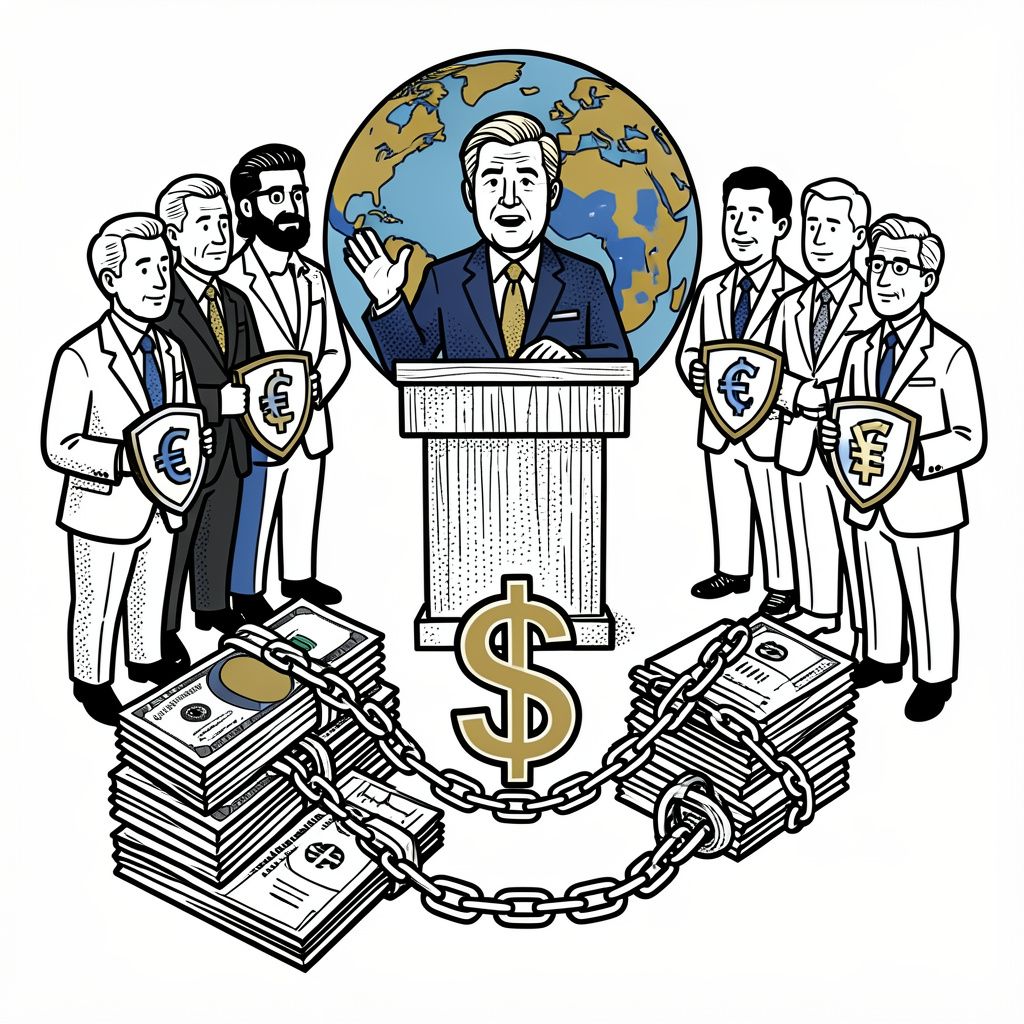
U.S. Treasury Secretary Scott Bessent is pushing international allies to enforce aggressive economic sanctions against Iran. The campaign aims to freeze Iranian assets and sever non-compliant institutions from the U.S. dollar system.
G20 Summit Diplomacy and Sanctions Push
On the sidelines of the Group of 20 summit concluded on 1 September 2026 in Asheville, North Carolina, Treasury Secretary Scott Bessent urged international allies to support United States efforts to economically constrain Iran [1]. Speaking to foreign partners during the meeting of the world’s largest economies, Bessent emphasized that coordinated multilateral enforcement is essential to maximizing the impact of economic sanctions targeting Iranian petroleum exports and banking networks [1]. However, the G20 economic officials failed to issue a joint communiqué due to China’s refusal to accept language criticizing its export strategy and industrial overcapacity [2]. Bessent noted that while the U.S. seeks alignment, the People’s Republic of China dissented on specific agenda items including supply chains for critical minerals [2].
Operation Economic Outcast Details
The diplomatic pressure complements Operation Economic Outcast, a financial offensive launched by the U.S. Treasury on 24 August 2026 [5]. Treasury Secretary Bessent has described the campaign as an economic D-Day, aiming to freeze identified Iranian Revolutionary Guard Corps offshore assets and reallocate funds to victims of terror [3]. The operation involves the designation of nearly 60 new Specially Designated Nationals and the suspension of five general licenses related to Iranian educational and professional exchanges [5]. Specific targets include accounts in the British Virgin Islands held by trust companies and luxury real estate holdings valued at approximately $100 million [3].
Global Market Response and Trade Flows
Despite the heightened rhetoric, global markets have largely shrugged off the initial threats, with Iranian bank branches remaining open in Dubai as of late August 2026 [4]. Commercial flights continued between Iran and key trading partners including Turkey, the United Arab Emirates, and China, indicating persistent economic linkages [4]. Analysts note that China imports approximately 90% of Iran’s oil, leading some experts to question the efficacy of sanctions that do not fully address this trade relationship [4]. Former U.S. Treasury official Alex Zerden observed that public actions taken by the Treasury Department did not match the hype as the war passed the six-month mark [4].
Regulatory Deadlines and Compliance
Financial institutions face imminent deadlines as General License BB, authorizing the wind-down of transactions previously permitted under suspended licenses, expires on 8 September 2026 [5]. The Treasury Department has stated that every country has a defined timeline to shut down identified illicit activities or face unilateral U.S. Treasury action [5]. On 28 August 2026, FinCEN issued a proposed rule under Section 311 of the USA PATRIOT Act targeting Banque Misr’s UAE-based branches, alleging they facilitated approximately USD 1.8 billion in transactions for Iranian shadow banking front companies [5]. Bessent warned that non-compliant entities risk being removed from the U.S. dollar system [5].