Why Record Corporate Profits Are Failing to Spark a Stock Market Rally
New York, Thursday, 27 August 2026.
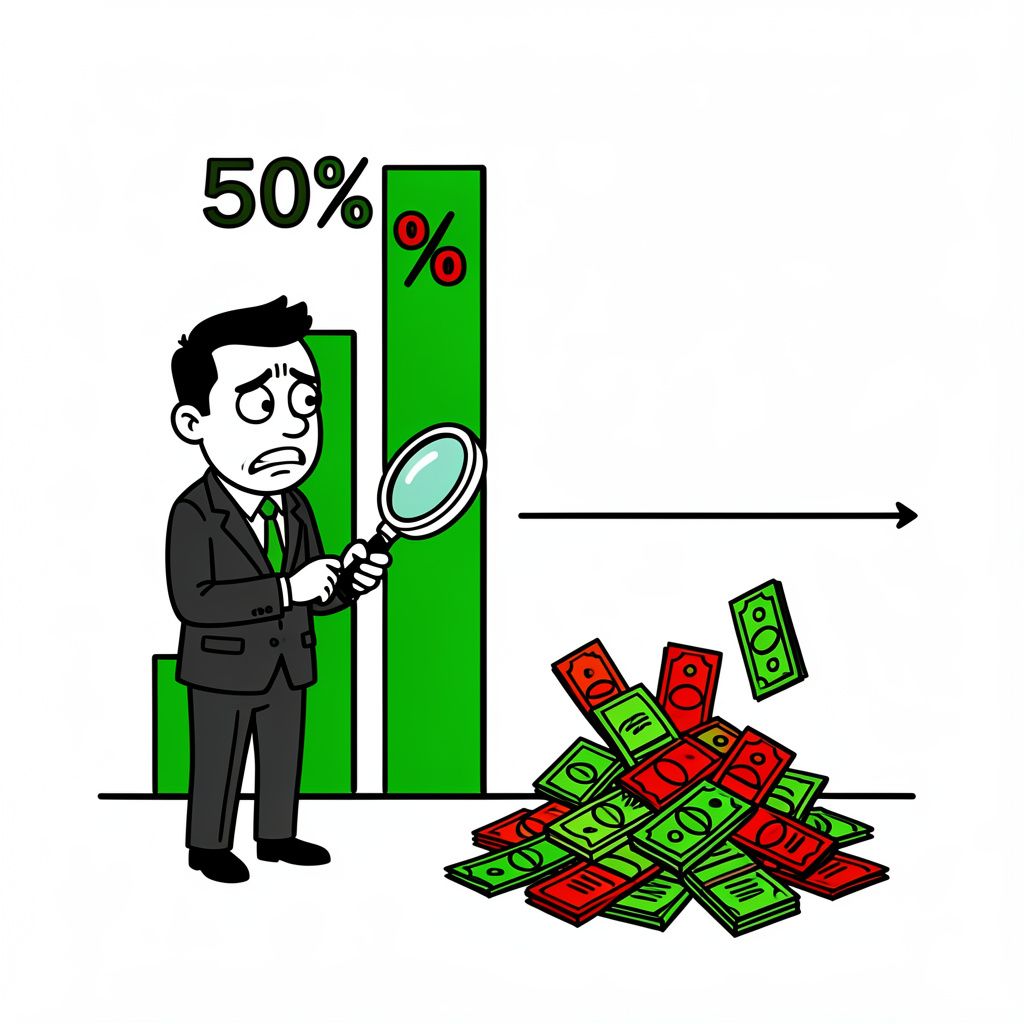
Despite historic second-quarter corporate profit growth exceeding 50%, stock markets remain flat. Investors worry about high valuations, as historical data reveals that massive earnings surges frequently precede major market declines.
Record Earnings Meet Market Caution
As of August 18, 2026, second-quarter earnings growth for the S&P 500 reached 29%, marking the largest upside surprise in history [1]. By late August 2026, year-over-year growth exceeded 50%, representing the highest quarterly growth rate in five years [1]. Despite these figures, equity markets have shown muted reactions, with the S&P 500 index gaining 12% year-to-date in 2026 [1]. Institutional investors face a disconnect between booming corporate profits and lagging stock performance, signaling broader macroeconomic caution regarding future growth sustainability [1]. Analysts note that S&P 500 earnings are now expected to surge 32% in 2026, which is 17 percentage points higher than the 15% growth expected at the start of the year [1].
Historical Precedents and Valuation Risks
Historical data from BCA Research indicates that 5 of the 6 periods of extremely high earnings growth in the last 25 years preceded significant market declines [1]. Notable examples include 2018, where 20.5% EPS growth corresponded with a -6.6% S&P return [1]. Current market risks include traditional valuation metrics sitting in the 98th percentile, two standard deviations above average [1]. Investors worry about high valuations alongside high inflation, interest rates, and rising U.S. debt [1].
The AI Investment Driver
AI-driven investments accounted for approximately 75% of the 50% headline S&P 500 EPS growth in Q2 2026 [2]. Hyperscaler capital investment is projected to reach nearly $800 billion in 2026 and over $1 trillion in 2027 [2]. LPL Research reports that the recent technical breakout of the S&P 500 to new highs has elevated the ceiling for equity performance [2]. However, the correlation between the 10-year U.S. Treasury yield and the S&P 500 tends to flip when yields exceed 4.3% [2].
Corporate Case Study and Outlook
On August 25, 2026, Williams-Sonoma reported fiscal Q2 2026 results, featuring 6.2% comparable sales growth and earnings per share of $2.10 [3]. Despite beating the $2.06 forecast, the stock fell 1.73% to $230.67 in premarket trading on August 25, 2026 [3]. Financial headwinds impacting gross margins included a 160-basis-point drop due to tariff pressure and rising fuel costs [3]. LPL Research forecasts the 10-year Treasury yield will move toward the 4.0% to 4.5% range by the end of 2026 [2]. A potential Democratic congressional majority win in November 2026 could lead to anti-corporate policies, such as higher corporate taxes [1].