Iran Claims Missile Strike on US Carrier as Conflict Threatens Global Oil Supply
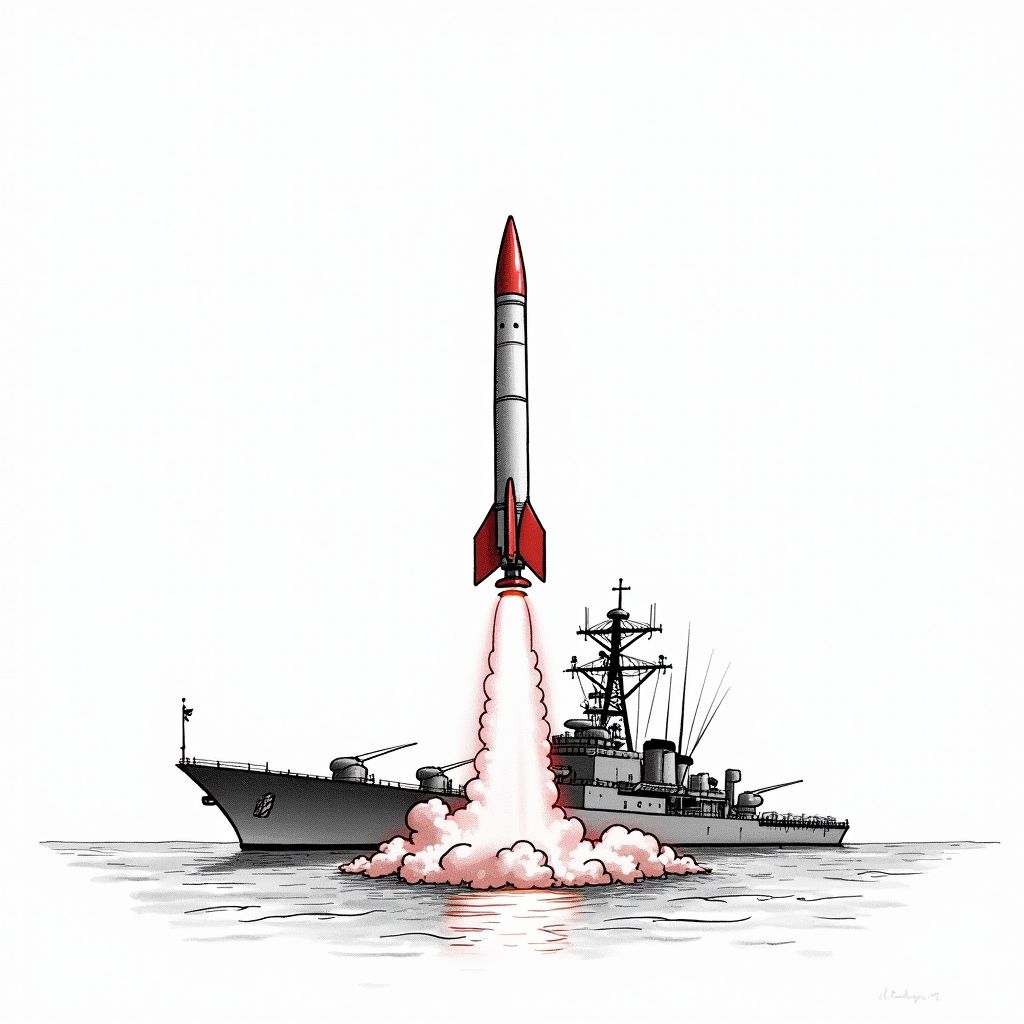
Tehran, Sunday, 1 March 2026.
Iran alleges four ballistic missiles struck the USS Abraham Lincoln, signaling a severe escalation that threatens the Strait of Hormuz and could trigger immediate volatility in global energy markets.
Direct Challenge to American Naval Supremacy
In a defining moment for the widening conflict in the Middle East, Iran’s Revolutionary Guards (IRGC) announced on Sunday, March 1, that they successfully targeted the USS Abraham Lincoln with four ballistic missiles [3]. This claim, broadcast by local media, asserts that the carrier was struck in the Gulf, with the IRGC warning that regional waters would become a “graveyard” for aggressors [3]. The alleged strike serves as a severe escalation following Saturday’s coordinated Iranian missile barrage targeting U.S. personnel across five Gulf nations [https://wsnext.com/42eb266-Middle-East-conflict-Energy-security/]. While the Pentagon has yet to verify the extent of the damage [GPT], the USS Abraham Lincoln has been operating off the coast of Oman in the Arabian Sea, serving as the flagship for a nine-ship strike group that spearheaded the recent U.S.-Israel joint offensive [1]. The carrier, which houses approximately 60 aircraft and 7,600 personnel, played a central role in launching jet attacks against Iranian infrastructure on Saturday, February 28 [1]. The IRGC’s assertion of a direct hit on a nuclear-powered aircraft carrier represents a potential breach of what military analysts consider a red line in naval warfare, challenging the perceived invulnerability of U.S. power projection in the region [2].
Regime Decapitation Sparks Vows of Total Revenge
The ferocity of Iran’s counter-offensive appears driven by the confirmation that the joint U.S.-Israeli operation, dubbed “Operation Epic Fury,” resulted in the death of Iran’s Supreme Leader, Ali Khamenei [4][6]. Iran’s State News Agency confirmed the killing, which followed an earlier announcement by President Donald Trump regarding the success of the strikes [4][5]. In response, the IRGC issued a declaration vowing that the “hand of revenge” would not rest until the perpetrators are “severely, decisively, and regretfully punished” [5]. This decapitation strike has fundamentally altered the strategic calculus in Tehran, shifting the conflict from a limited exchange of fire to an existential struggle for the regime’s survival. President Trump and Israeli Prime Minister Benjamin Netanyahu have explicitly encouraged the Iranian populace to overthrow the remaining government structure, signaling a coordinated policy of regime change [8]. However, experts warn that removing the leadership “from the chess board” creates a volatile power vacuum, with the IRGC now operating as a militarized state entity, or “IRGCistan,” intent on maximizing retaliatory damage regardless of the long-term consequences [6].
Strait of Hormuz Blockade and Energy Market Shock
The conflict’s economic reverberations have materialized rapidly in the Strait of Hormuz, the world’s most critical energy choke point. On Saturday, February 28, the IRGC began transmitting VHF messages to commercial vessels declaring that “no ship is allowed to pass the Strait of Hormuz” [7]. This verbal blockade escalated into kinetic action on Sunday, March 1, when an oil tanker was struck off the coast of Oman, just 3.7 kilometers north of Kumzar [7]. The United Kingdom Maritime Trade Operations (UKMTO) has reported significant military activity in the area, prompting Greece to advise its merchant fleet to avoid the waterway entirely [7]. The Strait handles approximately 20 million barrels of oil daily—roughly 30 percent of all seaborne crude—and about 20 percent of global LNG shipments [7]. Energy analysts caution that a sustained closure would cause prices to “gap violently upward on fear alone,” potentially driving crude oil to $100 per barrel or higher [7]. Such a spike would trigger immediate inflationary pressure globally, with economists estimating it could add between 0.6 and 0.7 percent to global inflation, complicating monetary policy for central banks already navigating a fragile economic landscape [7].
Sources
- www.sandiegouniontribune.com
- fox5sandiego.com
- www.timesofisrael.com
- modern.az
- medianews.az
- www.atlanticcouncil.org
- www.aljazeera.com
- globalnation.inquirer.net