Trump Declares U.S. Economy 'Opposite of a Depression'—But Economists Disagree
Washington D.C., Tuesday, 23 June 2026.
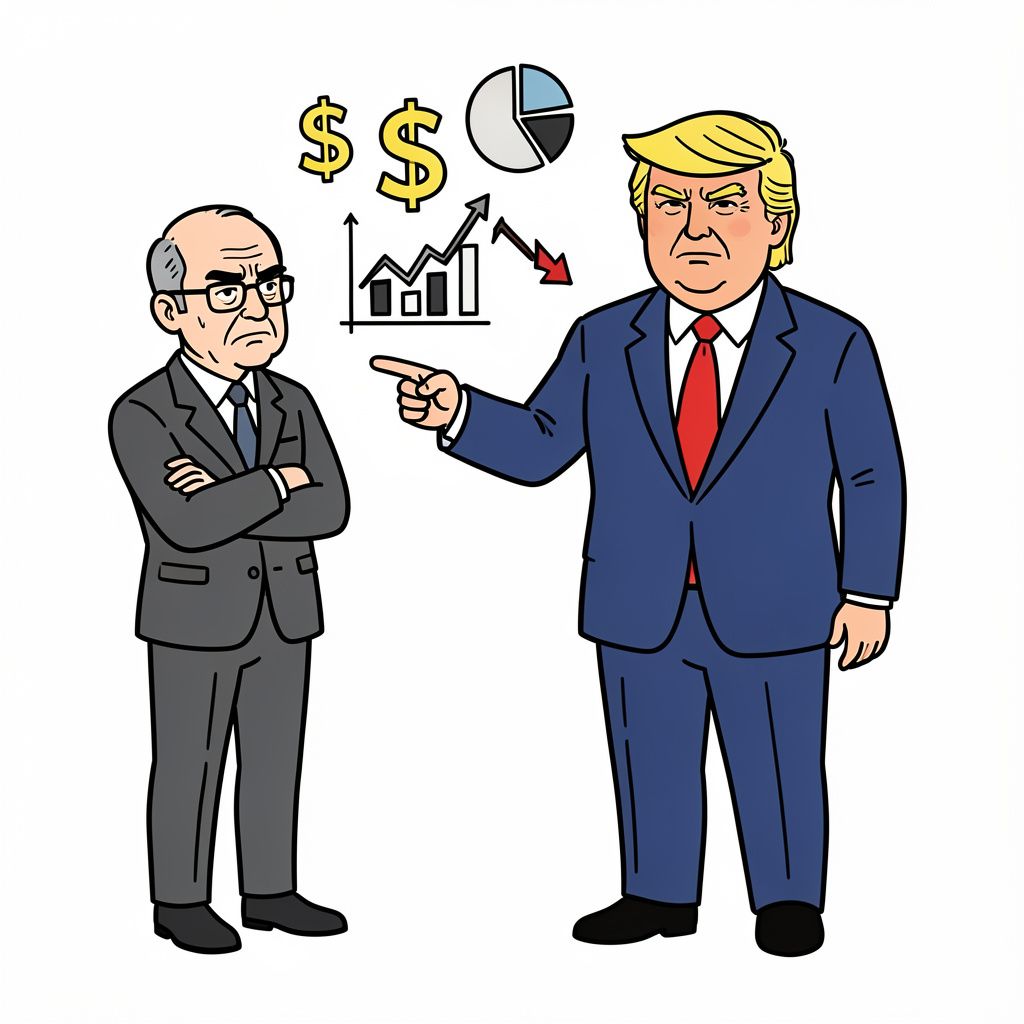
Former President Trump’s claim that the U.S. is experiencing ‘the opposite of a depression’ has sparked sharp debate. While markets and consumer spending show resilience, economists warn of wage stagnation, debt, and geopolitical risks—painting a far less rosy picture. The clash highlights deep divisions over economic reality ahead of the 2026 midterms.
Trump’s Economic Optimism: A Contrast to Expert Analysis
On 21 June 2026, former President Donald Trump (Republican) declared during a White House press briefing that the United States is experiencing ‘the strongest economy we’ve ever had’ and ‘the opposite of a depression’ [1][3]. This statement, made in the Oval Office, comes amid a complex economic landscape marked by mixed indicators. Trump specifically pointed to oil prices being ‘way down’ following the U.S. Treasury’s authorization of Iranian crude sales through August 2026, though the exact date of this authorization remains unspecified [1].
Geopolitical Assertions and Economic Claims
Trump’s remarks extended beyond domestic economic performance to geopolitical strategy. When questioned by Wall Street Journal reporter Philip Wegmann about the risk of economic catastrophe in the context of Iran tensions, Trump responded, ‘Nuclear weapon supersedes depression,’ asserting that Iran’s leverage is effectively neutralized (‘They’re gone’) while Americans are ‘setting records’ [1]. This statement underscores the administration’s framing of economic resilience as intertwined with foreign policy achievements. However, the claim of $18-19 trillion in foreign investments was disputed by economists, with the White House citing a significantly lower figure of $10.6 trillion [1].
Economic Reality Check: Persistent Challenges
Economists and financial analysts have pushed back against Trump’s characterization of the economy. Jared Bernstein, former chairman of President Biden’s Council of Economic Advisers, countered that while the U.S. is not in a recession, ‘to a lot of people, it kind of feels like it.’ Bernstein emphasized the disconnect between the administration’s optimism and public sentiment, noting that ‘large majorities of Americans are very clear that everything is far from fine in their economic lives’ [1]. This sentiment is reflected in recent polling data showing overwhelmingly negative reviews of the economy [7].
Political Implications Ahead of 2026 Midterms
Trump’s economic messaging appears strategically timed for the upcoming 2026 midterm elections. On 23 June 2026, the president visited Pennsylvania’s Lehigh Valley to tout economic gains, framing the initial agreement with Iran as a key achievement [2]. This visit follows a pattern of using economic optimism as a campaign tool, with Trump previously declaring on Father’s Day 2026 that ‘our country is doing great’ with ‘record jobs numbers and stock market’ [6]. However, critics argue this narrative oversimplifies economic realities for many Americans.
Expert Consensus vs. Political Narrative
The divergence between Trump’s economic narrative and expert analysis highlights broader tensions in economic perception. While the administration points to macroeconomic indicators like GDP growth (estimated at 2.1% annualized for Q2 2026 [GPT]) and low unemployment (3.7% as of May 2026 [GPT]), economists caution against overlooking structural challenges. These include: 1) Rising income inequality, with the top 10% of earners holding 69% of total wealth [GPT]; 2) Persistent inflation concerns, with core CPI still above the Federal Reserve’s 2% target at 2.8% year-over-year as of May 2026 [GPT]; 3) Business investment slowdowns in key sectors [alert! ‘specific sector data not provided’].
Market Reactions and Investor Sentiment
Financial markets have shown mixed reactions to the administration’s economic messaging. While the S&P 500 reached record highs in early June 2026, bond markets have signaled concerns about long-term fiscal sustainability, with 10-year Treasury yields rising to 4.3% [GPT]. The disconnect between stock market performance and broader economic sentiment reflects what some analysts describe as a ‘K-shaped recovery,’ where large corporations and high-net-worth individuals benefit disproportionately compared to middle- and lower-income households [GPT].