Trump Welcomes America's 250th Anniversary with Bold Mount Rushmore Address
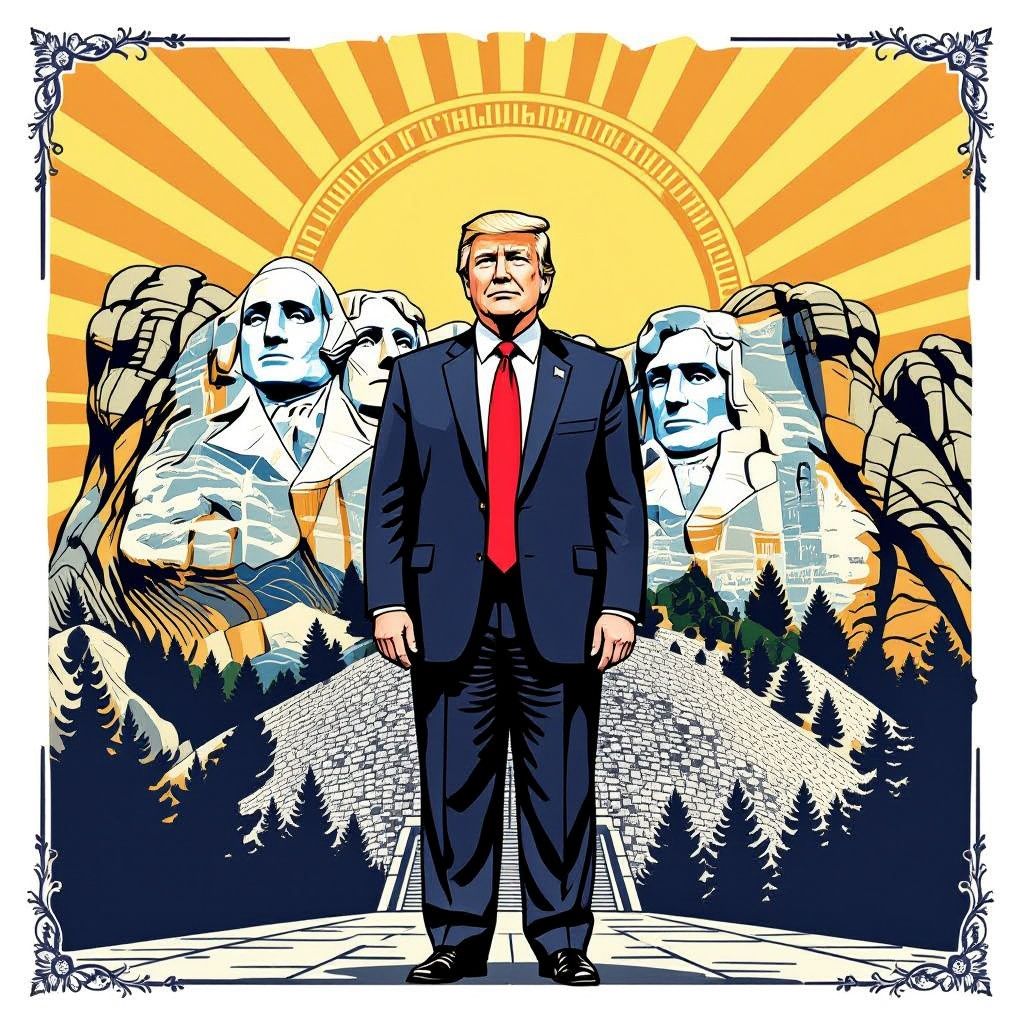
Keystone, Sunday, 5 July 2026.
Marking America’s 250th anniversary at Mount Rushmore, President Trump declared a “Golden Age” while warning that communism poses a greater threat to U.S. liberty than World War II.
A Symbolic Stage in South Dakota
On the evening of Friday, July 3, 2026, President Donald Trump delivered an Independence Day eve address at the Mount Rushmore National Memorial near Keystone, South Dakota, initiating the official celebrations for the U.S. Semiquincentennial [1][2]. The event featured a 28-minute speech delivered in front of the 18.29-meter carved heads of George Washington, Thomas Jefferson, Theodore Roosevelt, and Abraham Lincoln [1][2]. Following the address, attendees witnessed a 23-minute fireworks and light display over the historic monument [1][2]. The combined duration of the main address and the subsequent visual display reached 51 minutes, representing a tightly choreographed spectacle designed to emphasize national pride [1].
Economic Nationalism and the Golden Age Vision
During his address, President Trump framed the 250th anniversary of American independence not as a culmination, but as the beginning of a “Golden Age of America” [1]. Emphasizing economic nationalism and domestic strength, Trump declared that the American dream still lives and that the nation cannot be beaten, regardless of external challenges [1]. He praised American boldness, ambition, and competitiveness, asserting that what is strong can be made stronger [1]. This rhetoric sets a distinct political and economic tone for the remainder of the fiscal year, signaling a continued policy focus on domestic manufacturing and patriotic consumer sentiment [GPT].
Political Divergence and Warnings of Ideological Threats
While traditional Independence Day addresses by U.S. presidents have historically focused on apolitical unity, President Trump’s speech swerved into highly political territory, issuing stark warnings about ideological threats [2]. Specifically, he characterized communism as a “mortal threat to American liberty,” describing it as the greatest threat the country has faced, surpassing the historical impacts of World War I, World War II, Pearl Harbor, and the September 11 attacks [2]. The political nature of the event was further highlighted by the attendance of Glenn Brooks, a participant in the January 6, 2021, Capitol attack who received a presidential pardon [2].
A Fractured National Landscape
The Semiquincentennial milestone has exposed deep political and organizational divisions within the United States [GPT]. The planning of the 250th anniversary has been marked by competing efforts between the White House-aligned “Freedom 250” initiative and the bipartisan congressional group “America250” [2]. Highlighting these differing perspectives, New York City Mayor Zohran Mamdani emphasized working toward the perfection of the nation’s founding ideals, asserting that these ideals are strong enough to endure authoritarian regimes if actively pursued [2]. Concurrently, a diverse group of citizens, including travelers Michael and Cindi Dresdner, gathered at the National Archives in Washington, D.C., to view the founding documents, reflecting a shared affection for the country despite political differences [2].
Weather Disruptions and the Global Backdrop
Beyond the political arena, extreme weather heavily impacted scheduled events across the East Coast [GPT]. A severe heat wave forced Philadelphia to cancel its “Salute to Independence” parade on July 3, 2026, and led to the temporary closure of the Great American State Fair in Washington, D.C. [2]. Furthermore, the official Washington Independence Day parade scheduled for Saturday, July 4, 2026, was canceled due to the hazardous weather conditions [2]. Despite these cancellations, the Capitol Fourth concert proceeded on July 3, featuring performances by Patti LaBelle and Trace Adkins [2]. Following his South Dakota address, President Trump scheduled a second speech and a massive fireworks display at the National Mall in Washington, D.C., for the evening of July 4, 2026 [1][2]. Internationally, the celebrations coincided with the burial of Ayatollah Ali Khamenei in Iran, where participants issued anti-U.S. rhetoric and called for revenge [1].