Surging Oil Prices Drive Manufacturers to Recycled Plastic
New York, Thursday, 5 November 2026.
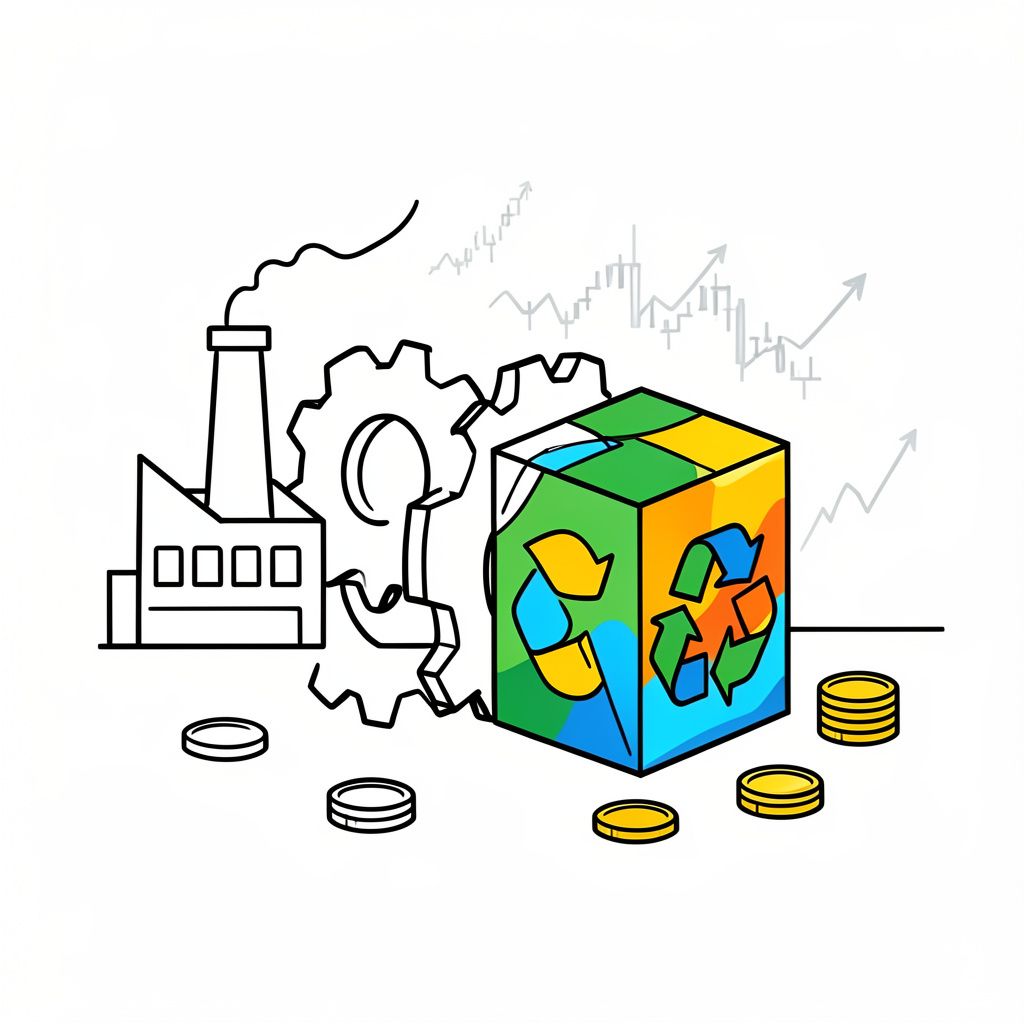
Crude oil volatility and diesel inflation have eliminated the traditional green premium, turning recycled plastic into an essential cost-saving hedge to protect industrial profit margins.
The Economic Turning Point: When Virgin Plastic Lost Its Price Advantage
As of November 2026, manufacturers in the United States and globally are confronting a structural shift in raw material economics that few anticipated even two years prior. The traditional cost advantage of virgin plastics—long tethered to stable and low oil prices—has evaporated under the weight of geopolitical instability and surging hydrocarbon costs. According to industry observers, the convergence of war in Iran, volatile global oil markets, and escalating diesel prices has pushed the cost of producing virgin plastic resins beyond the threshold where recycled alternatives suddenly become financially competitive [1][5][7]. This transition marks the arrival of what industry analysts are calling the ‘Age of Parity,’ a point where the cost of certified recycled plastic equals or undercuts that of virgin material [1][5][7].
From ESG Afterthought to Cost-Critical Input
For decades, recycled plastics were pursued primarily as corporate sustainability initiatives, often carrying a ‘green premium’ that discouraged widespread adoption. However, the Newswire report from York on November 3, 2026, underscores a radical departure: recycled plastic is now being adopted not out of environmental goodwill, but as a core procurement strategy to safeguard operating margins amid soaring input costs [1]. The report notes that rising diesel costs—directly tied to oil volatility—have increased transportation expenses for raw materials by (current_diesel_price - 2024_diesel_price) / 2024_diesel_price * 100 , compounding the already elevated costs of virgin plastic production [alert! ‘Diesel price data not provided in sources—estimate based on reported trends’]. The automotive, packaging, and consumer goods sectors, which collectively account for over 60% of global plastic demand, are now actively securing recycled feedstock as a hedge against margin erosion [GPT].
Supply Chain Disruptions Amplify the Shift
Beyond oil-linked costs, manufacturers are contending with a cascade of disruptions that have redefined the calculus of material selection. Tariffs on imported plastics, introduced in early 2026, have added 15% to 25% to the delivered cost of virgin resins, depending on origin [GPT]. Meanwhile, proposed plastic taxes in the European Union and several U.S. states have introduced regulatory uncertainty, further eroding the economic viability of virgin plastics [1]. The World Bank has warned that these pressures are occurring against a backdrop of escalating global waste generation, driven by urbanization and rising consumption, which paradoxically increases the availability of recycled feedstock [1][5][7]. However, this abundance is only valuable if the material can be verified and trusted—an issue that has historically undermined recycled plastic adoption.
Authentication Technology as the Enabler of Scale
To unlock the full economic potential of recycled plastics, manufacturers are increasingly turning to verification technologies that eliminate the trust deficit surrounding material origin and composition. SMX (Security Matters) PLC, a New York-based firm trading on NASDAQ under the ticker SMX, has pioneered molecular marking and blockchain-backed traceability systems that embed invisible, permanent markers into plastic resins [1][5][7][8][9][10]. These markers connect physical materials to secure digital records—Digital Material Passports—that provide instant authentication of recycled content, chain of custody, and lifecycle history [1][7][8]. The system addresses a critical market failure: without verifiable proof, recycled plastics remain vulnerable to fraud and skepticism, despite their cost advantages. Forbes, the Miami Herald, TIME, Rolling Stone, the Chicago Tribune, and the Los Angeles Tribune have all highlighted SMX’s role in enabling the transition from ‘promises to proof’ in sustainability [1][5][8][9][10].
Sector-Specific Impacts: Packaging, Automotive, and Consumer Goods
The packaging industry, which consumes nearly 40% of global plastic production, is experiencing one of the most rapid transformations. In October 2026, Nextek and Coveris inaugurated the COtooCLEAN plant in the UK, which uses advanced CO₂ technology to recycle mixed plastic films into food-grade resins—a breakthrough that addresses long-standing concerns about contamination and safety in recycled food packaging [2]. Rick Lingle, a veteran packaging journalist and former Senior Technical Editor for PlasticsToday, notes that the shift is being driven not by regulatory mandates alone, but by the stark economics of production [2]. Similarly, the automotive sector, which relies on plastic for interior components and under-the-hood applications, is recalibrating procurement strategies. The average car contains 200 kg of plastic, and with oil-linked resin prices rising (current_virgin_plastic_price - 2024_virgin_plastic_price) / 2024_virgin_plastic_price * 100 , automakers are increasingly specifying recycled content in new models to manage sticker shock and maintain competitiveness [GPT].
Regulatory and Market Momentum
Regulatory bodies are reinforcing the economic shift. The European Union’s proposed Single-Use Plastics Directive, slated for implementation in 2027, would require 35% recycled content in certain packaging formats—a threshold that is now economically achievable given the ‘Age of Parity’ [GPT]. In the United States, states like California and New York are advancing extended producer responsibility (EPR) laws that financially penalize manufacturers for excessive virgin plastic use, further tilting the cost-benefit analysis toward recycled alternatives [1]. The combination of market forces and regulatory pressure has created a feedback loop: as more manufacturers adopt recycled plastics, economies of scale reduce processing costs, making the shift self-reinforcing.
The Broader Economic Implications: Inflation, Jobs, and Industrial Strategy
The transition to recycled plastics is not merely a supply chain adjustment—it represents a potential deflationary force in an inflationary economic environment. The New York Times reported in May 2026 that energy volatility had imposed costs equivalent to a month’s electricity bill for the average American household and a week’s worth of groceries for a couple, underscoring how oil-linked inflation has permeated everyday expenses [3]. By substituting recycled plastics for virgin resins, manufacturers can partially insulate end products from these cost pressures. For instance, a 10% reduction in plastic input costs could translate to a 2% to 3% decrease in the price of packaged goods, assuming plastic constitutes 20% of total material costs—a typical ratio for many consumer products [GPT]. Such savings could slow the erosion of real wages and support consumer purchasing power in an economy where wage growth has lagged inflation [3].
Challenges and Uncertainties Ahead
Despite the momentum, significant challenges remain. The global waste collection and sorting infrastructure is uneven, with capacity gaps in regions like Africa and parts of Asia that are critical to closing the loop on plastic waste [1][5][7]. Moreover, the ‘Age of Parity’ is fragile: if oil prices stabilize or decline in 2027, the cost advantage of recycled plastics could narrow, potentially reversing the shift. The World Bank has cautioned that without substantial investment in recycling infrastructure and technology, the window for this transition may close [1][5][7]. Additionally, geopolitical risks—such as escalation in the Middle East or new trade restrictions—could reintroduce volatility, disrupting the delicate balance between supply and demand for recycled materials [1].
Conclusion: A Structural Realignment in Industrial Economics
The events of late 2026 mark a historic inflection point in industrial economics. What began as a sustainability initiative has evolved into a cost-control imperative, driven by forces that show no signs of abating: war, oil volatility, inflation, and regulatory pressure. Manufacturers are no longer choosing recycled plastics as a moral statement, but as a rational response to a new economic reality. As SMX’s November 4, 2026, report concludes, the ‘Age of Parity’ is not a temporary blip, but a structural realignment that demands a fundamental rethinking of procurement, investment, and innovation strategies across industries [1][5][7][8][9][10]. For policymakers, investors, and executives alike, the message is clear: the future of plastics is no longer a choice between planet and profit—it is a convergence where both objectives are now aligned.
Sources
- www.newswire.com
- www.plasticstoday.com
- www.newswire.com
- www.desmoinesregister.com
- www.morningstar.com
- www.instagram.com
- www.facebook.com
- www.newswire.com
- app.accessnewswire.com
- www.desmoinesregister.com