Federal Reserve Chair Nominee Faces Senate Blockade Amid Investigation Dispute
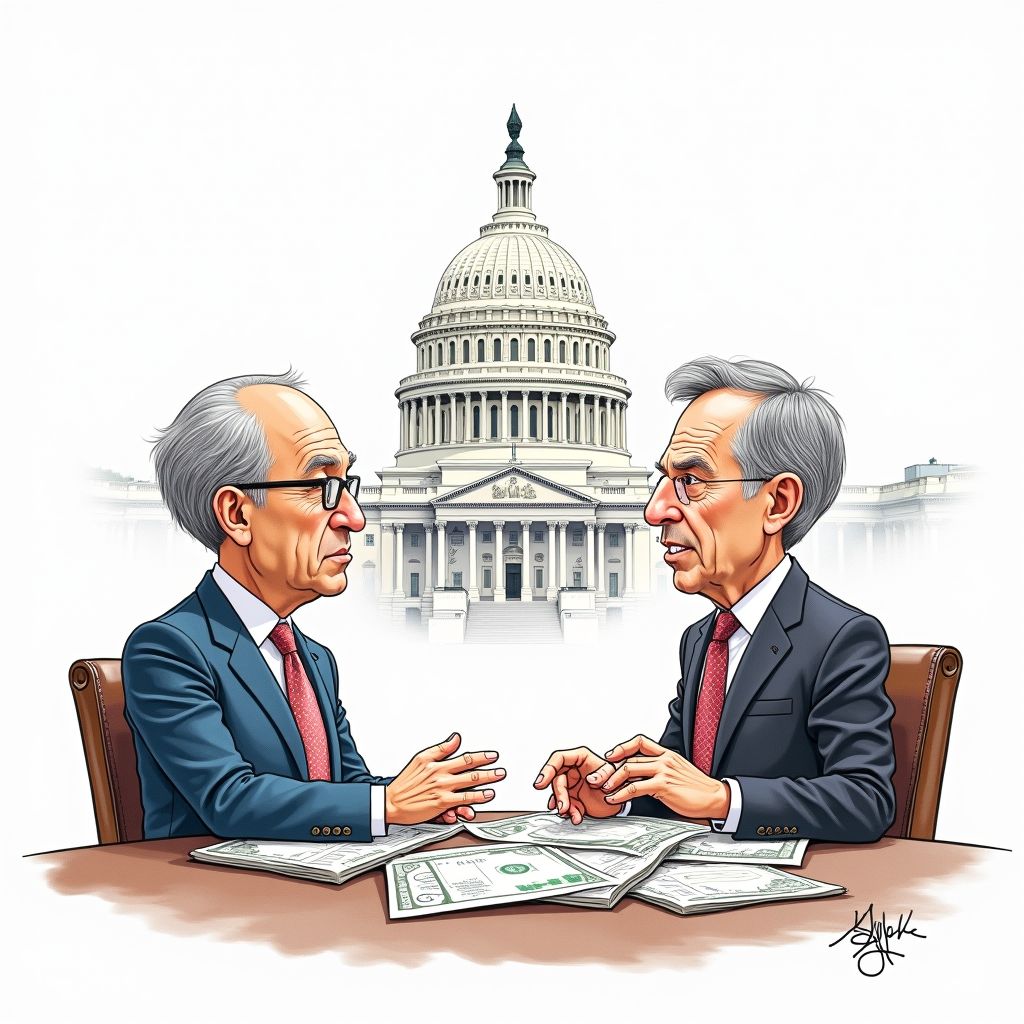
Washington, Wednesday, 11 March 2026.
Federal Reserve nominee Kevin Warsh faces a Senate blockade, with his confirmation stalled until the Justice Department resolves its unprecedented investigation into current Chair Jerome Powell.
A Standoff Over Central Bank Independence
On Tuesday, March 10, 2026, President Donald Trump’s nominee for Federal Reserve Chair, Kevin Warsh, held a meeting on Capitol Hill with Republican Senator Thom Tillis of North Carolina [1][2]. Despite Trump nominating Warsh earlier in January 2026, his path to confirmation remains obstructed [1]. Following their discussion, Senator Tillis described the encounter as a “good meeting” and expressed that he is a “real fan” of the nominee [1][3]. However, Tillis made it unequivocally clear that no statements or assurances from Warsh could persuade him to lift his current blockade on the confirmation process [2].
A Standoff Over Central Bank Independence
The political impasse centers entirely on an ongoing Department of Justice (DOJ) criminal investigation into current Federal Reserve Chair Jerome Powell [1][2]. Senator Tillis has pledged to block any central bank nominations from advancing through the Senate Banking Committee until the Trump administration officially concludes its probe into Powell [1][3]. The investigation, which Powell confirmed the existence of on January 11, 2026, scrutinizes his congressional testimony from the previous year regarding renovations to the Federal Reserve’s offices [1][3]. While the DOJ focuses its inquiry on the building renovations, Powell has publicly asserted that the U.S. Attorney’s Office in Washington, D.C., is targeting him as retaliation for his refusal to comply with President Trump’s demands to aggressively slash interest rates [2]. Consequently, Powell has characterized the DOJ’s actions as “unprecedented” [1].
Implications for Central Bank Leadership
This legislative gridlock introduces significant operational risks for the Federal Reserve, the independent body historically responsible for steering the monetary policy of the United States [GPT]. Chair Powell’s current term is scheduled to officially expire in May 2026 [1]. To successfully succeed him, Warsh requires confirmation by a simple majority in the Senate [1]. If the standoff persists without resolution, the lack of confirmed leadership could undermine market confidence at a critical juncture [alert! ‘The exact economic impact of a prolonged confirmation delay remains speculative and highly dependent on future market reactions’].
Implications for Central Bank Leadership
Warsh is no stranger to the inner workings of the Federal Reserve or to the Trump administration’s vetting process. He previously became the youngest person to serve on the Federal Reserve’s Board of Governors in 2006 at the age of 35, ultimately stepping down in 2011 [1]. This timeline indicates that Warsh has been absent from the board for exactly 15 years [1]. Academically, he holds a bachelor’s degree in public policy from Stanford University, earned in 1992, and a law degree from Harvard University, completed in 1995 [1]. Interestingly, Warsh was considered a leading candidate to replace Janet Yellen as Fed Chair in 2017, but President Trump ultimately selected Powell for the role that Warsh is now attempting to secure [1].