Hyundai Discontinues Santa Cruz to Pivot Toward Traditional Midsize Pickup Market
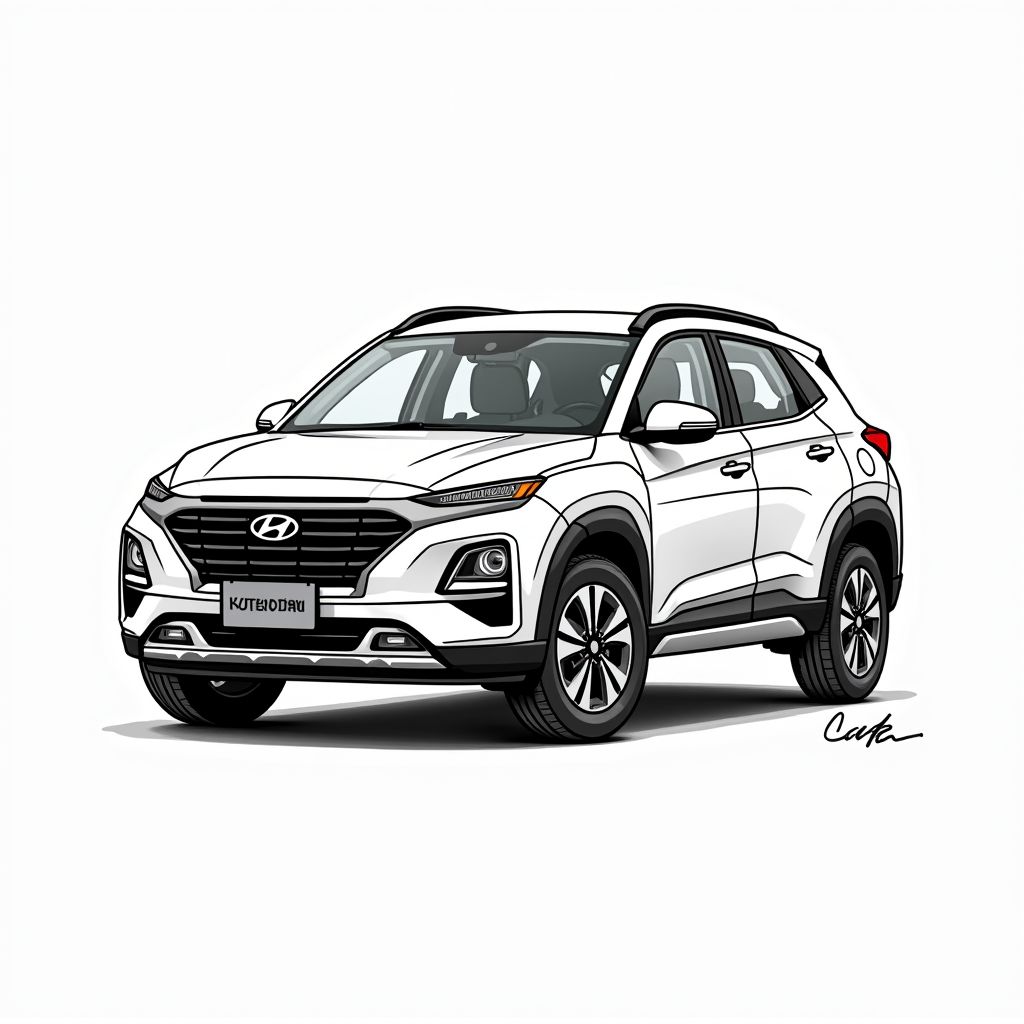
Seoul, Thursday, 29 January 2026.
After the Ford Maverick outsold the Santa Cruz 155,000 to 25,000 in 2025, Hyundai is cancelling the model to develop a larger, body-on-frame competitor for the midsize segment.
Market Realities Force a Strategic Correction
Hyundai Motor Company (HYMTF) has decided to end the production of its Santa Cruz compact pickup, a move that effectively concedes the unibody truck segment to Ford (F). Reports emerging on Thursday, January 29, 2026, indicate that the automaker will discontinue the slow-selling model to reallocate resources toward a more traditional body-on-frame pickup truck [1][3]. The disparity in market performance between the two competitors has become untenable; in 2025, Ford sold 155,051 Maverick pickups compared to just 25,499 units for the Santa Cruz [2]. This represents a sales volume gap where Ford outsold Hyundai by a factor of 6.081, highlighting a profound misalignment between the Santa Cruz’s lifestyle-oriented positioning and consumer demand.
Analyzing the Sales Disparity
The Santa Cruz, which shares its unibody platform with the Tucson crossover, struggled to gain traction against the more utilitarian Maverick [3][5]. Despite a mid-cycle refresh for the 2025 model year, the vehicle failed to close the sales gap, leaving dealers with an estimated five months of inventory as of early 2026 [2]. The sales figures suggest that the North American market favors the versatility and brand recognition associated with Ford’s lineup over Hyundai’s niche offering [3]. Furthermore, the Santa Cruz faced logistical hurdles; exports to Canada were halted in August 2025 due to retaliatory tariffs on U.S.-manufactured vehicles, further limiting the truck’s addressable market [8]. In Canada, the model accounted for a mere 1.954 percent of Hyundai’s total sales volume in its last full year of availability [5].
Strategic Pivot to Body-on-Frame Architecture
Rather than abandoning the truck market entirely, Hyundai is pivoting its strategy to compete in the midsize segment with a more robust architecture. Sources indicate that the company plans to begin production of a new midsize body-on-frame pickup in the summer of 2029 [1][7]. This future model is designed to compete directly with established players such as the Ford Ranger, Toyota Tacoma, and Chevrolet Colorado [2]. By moving away from the unibody construction used in the Santa Cruz, Hyundai aims to deliver a vehicle with the durability and off-road capability expected by traditional truck buyers, potentially sharing components with the recently launched Kia Tasman [2].
Production Timeline and Implications
The timeline for the Santa Cruz’s departure is accelerating. While original plans suggested the model might remain on sale through the first half of 2027, current reports suggest production is scaling back as early as the first quarter of 2026 [2]. Some sources indicate that production could cease entirely in the coming weeks [8], while others project a wind-down extending into early 2027 [2]. Regardless of the exact termination date, the strategic direction is clear: Hyundai is clearing the deck to focus on a “legit four-wheeler” capable of challenging the segment leaders by the end of the decade [3]. When reached for comment regarding future product planning, a Hyundai spokesperson stated that decisions are guided by “consumer demand and overall market trends” [2].
Summary
Hyundai’s decision to discontinue the Santa Cruz reflects a pragmatic response to overwhelming market data. The compact truck experiment, while innovative, could not withstand the commercial dominance of the Ford Maverick. By pivoting to a body-on-frame platform slated for 2029, Hyundai is signaling a shift from niche lifestyle experimentation to a serious, hardware-focused assault on the lucrative midsize truck segment.
Sources
- www.autonews.com
- www.caranddriver.com
- www.thedrive.com
- www.reddit.com
- driving.ca
- www.guideautoweb.com
- rpmweb.ca
- www.auto123.com