NASA Targets February for First Crewed Moon Mission in 50 Years
Cape Canaveral, Sunday, 25 January 2026.
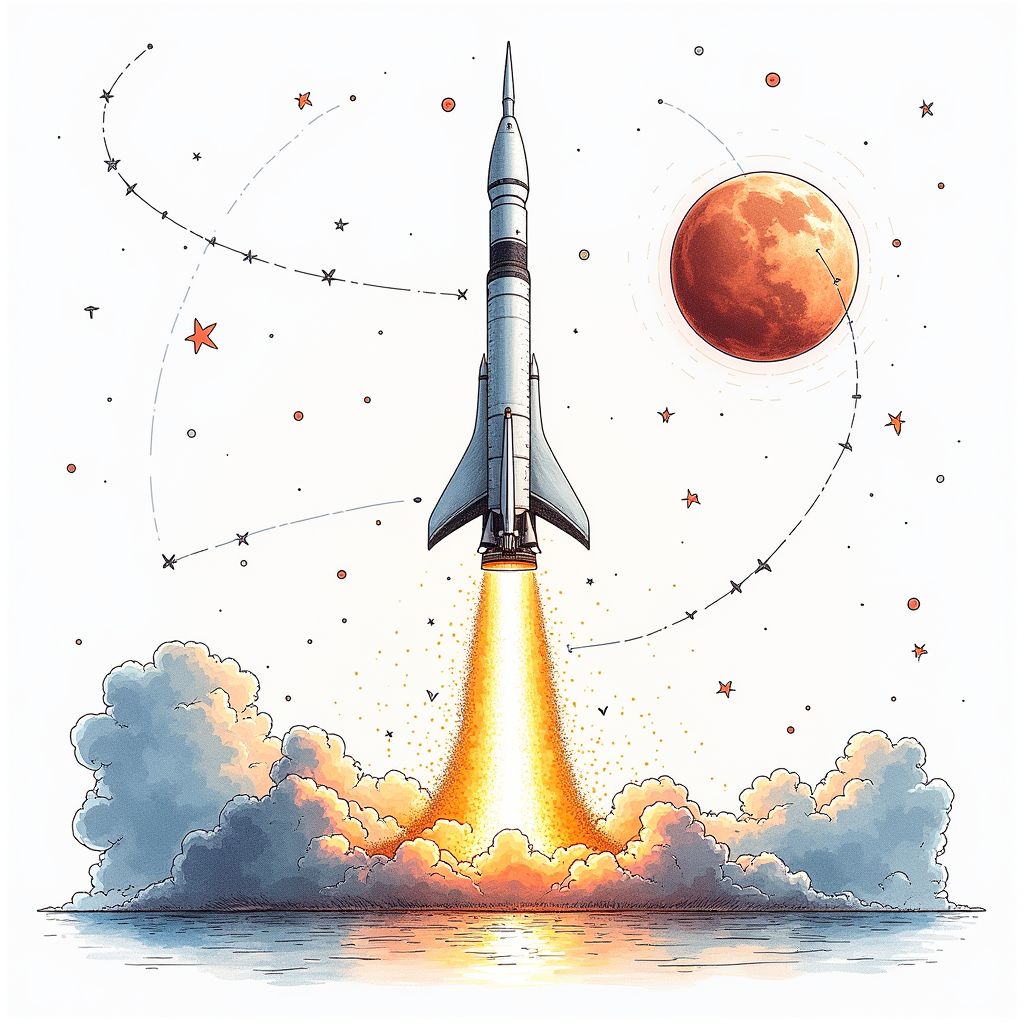
With the massive SLS rocket now positioned on the launch pad, NASA targets early February for Artemis II, marking the aerospace sector’s historic return to lunar orbit after five decades.
Operational Milestones and Launch Readiness
The physical positioning of the hardware represents a definitive shift from planning to operations. On January 18, 2026, NASA completed the rollout of the Space Launch System (SLS), moving the 98-meter tall rocket 6.5 kilometers from the Vehicle Assembly Building to Launch Pad 39B at the Kennedy Space Center [3][4]. This logistical feat, which took approximately 12 hours to complete, places the vehicle in position for its final pre-flight tests [4]. The agency has scheduled a critical ‘wet dress rehearsal’ for February 2, 2026, a procedure that involves fully fueling the rocket to simulate countdown processes without igniting the engines [4]. While the launch window opens as early as February 6, NASA managers remain vigilant against ‘launch fever,’ ensuring that schedule pressure does not compromise safety protocols as the agency approaches this high-stakes deadline [3].
Mission Profile and Crew Dynamics
Artemis II is designed as a stress test for the Orion spacecraft’s life support and navigation systems before a lunar landing is attempted. The 10-day mission profile will see the crew travel approximately 7,600 kilometers beyond the far side of the Moon, a trajectory that will take humans further from Earth than ever before [3][4]. The four-person crew includes NASA astronauts Reid Wiseman, Victor Glover, and Christina Koch, along with Canadian Space Agency astronaut Jeremy Hansen [3][4]. This crew composition is historically significant, featuring the first woman (Koch), the first person of color (Glover), and the first non-American (Hansen) to travel to the lunar vicinity [3]. Following the lunar flyby, the spacecraft is scheduled to splash down in the Pacific Ocean, where it will be recovered by the U.S. Navy [3][4].
Strategic Implications and Global Leadership
Beyond the technical objectives, Artemis II serves as a geopolitical instrument in an increasingly competitive space economy. Operating in the second year of President Trump’s second term, NASA Administrator Jared Isaacman has emphasized that the agency is moving with ‘clarity, purpose, and momentum’ to advance American leadership in space [1][2]. The mission is a precursor to a planned lunar surface return by 2028 and reinforces the Artemis Accords, a diplomatic framework now signed by 60 nations [1][2]. This progress occurs against a backdrop of international competition; China and Russia have announced joint efforts for a lunar reactor, and China’s Chang’e 7 mission is also expected to launch in 2026, underscoring the urgency of the U.S. timeline [4].
Public Engagement and Economic Outlook
The mission also represents a focal point for public engagement and the aerospace industry. The Kennedy Space Center Visitor Complex is preparing to open an immersive exhibition, ‘Artemis II: Pathway to the Moon,’ four days prior to launch, allowing the public to view mission hardware and crew artifacts [5]. Economically, the mission is supported by the Working Family Tax Cut Act, which has provided necessary funding authorities for NASA’s long-term strategy [1][2]. As the launch window approaches, the successful execution of Artemis II is viewed as a necessary validation for the deep space systems that will underpin the future lunar economy [1].