Social Security Payments Projected to Increase Up to 3.8 Percent in 2027
Washington, Saturday, 8 August 2026.
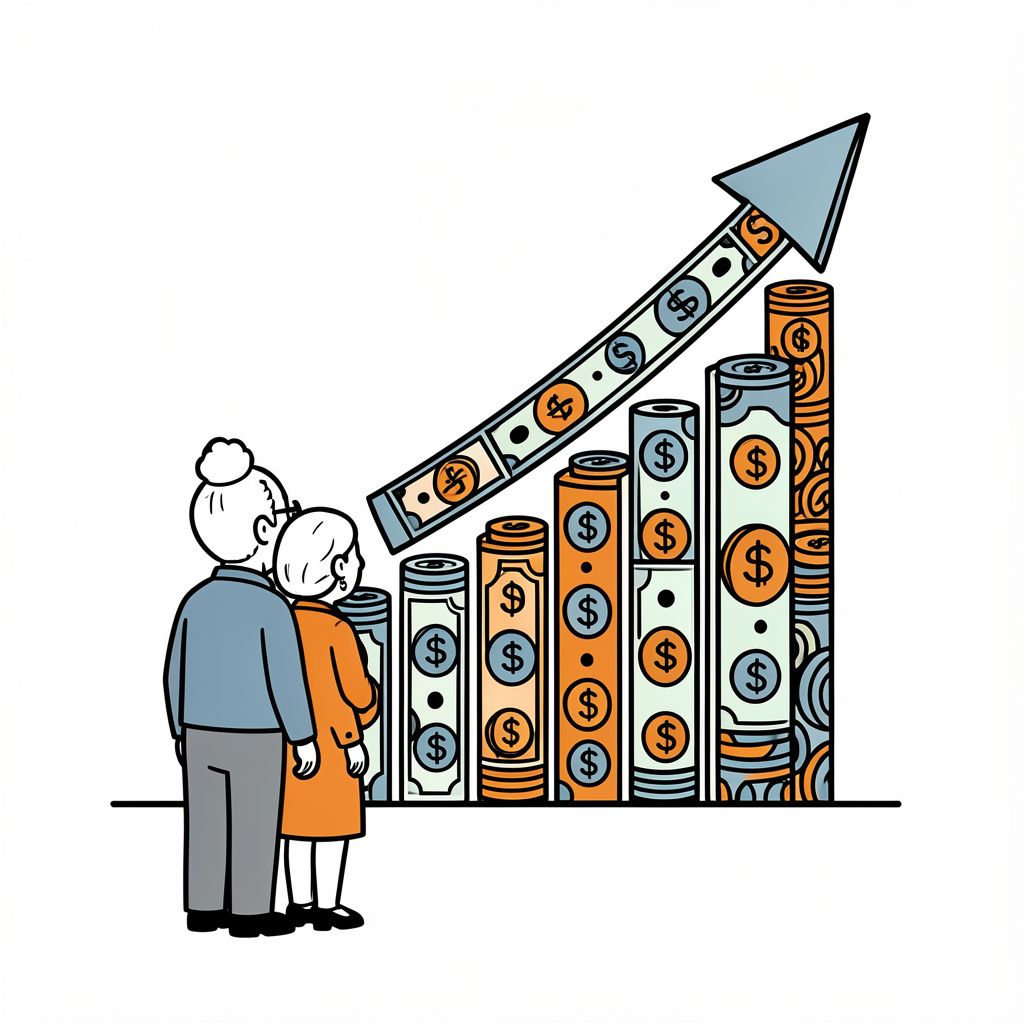
Driven by persistent energy inflation, Social Security benefits could jump 3.8% in 2027—one of the decade’s highest increases—as seniors struggle with a 13.7% loss in purchasing power.
2027 COLA Projections Rise Amid Inflation
As of August 8, 2026, early projections indicate that Social Security benefits could increase by 3.7% to 3.8% in 2027, driven by persistent inflation tracking via the Consumer Price Index [1][4]. The Senior Citizens League (TSCL) specifically projects a 3.8% Cost-of-Living Adjustment (COLA) for 2027, which would be an increase from the 2.8% adjustment implemented in 2026 [1][2]. AARP offers a slightly more conservative estimate, projecting a 3.6% COLA for the upcoming year [1]. The Social Security Administration (SSA) is scheduled to announce the final 2027 COLA in October 2026, calculated by comparing third-quarter inflation averages from July through September [1][2][4]. This timeline means the final figure depends on economic data collected in the months following the current date [2][3].
Purchasing Power and Healthcare Costs
The potential increase addresses significant erosion in benefit value, as Social Security benefits have lost 13.7% of their purchasing power since 2016 [3]. This decline means that $1,000 in benefits from 2016 now equates to approximately $863 in purchasing value [3]. Compounding financial pressure, the Centers for Medicare & Medicaid Services announced in November 2025 that the standard monthly Medicare Part B premium increased from $185 in 2025 to $202.90 in 2026 [1][2]. This premium rise represents a 9.7% increase, calculated as 9.676 [1][2]. Research from The Senior Citizens League indicates that 57% of seniors skipped a health care procedure in the 12 months preceding August 6, 2026, due to costs [1][2][4].
Historical Context and Volatility
Historical data shows significant volatility in recent adjustments, with the 2023 COLA reaching 8.7% compared to 2.5% in 2025 [3][4]. A projected COLA of 3.8% for 2027 would mark the 17th-highest COLA of all time and the third-highest in the past decade [3]. Energy prices remain a critical variable, with June 2026 year-over-year energy price increases reaching 15.7% for all energy and 26.7% for gasoline [3]. Alex Moore, a statistician for The Senior Citizens League, noted that unstable oil prices are the number one factor to watch regarding the final calculation [1][2]. If inflationary fuel pressures remain high over the next two months, the COLA could potentially exceed current estimates [1][2].
Legislative Proposals and Future Calculations
Legislative efforts continue to address how adjustments are calculated, with the Social Security 2100 Act proposing the use of the Consumer Price Index for the Elderly (CPI-E) instead of the current CPI for urban wage earners [1][2]. This change aims to better reflect spending on housing and medical care, which disproportionately affect seniors [1][2]. For context on the impact of current projections, a 3.7% COLA would increase an average benefit of $2,000 by $74 per month, calculated as 74 [4]. While the SSA finalizes the official number in October 2026, these projections underscore the persistent cost pressures within federal entitlement programs [1][3].