Discrepancy Grows Over Oil Shipping Volumes in the Strait of Hormuz
Washington, Thursday, 3 September 2026.
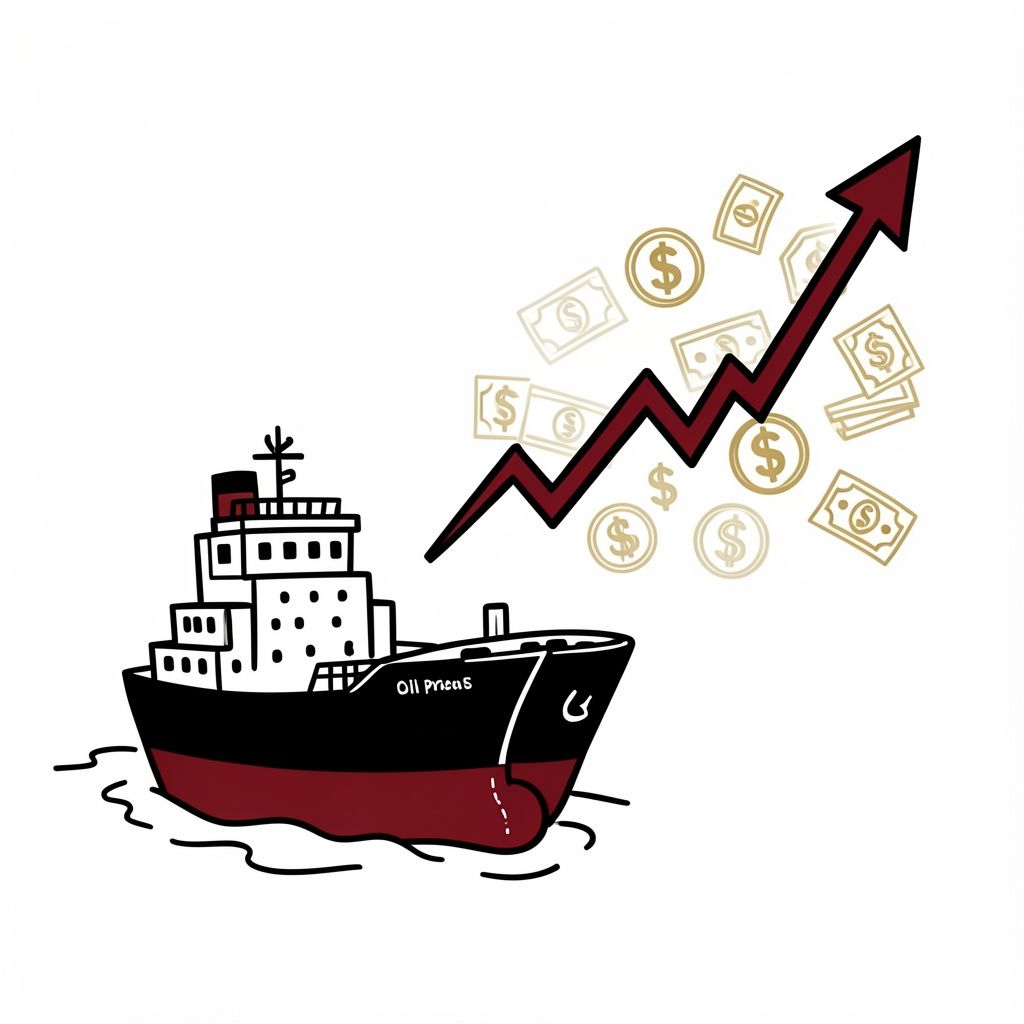
Data from independent trackers reveals a dramatic drop in Strait of Hormuz tanker traffic to just five ships, directly contradicting official claims and sending oil prices above $95 per barrel.
Conflicting Transit Reports and Data Discrepancies
On 2026-08-31, commercial tracker Kpler reported only 5 ships crossed the Strait of Hormuz, a figure that stands in stark contrast to official government assertions [1]. US Energy Secretary Chris Wright claimed over 17 million barrels of oil transited the waterway on that same day, creating a significant divergence in reported volumes [1]. The administration asserts the US Navy is assisting dozens of ships nightly through the ~33.8 km wide chokepoint, rendering them undetectable to commercial trackers like Kpler that rely on satellite imagery [1]. This discrepancy creates uncertainty for traders who rely on transparent data to assess global supply chain stability [1].
The White House and President Trump have faced weeks of skepticism regarding their claims of control over the Strait of Hormuz, with multiple sources indicating only single-digit ship crossings despite administration assertions [1]. Mason Hamilton, vice president of economics and research at the American Petroleum Institute, remarked on the situation by stating, “Might as well just rename it Schrödinger’s Strait…” [1]. Such comments highlight the confusion prevalent among industry experts attempting to reconcile official statements with observable market data [1]. The reliability of maritime traffic data is crucial for pricing energy futures and planning logistical operations across the globe [1].
Energy Markets React to Supply Fears
Crude oil prices rose above $95 per barrel following the renewed US-Iran conflict, reflecting investor anxiety over potential supply disruptions [1]. On 2026-09-01, oil rose for a second session as fresh hostilities between the US and Iran raised concerns about prolonged disruptions to energy flows through the Strait of Hormuz [3]. Leslie Palti-Guzman, Founder at Energy Vista, discussed the outlook for global energy as conflict in the Middle East continues to disrupt flow [3]. The market sensitivity underscores the strategic importance of this waterway for international energy security [3].
Compounding the tension, two supertankers carrying Saudi crude were reportedly struck by unknown projectiles within minutes of each other while sailing out of the Strait of Hormuz on 2026-09-01 [2]. Both vessels had loaded around 4 million barrels of Saudi oil each, according to shipping intelligence firm Marisks [2]. All crew members were reported safe, but the incidents marked a fresh escalation in the threat environment near Oman [2]. These attacks came amid an ongoing confrontation over the strategic waterway and growing fears of further disruption to global oil supplies [2].
Escalation and Official Responses
On 2026-09-02, the US launched new strikes on Iran’s southern coast with explosions reported in several locations near the Strait of Hormuz [4]. Tehran fired back targeting US bases in Jordan, with Washington denying claims of US casualties [4]. President Trump claimed the US now controls the Strait of Hormuz and suggested renaming it, posting on Truth Social regarding the geopolitical situation on 2026-09-02 [1][5]. He stated that the US is “doing really well with Iran” and claimed Tehran has lost its navy, air force, aircraft and military technology [5].
President Trump also declared America has control over the strategically vital Hormuz Strait, a key global oil chokepoint [5]. On 2026-09-02, President Trump posted on Truth Social suggesting renaming the Strait of Hormuz to “TRUMP STRAIT,” amid ongoing geopolitical tension [1]. The White House released a map with the Strait of Hormuz relabeled “Trump Strait,” though the numbers behind the joke are dead serious according to commentary [6]. Since the U.S. resumed the naval blockade in mid-July, Iran has exported zero oil from its own shores, according to sources cited in social media reports [6].
Sources
- finance.yahoo.com
- timesofindia.indiatimes.com
- www.bloomberg.com
- www.aljazeera.com
- timesofindia.indiatimes.com
- www.facebook.com