Goldman Sachs Boosts Brink's Outlook Following Strong Earnings Beat and Market Rally
New York, Tuesday, 3 March 2026.
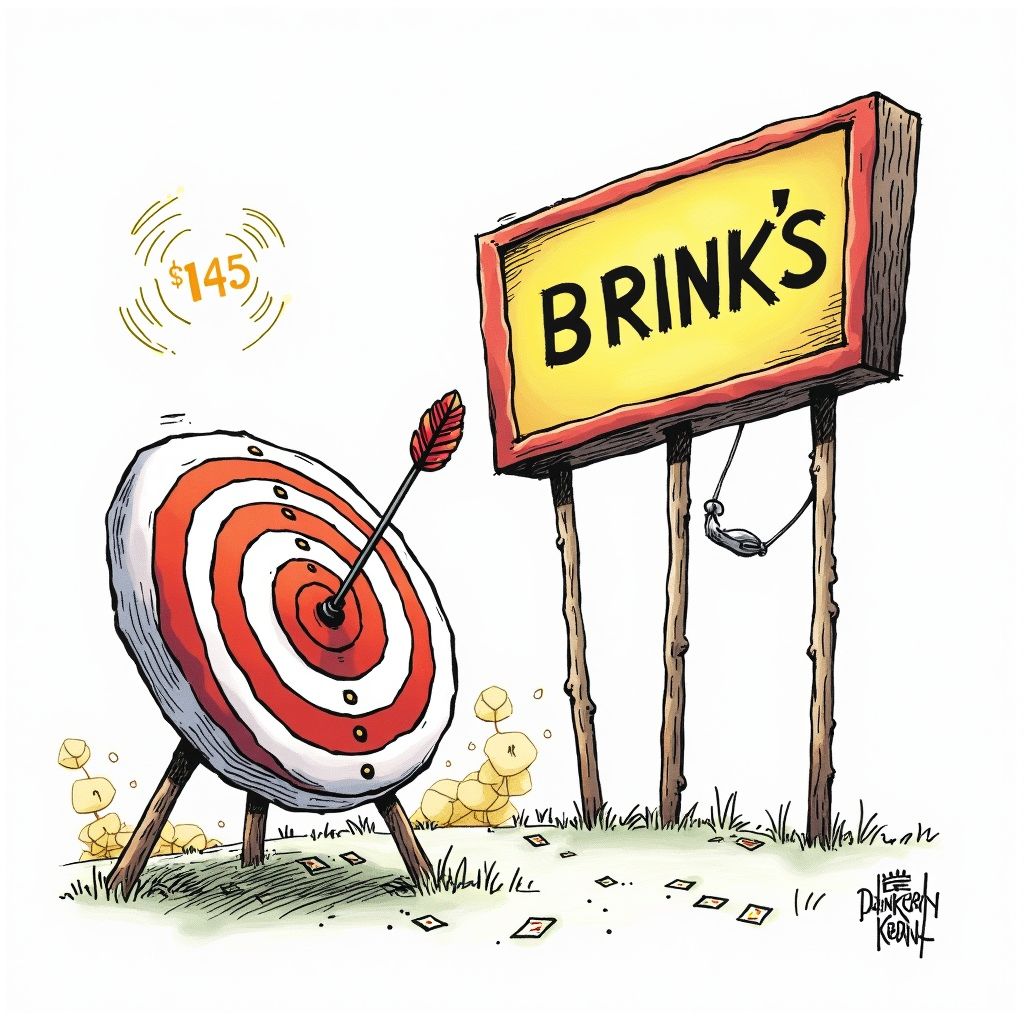
On Monday, March 2, 2026, The Brink’s Company (NYSE: BCO) saw its stock price surge nearly 8% to close at $125.85 after Goldman Sachs raised its price target to $145. This bullish revision, up from $129, follows a robust fiscal performance where Brink’s exceeded quarterly earnings estimates by reporting an EPS of $2.54. The market reacted swiftly to this vote of confidence, with trading volume spiking 184% above the previous session, signaling renewed institutional interest despite recent technical weakness. While some chart indicators had previously suggested bearish momentum, the combination of this analyst upgrade, a stable “BB+” credit rating from Fitch, and an active $750 million share repurchase program highlights strong underlying fundamentals. Investors are now actively weighing these solid operational metrics against mixed short-term signals as the stock approaches key resistance levels.
Market Volatility and Technical Indicators
The trading session on Monday, March 2, was characterized by significant volatility as The Brink’s Company rebounded from recent weakness. The stock fluctuated widely, moving between a daily low of $113.27 and a high of $126.43, ultimately securing a single-day gain of 7.776%, closing at $125.85 [4]. This upward momentum marks a reversal from the preceding period, where the stock had experienced a drop of approximately 10.65% in the days leading up to March 2 [5]. Technical analysis reveals that while the stock has found accumulated volume support at $123.90, it faces immediate resistance at $129.82 [4]. Despite the positive price action, investors are navigating mixed signals; while a buy signal was identified from a pivot bottom on February 28, bearish indicators such as a MACD death cross were observed as recently as late February [4][5].
Credit Ratings and Analyst Consensus
Beyond the immediate price fluctuations, the company’s broader financial health continues to garner validation from credit rating agencies and equity analysts alike. On Friday, February 27, Fitch Ratings affirmed Brink’s Long-Term International Scale credit rating at “BB+” with a stable outlook [2]. This credit stability complements the growing optimism in the equity markets; prior to the recent Goldman Sachs upgrade, Truist Financial had already increased its price target for the stock to $163 on February 10, maintaining a “buy” rating [3]. Currently, the consensus rating for the Richmond, Virginia-based firm stands at “Moderate Buy,” with an average price target of $154.00 [3][6].
Capital Allocation and Shareholder Returns
The renewed market confidence is underpinned by solid operational results and an aggressive capital allocation strategy. On Thursday, February 26, Brink’s reported quarterly earnings of $2.54 per share, beating analyst estimates by $0.07 [1]. Management has remained committed to returning value to shareholders, evidenced by the dividend payment of $0.255 distributed on March 2 to stockholders of record as of February 2 [3]. Furthermore, the company is actively utilizing its balance sheet to support the stock price; on December 11, 2025, the Board of Directors authorized a $750 million share repurchase program, which represented approximately 15.4% of outstanding shares at the time of authorization [1].
Institutional Confidence Versus Insider Activity
Ownership data suggests a divergence between institutional accumulation and insider transactions. Institutional investors and hedge funds currently hold 94.96% of the company’s stock [3], with recent analysis indicating a positive trend in big-money flows and a block inflow ratio of 50.71% [5]. This strong institutional backing contrasts with recent insider activity; on December 15, 2025, insider Michael E. Sweeney sold 1,418 shares at an average price of $119.50, totaling $169,451 [1]. Following this transaction, corporate insiders collectively own just 0.72% of the company’s stock [1][3], leaving the vast majority of equity in the hands of external asset managers.