SpaceX Takes Over Critical GPS Mission from United Launch Alliance
Cape Canaveral, Monday, 26 January 2026.
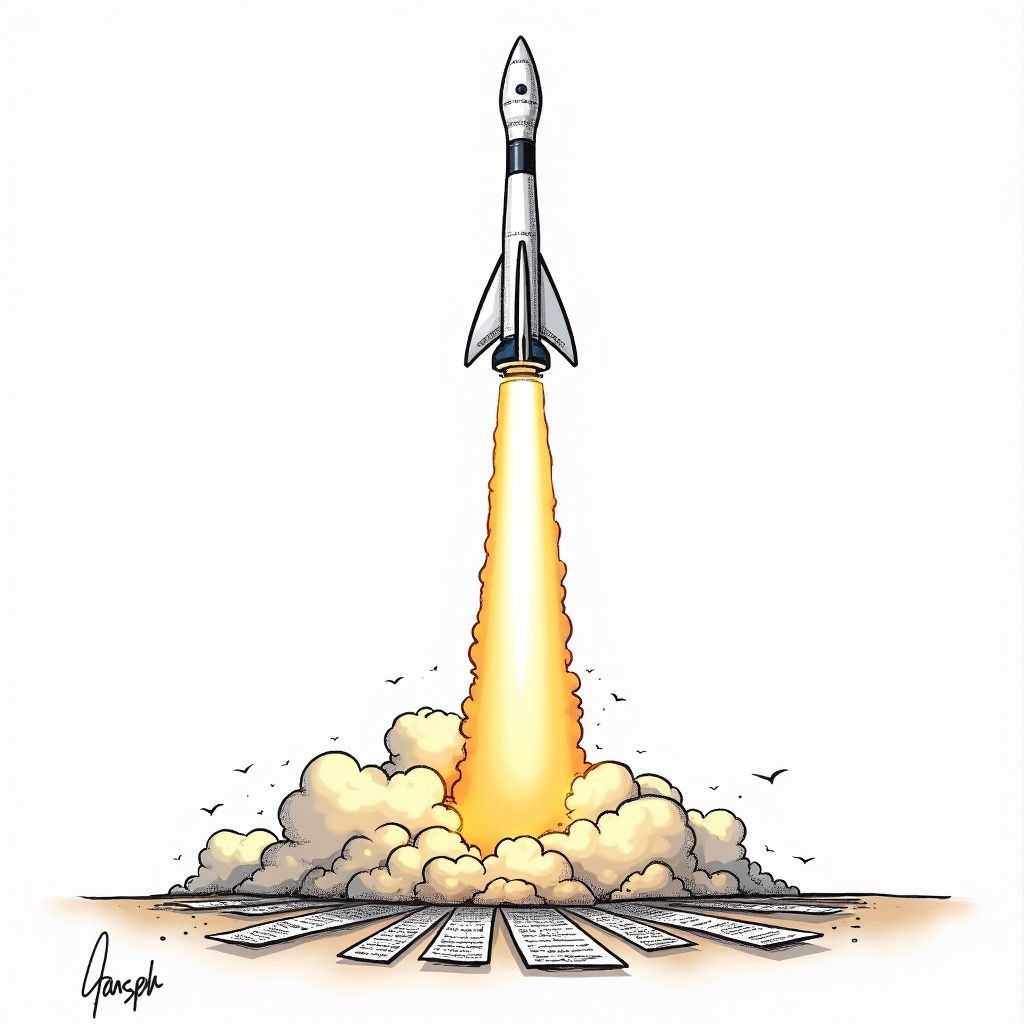
SpaceX prepares to launch the Space Force’s GPS III-9 satellite. Underscoring market shifts, this payload was reassigned from a United Launch Alliance Vulcan rocket due to scheduling delays.
Launch Timeline and Weather Constraints
While the mission was initially targeted for a Monday night liftoff, updates issued midday January 26 indicate that SpaceX has delayed the launch of the GPS III-9 mission by approximately 24 hours [1]. The Falcon 9 rocket is now scheduled to launch from Space Launch Complex 40 at Cape Canaveral Space Force Station on Tuesday, January 27, 2026, at 23:38 EST [1]. This adjustment allows teams to bypass a marginal weather outlook; the 45th Weather Squadron had forecast only a 40 percent chance of favorable conditions for Monday, whereas the outlook for the new Tuesday window improves significantly to 95 percent [1][4]. Following the launch, the Falcon 9 first-stage booster, identified as B1096, will attempt its fifth recovery landing on the drone ship A Shortfall of Gravitas in the Atlantic Ocean, approximately 8.5 minutes after liftoff [1][4].
Strategic Pivot from Vulcan to Falcon 9
This operation underscores a strategic realignment within the U.S. Space Force’s launch manifest, marking the third instance where a GPS satellite has been reassigned from United Launch Alliance (ULA) to SpaceX [4][6]. The GPS III-9 payload was originally contracted to fly on ULA’s Vulcan rocket, but delays in the vehicle’s certification and a “heavily congested” manifest prompted the transfer to the flight-proven Falcon 9 [1][6]. Colonel Ryan Hiserote, the Space Force’s National Security Space Launch (NSSL) program manager, highlighted the necessity of this flexibility, noting that the program must “pivot when necessary to changing circumstances” to ensure critical capabilities reach orbit without excessive delay [1][4]. This shift follows similar reassignments for the Rapid Response Trailblazer mission in December 2024 and the GPS III-7 mission in May 2025 [4].
Market Dynamics in National Security Launch
The transfer of the GPS III-9 mission reflects broader shifts in the National Security Space Launch (NSSL) landscape. Under the Phase 2 contracts, ULA was originally allocated 60 percent of assignments between fiscal years 2020 and 2024, but the company has faced timeline challenges, flying its first national security launch on Vulcan only in August 2025 [4]. In the subsequent Lane 2 missions, which cover task orders from 2025 through 2029 and are valued at $13.7 billion, SpaceX has secured a dominant position [4]. The company is set to receive 28 of the 54 planned missions, representing approximately 51.852 percent of the total workload, while ULA is slated for 19 missions and Blue Origin for 7 [4].
Honoring a Legacy in Orbit
The payload for this mission, GPS III Space Vehicle 09 (SV09), is the ninth of ten third-generation satellites built by Lockheed Martin, featuring advanced anti-jamming M-Code technology to modernize global positioning infrastructure [1][4]. The Space Force has named the satellite in honor of Colonel Ellison Onizuka, a U.S. Air Force test pilot and NASA astronaut who tragically died in the Space Shuttle Challenger disaster 40 years ago this week [1][2]. This naming convention follows previous tributes, such as SV05 named for Neil Armstrong and SV07 for Sally Ride, linking modern space capabilities with the heritage of American exploration [2].