Why Discount Shoppers Are Receiving Millions After Sneaky Register Price Increases
Chesapeake, Sunday, 15 November 2026.
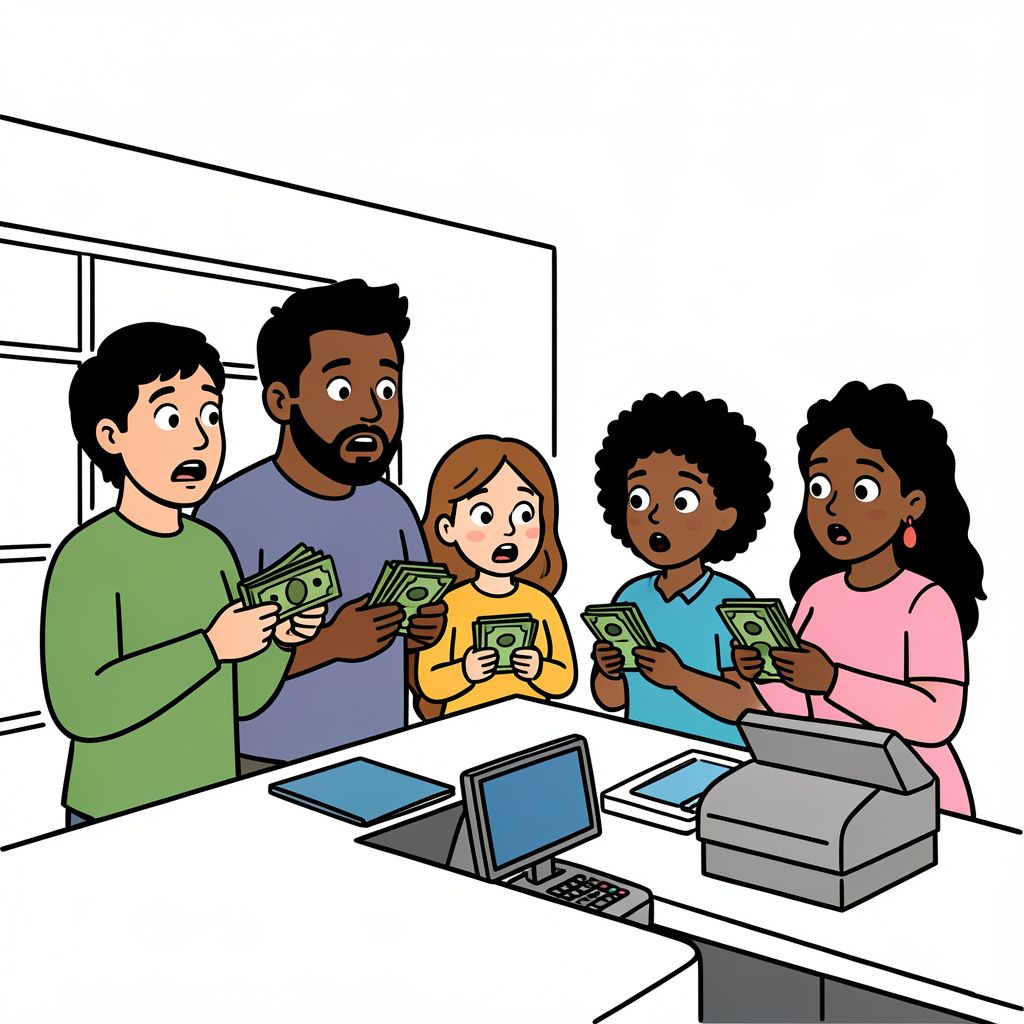
Family Dollar agreed to a $63 million settlement following thousands of failed inspections that exposed systematic register overcharging, returning $40 million directly to misled consumers.
A $63 Million Reckoning for Systematic Overcharging
Family Dollar, a subsidiary of Dollar Tree Inc. (NASDAQ: DLTR), has agreed to pay $63 million to resolve allegations that it systematically overcharged consumers at checkout registers compared to advertised shelf prices [1][2][3][5][8]. The settlement, announced on 12 November 2026 by the Federal Trade Commission (FTC) and 17 states, marks one of the most significant enforcement actions in recent years targeting deceptive retail pricing practices [1][2][3][5][8]. The agreement follows years of scrutiny, including thousands of failed price inspections and consumer complaints that exposed a pattern of register discrepancies across Family Dollar’s 7,000+ stores in 48 states and Washington, D.C. [3][5][8].
The Scale of Deception: Millions Overcharged Over Three Years
Federal regulators and state attorneys general allege that Family Dollar overcharged consumers by “millions of dollars” from January 2023 to October 2026, with discrepancies arising from shelf tags, advertisements, and digital platforms failing to match register prices [1][3][5][8]. The FTC’s complaint cited concrete examples, including a “2 for $20” diaper promotion that was advertised on shelf tags and the mobile app but routinely refused at checkout in at least seven states during January 2025 [1][3][5][8]. In one documented case in Michigan, a customer presented a shelf tag for the diaper deal, only for the store manager to remove the tag and refuse the discount, leaving the consumer overcharged [3][5][8]. These incidents were not isolated: over the past five years, state and local regulators cited Family Dollar for thousands of pricing violations, resulting in fines exceeding $3 million [3][5][8].
Breaking Down the Settlement: Restitution, Discounts, and Accountability
Under the terms of the settlement, Family Dollar will allocate the $63 million in three key ways: a $40 million consumer redress fund for eligible purchases made between January 2023 and October 2026, a $20 million discount program offering customers 15% off select items for two days, and payments totaling over $3 million to the 17 participating states [1][2][3][5][8]. The redress fund will be publicized through in-store and digital notices, ensuring affected consumers can claim their share of the restitution [1][2][3][5][8]. Additionally, Family Dollar must implement a pricing accuracy program, independently assessed and annually certified, to monitor prices, verify tags, and train employees—a structural change designed to prevent future overcharges [1][2][3][5][8]. The company neither admitted nor denied the allegations as part of the settlement [1][2][3][5][8].
Regulatory Ripple Effects: Dollar General Faces Similar Scrutiny
The Family Dollar settlement is part of a broader crackdown on deceptive pricing practices in the discount retail sector. On 26 October 2026, the FTC and 20 states filed a lawsuit against Dollar General Corporation, alleging similar overcharging schemes at its over 20,000 stores nationwide [3][5][8]. That case remains ongoing, with regulators signaling that further enforcement actions are likely against other retailers in the sector [3][5][8]. The scrutiny reflects growing concerns about algorithmic pricing, automated register compliance, and the burden of overcharges on low-income households, who generate approximately 60% of total revenue at dollar stores like Family Dollar [3][8]. Representative Nikki Budzinski (D-IL) emphasized the broader implications, stating in October 2026 that the issue warranted congressional attention, noting that ‘accountability cannot stop here’ [3][8].
What This Means for Consumers and the Retail Landscape
For consumers, the settlement offers a rare opportunity for restitution, with $40 million earmarked to reimburse those who were overcharged over the past three years. The FTC’s Christopher Mufarrige, Director of the Bureau of Consumer Protection, framed the settlement as a win for transparency, stating, ‘Today’s order will ensure Family Dollar stops deceiving consumers about its prices and returns money to consumers harmed by these practices’ [1][2][3][5][8]. For the retail industry, the case underscores the heightened regulatory and legal risks associated with pricing inaccuracies, particularly as consumers increasingly rely on digital tools to compare prices [GPT]. Family Dollar’s pledge to strengthen its pricing accuracy program—while neither admitting nor denying wrongdoing—signals a shift toward proactive compliance in an era of closer scrutiny [1][2][3][5][8].
Sources
- www.nytimes.com
- www.clickondetroit.com
- www.ftc.gov
- www.theguardian.com
- www.cbsnews.com
- www.facebook.com
- www.facebook.com
- abcnews.com