Tesla Retires Model S and X to Manufacture Optimus Robots at Fremont
Austin, Thursday, 29 January 2026.
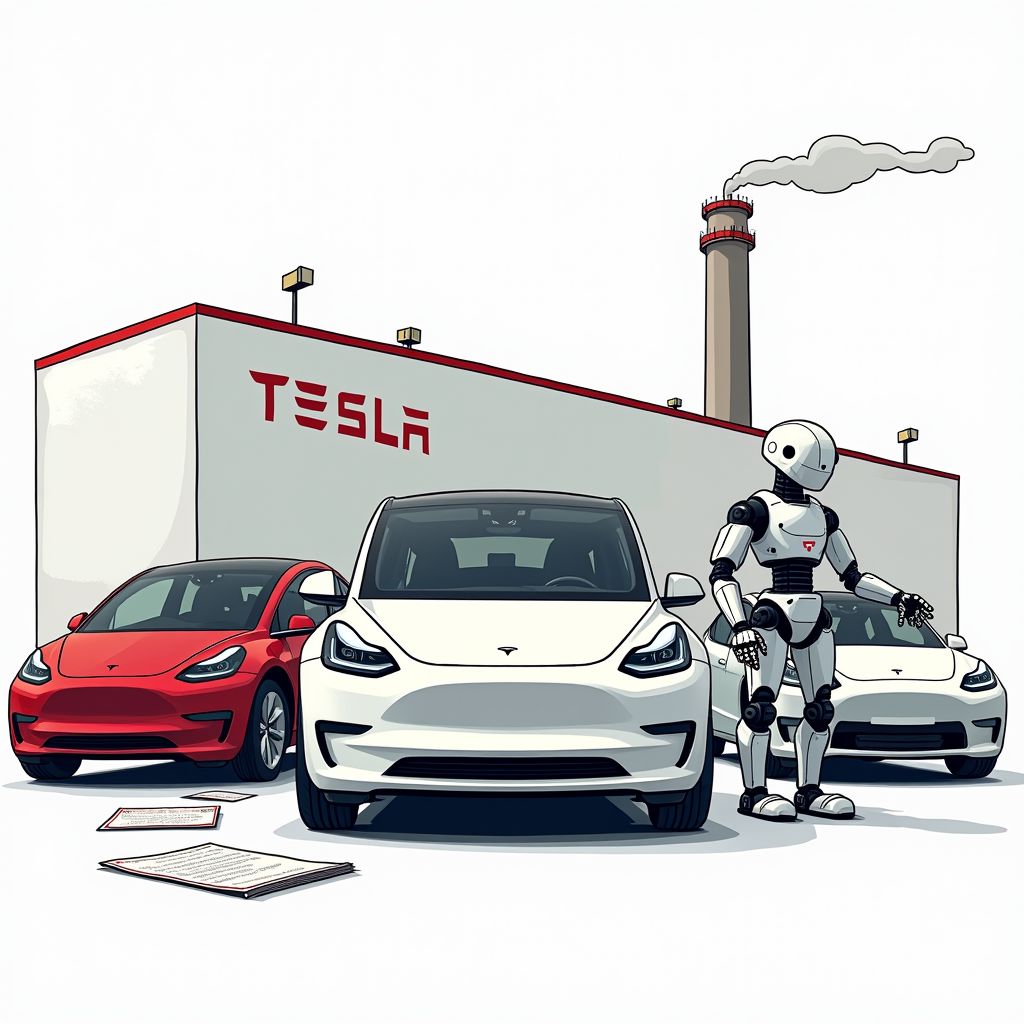
Marking a definitive pivot to autonomy, Tesla will cease Model S and X production in Q2 2026, repurposing the factory to manufacture one million Optimus robots annually.
A Strategic Pivot to Robotics
In a decisive move announced during the company’s fourth-quarter earnings call on Wednesday, CEO Elon Musk confirmed that Tesla (TSLA) will conclude production of the Model S and Model X in the second quarter of 2026 [1][2]. Musk described the discontinuation of these pioneering vehicles as an “honorable discharge,” signaling a major operational shift for the automaker [1]. The Fremont, California factory, which has produced the Model S since 2012, will undergo a comprehensive conversion to manufacture Optimus humanoid robots, with a long-term production target of one million units per year [1][2]. This transition underscores Tesla’s aggressive reorientation toward autonomy and artificial intelligence, moving away from the luxury electric vehicles that originally defined its brand [2].
The End of the Legacy Fleet
While the Model S and Model X were critical in establishing Tesla as a dominant force in the electric vehicle market, their contribution to the company’s sales volume has waned significantly in the face of mass-market alternatives [3]. In 2025, the disparity between Tesla’s legacy models and its newer offerings was stark. According to delivery data, the Model 3 and Model Y accounted for approximately 96.892% of the company’s 1,636,129 total vehicle deliveries for the year [4]. Conversely, deliveries of the company’s other models dwindled, with one report noting a 36% year-over-year decline in non-primary vehicle deliveries compared to 2024 [2].
Financial Realities and Market Reaction
The announcement arrived amidst a complex financial backdrop for Tesla. In its fourth-quarter results, the company reported revenue of $24.901 billion, surpassing Wall Street expectations, and posted non-GAAP earnings of $0.50 per share [5]. However, the company also acknowledged its first annual revenue decline on record for the full year of 2025 [1][5]. Profitability metrics also faced headwinds, with GAAP profits falling 61% and non-GAAP profits decreasing by 16% compared to the same period in the previous year [5]. Despite these mixed indicators, investors reacted positively to the company’s forward-looking strategy, driving the stock up more than 3% in after-hours trading [6].
A Robotic Future in Fremont
The repurposing of the Fremont facility represents a complete overhaul of the site’s capabilities. Musk noted that the Optimus production line requires a “completely new supply chain,” utilizing virtually no components from the existing automotive supply network [1]. While automation often raises concerns regarding employment, Tesla plans to increase the headcount at the Fremont factory to support this new manufacturing directive rather than implementing layoffs [1][6]. The company intends to unveil the third generation of the Optimus robot later this quarter, which Musk described as the “first design meant for mass production” [1].