How Satellite Angles Are Transforming Soybean Harvest Forecasts
Washington, Monday, 2 November 2026.
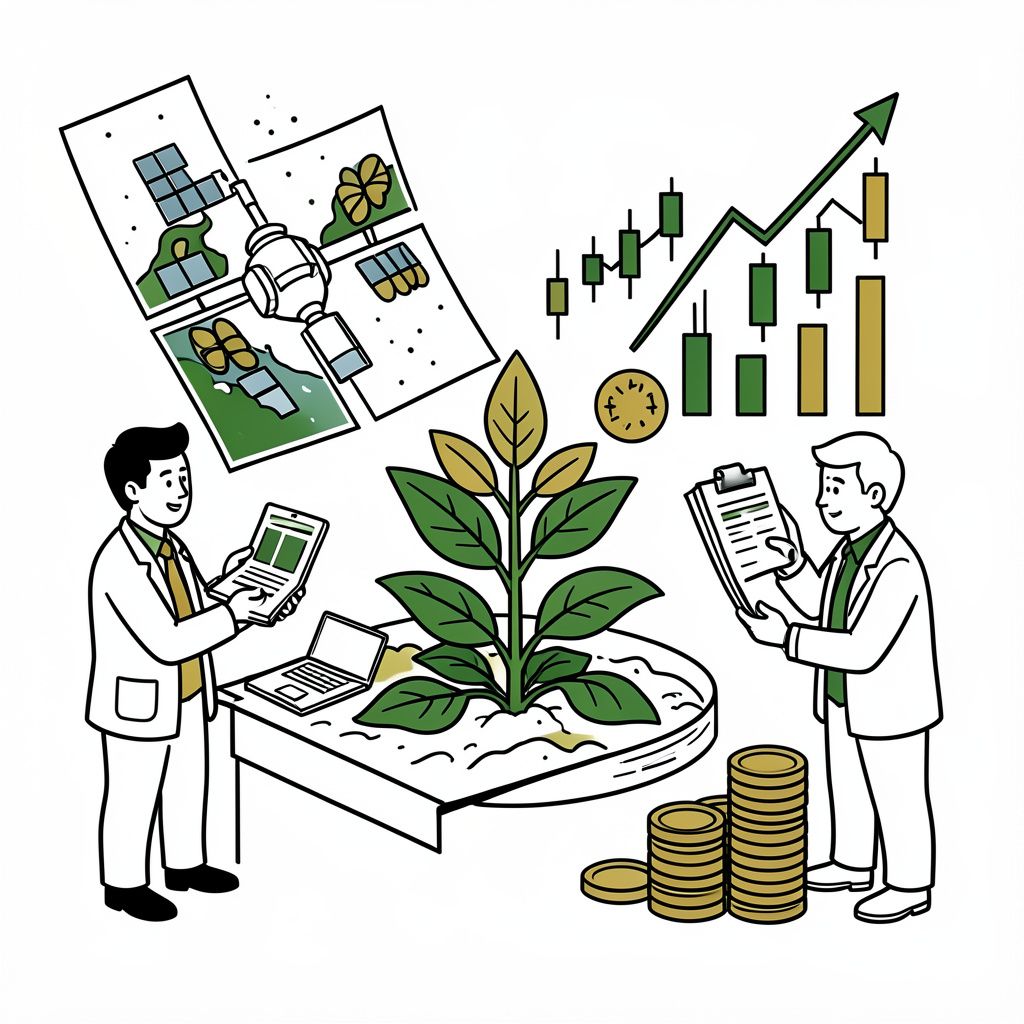
Researchers have transformed distorted satellite angles—long dismissed as useless background noise—into vital crop data, significantly boosting soybean yield forecast accuracy across hundreds of agricultural counties.
A Breakthrough in Agricultural Forecasting: M-Net’s Origins and Methodology
On August 3, 2026, researchers from China Agricultural University, Pacific Northwest National Laboratory, KU Leuven, and Southwest Jiaotong University published a physics-guided deep learning framework named M-Net in the Journal of Remote Sensing [1]. The model leverages multi-angular satellite viewing angles—traditionally dismissed as observational noise—to extract structural signals about soybean canopy health and crop density [1][2]. By integrating satellite imagery, solar-induced chlorophyll fluorescence (SIF), and bidirectional reflectance distribution function (BRDF)-derived features, M-Net achieves superior yield predictions compared to single-angle observations [1]. The study evaluated 613 U.S. soybean-growing counties across 29 states using data from 2019 to 2023, with 2019–2022 data used for training and validation and 2023 data reserved for independent testing [1][2].
Quantifying the Impact: Accuracy Gains and Market Implications
The M-Net model demonstrated a marked improvement in soybean yield forecasting accuracy, achieving an R² value of 0.69 in feature-ablation experiments, outperforming multi-angular MODIS structural information (R² = 0.64) and fixed-angle Sentinel-2 observations (R² = 0.56) [1]. The model’s mean root mean square error (RMSE) for regional soybean yield estimation was approximately 0.49 Mg/ha, with prediction error reducing from 0.44 Mg/ha across all counties to 0.30 Mg/ha in 104 counties with over 30% soybean cover [1]. These gains translate to more reliable early harvest volume estimates, which can mitigate price volatility in global grain markets and enhance risk assessment for agricultural portfolios [1][2]. TROPOMI satellite observations recorded median solar and viewing zenith angles of 23.9° and 44.0°, respectively, with viewing angles reaching 60° at the 95th percentile, underscoring the variability in data sources that M-Net successfully harnesses [1].
Policy and Industry Response: USDA-NASA Collaboration
In a move to institutionalize these advancements, USDA Secretary Brooke Rollins and NASA Administrator Jared Isaacman announced a Memorandum of Understanding on October 29, 2026, to integrate Earth observation, geospatial analytics, and statistical methodologies for agricultural statistics [2]. The collaboration aims to enhance satellite crop monitoring, joint technical reviews of crop production algorithms, and yield model development [2]. NASA’s advanced sensing and analytical capabilities, combined with USDA’s agricultural expertise, are expected to strengthen crop condition assessments and disaster impact evaluations [2]. Isaacman emphasized the initiative’s potential to deliver meaningful outcomes for American farmers and ranchers while advancing scientific research and economic competitiveness [2].
Broader Market Dynamics: Brazil’s Election and Soybean Market Reactions
While M-Net’s innovations promise to stabilize agricultural markets through improved forecasting, recent market volatility highlights the sensitivity of soybean prices to geopolitical events. Analysts noted an overreaction in soybean markets following Brazil’s election results, with funds trading on headlines sparking temporary downturns [3]. Concerns about Brazil’s currency fluctuations, potential El Niño-related weather threats, and downside risks for U.S. soybeans prompted a reevaluation of market positions [3]. Despite these short-term fluctuations, the long-term structural improvements in yield forecasting—such as those enabled by M-Net—could provide a stabilizing force, reducing speculative trading based on incomplete or noisy data [1][2].
Future Directions and Economic Outlook
Looking ahead, the researchers plan to validate M-Net beyond the U.S. soybean belt, extending its application to other crops, climates, and management systems [1]. The USDA-NASA collaboration is poised to expand the model’s utility by incorporating additional data streams and refining yield prediction algorithms [2]. For agricultural markets, this could mean more accurate supply chain planning, reduced price volatility, and better-informed trading strategies. As climate change and population growth increase pressure on global food systems, tools like M-Net offer a pathway to more resilient and data-driven agricultural economies [1][2].