Why Washington's New Strategy to Support Government Debt Is Alarming Experts
Washington, Monday, 21 September 2026.
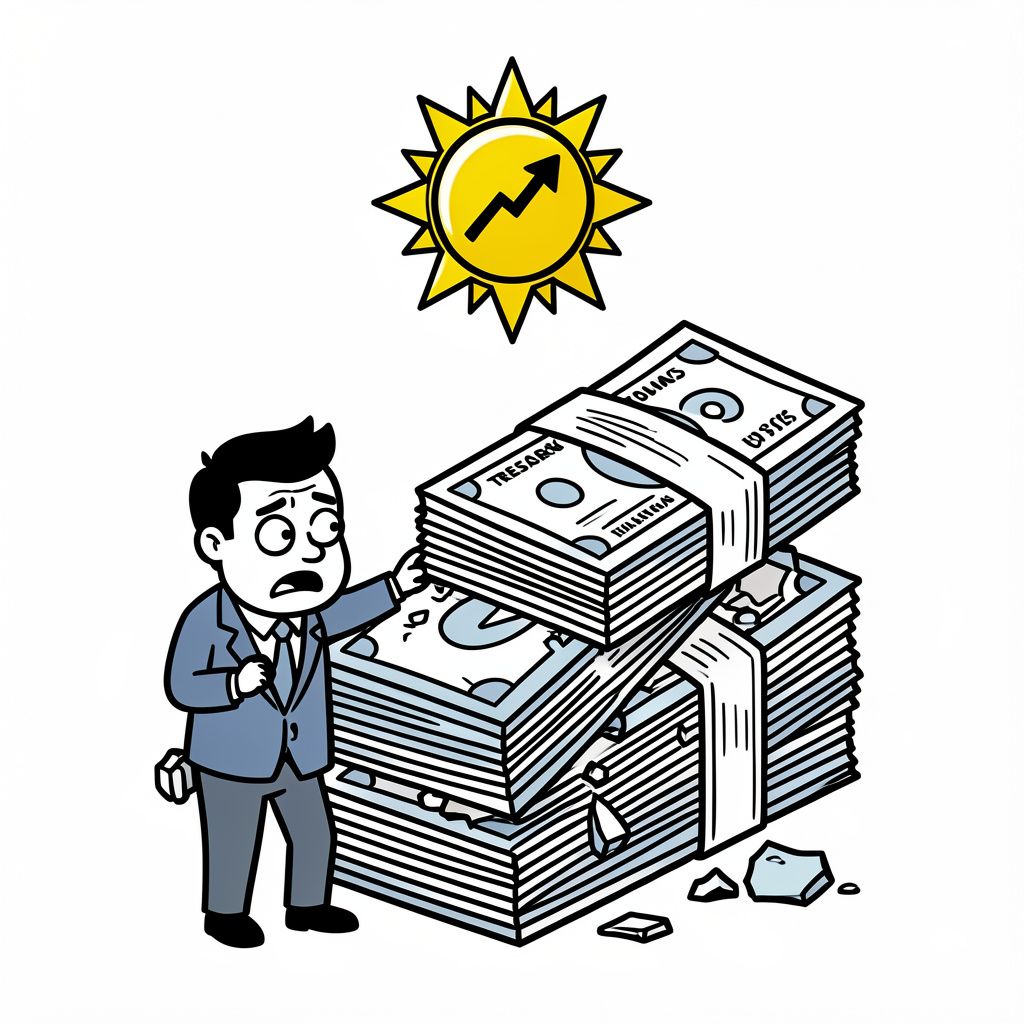
Doubling Treasury bond buybacks to $4 billion reduced yields and sparked a historic $100 gold surge, but experts warn these interventions signal dangerous weakness in American debt markets.
Market Intervention Sparks Debate
Prominent economists have raised concerns regarding U.S. Treasury Secretary Scott Bessent’s proposed bond buyback strategy, warning that government market interventions could signal fragility rather than strength to global investors [1]. As national debt levels approach $40 trillion, analysts caution that extraordinary Treasury measures risk undermining investor confidence by implying sovereign debt markets require artificial support [1]. This debate intensified on Monday, 21 September 2026, as Wall Street reacted to the implementation of policies designed to manage liquidity during a period of heightened economic uncertainty [3].
Market Intervention Sparks Debate
The U.S. Treasury increased the size of its regular debt repurchasing operations from $2 billion to $4 billion per action, a policy originally introduced in May 2024 but expanded significantly in September 2026 [1]. Treasury Secretary Scott Bessent initiated this bond buyback scheme to manage liquidity and market functioning, though critics argue it mirrors strategies typical of developing economies [1]. On approximately 13 September 2026, Secretary Bessent defended his bond scheme against critics during a podcast appearance, stating that if Bloomberg Terminal users were unhappy, “that’s too bad” [1].
Immediate Market Reactions
Following the announcement of the buyback expansion, the 30-year Treasury yield dropped approximately 10 basis points from a recent high, representing a calculated decrease of -2.26 percent [5]. Spot gold increased by $100 in under 45 minutes, reaching over $4,460 per troy ounce, while silver rose above $65 per troy ounce [5]. The VanEck Gold Miners ETF experienced its largest single-day percentage gain since 2022, indicating a strong investor pivot toward safe-haven assets amidst the treasury operations [5].
Immediate Market Reactions
Prior to these interventions, on 12 August 2026, the 30-year Treasury bond yield had reached 5.31%, the highest rate since 2007 [5]. The U.S. Treasury stated the objective of the buyback expansion is to bolster market depth and address emerging illiquidity across benchmark long-dated issues [5]. However, some analysts note that while communication signals commitment, it risks implying the market has already lost the confidence of investors [1].
Sovereign Confidence Risks
Columbia Business School Professor Yiming Ma noted that such interventions are reminiscent of emerging market economies whose funding conditions are much more uncertain [1]. Christina Parajon Skinner, a Wharton Professor and former Treasury official, countered that from the outside looking in, the move looks like liquidity management rather than a failure [1]. She emphasized that the Treasury has never been a passive buyer of government debt and knows there can be bumps in the long run that disrupt market functioning [1].
Sovereign Confidence Risks
Thierry Wizman, a Macquarie global FX and rates strategist, observed that Secretary Bessent was speaking about liquidity rather than a yield target or deficit [1]. Investors are waiting until the end of the year to see if everyone got financed and until next year to see if productivity gains from AI will help grow and disinflate the economy [1]. This waiting period creates a window of vulnerability where communication strategies are critically tested [1].
Broader Economic Pressures
The 30-year U.S. Treasury bond yield has reached a 20-year high of 5.3%, and the 10-year Treasury bond yield surpassed 5% as of 14 September 2026 [6]. The U.S. faces an annual budget deficit exceeding $2 trillion, with foreign investors holding approximately $8.5 trillion, representing 30% of total outstanding debt [6]. The Norwegian sovereign wealth fund announced plans on 4 September 2026 to reduce its U.S. Treasury bond holdings by $80 billion, representing a nearly 40% cut [6].
Broader Economic Pressures
Markets expect new Federal Reserve Chair Kevin Warsh to hike interest rates during the Federal Open Market Committee meeting occurring the week of 20 September 2026 to address inflationary pressures [6]. Treasury Secretary Bessent also spoke with CNBC on 21 September 2026 about AI safety concerns and talks with his Chinese counterpart, He Lifeng [4]. Global economic stability remains threatened by unsustainable public finances and geopolitical conflicts, requiring careful navigation by policymakers [6].