Trump Signals Potential Friendly Takeover of Cuba Amid Economic Collapse
Washington D.C., Saturday, 28 February 2026.
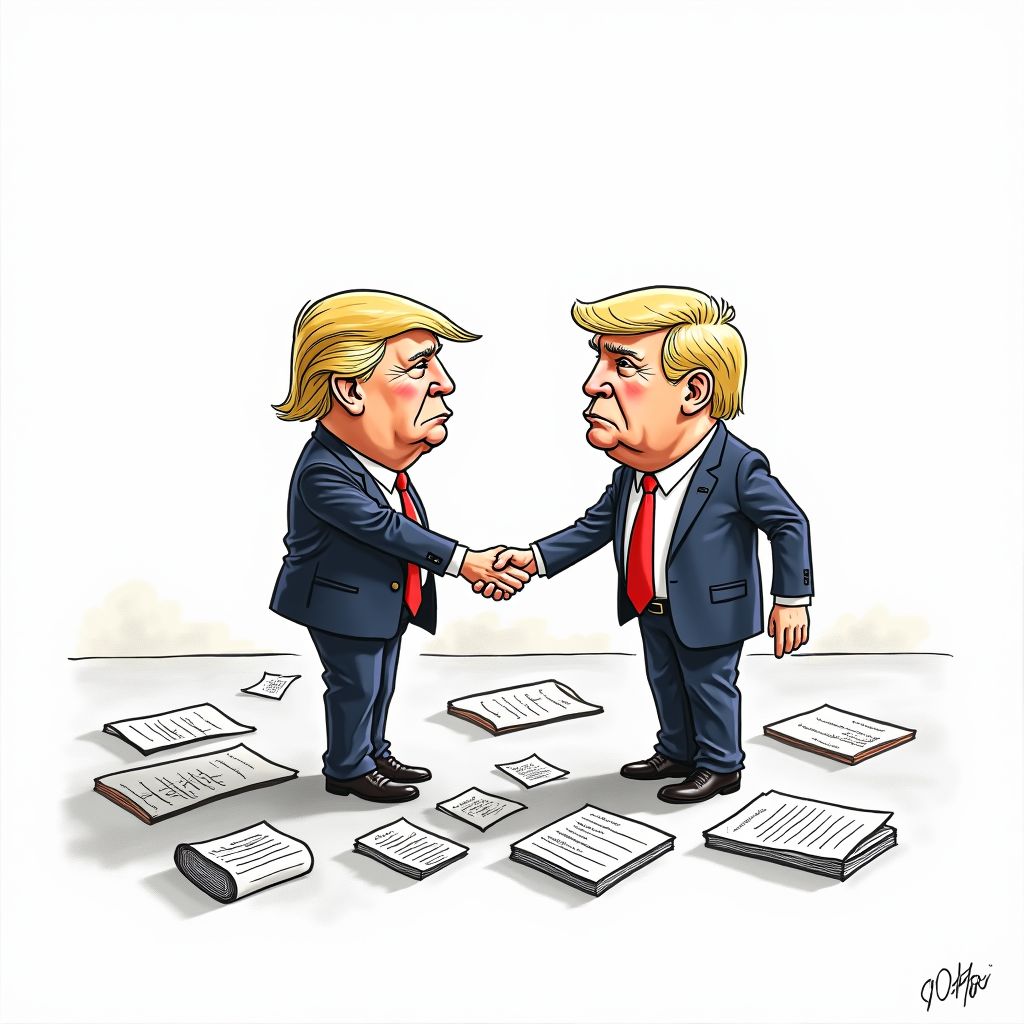
President Trump proposes a “friendly takeover” of Cuba, claiming the cash-strapped government is already negotiating with Washington as a severe fuel blockade pushes the island toward collapse.
Insolvency Driving Negotiations
Speaking to reporters at the White House on Friday, February 27, 2026, President Trump characterized the Cuban government as financially insolvent, stating, “They have no money. They have no anything right now” [2][5]. This economic assessment underpins his suggestion of a “friendly takeover,” a move he claims could result from ongoing discussions between Washington and Havana [4][8]. While the President did not elaborate on the specific mechanics of such a takeover, he emphasized that the initiative would be conducted on amicable terms, noting that the Cuban leadership is currently “in big trouble” and actively communicating with the U.S. administration [4][7].
High-Level Diplomatic Channels
Secretary of State Marco Rubio is reportedly spearheading these sensitive negotiations [1][6]. In a significant development reported on Thursday, U.S. officials engaged with Raul Guillermo Rodriguez Castro, the grandson of former President Raúl Castro, on the sidelines of a Caribbean conference [5][6]. Rodriguez Castro is a pivotal figure in Cuba’s financial structure, as he oversees GAESA, the military conglomerate that dominates the island’s economy [5]. Reports indicate that as of 2024, GAESA controlled approximately $18 billion in assets, making the cooperation of the Cuban military elite essential for any economic transition [5].
The Economics of the Fuel Blockade
The administration’s diplomatic overtures are occurring against the backdrop of an intensified “fuel blockade” formalized through executive orders in late January 2026 [5]. Following the U.S.-backed ouster of Venezuelan President Nicolás Maduro—a key Cuban ally—earlier in the year, the White House announced on January 11 that Venezuelan oil flows to Cuba would cease [1]. To enforce this isolation, the administration issued an order on January 29 threatening tariffs on any nation supplying energy to the island [1]. Consequently, the Cuban government reportedly has only six to seven weeks of fuel reserves remaining before facing a total blackout [5].
Humanitarian and Security Flashpoints
The economic strangulation has led to severe shortages, with the United Nations warning on Wednesday that essential services, including healthcare and food distribution, are becoming increasingly fragile [5]. Amid this instability, tensions flared violently on Wednesday, February 25, when a Florida-registered speedboat exchanged fire with Cuban border troops [3][7]. The clash resulted in four deaths and multiple injuries; the U.S. State Department confirmed on Thursday that American citizens were involved in the confrontation [3]. While Havana labeled the event a “terrorist attack,” President Trump’s rhetoric the following day focused on the regime’s inability to sustain itself rather than military retaliation [3][4].
Strategic Objectives
Analysts suggest the “friendly takeover” terminology may point toward economic absorption rather than territorial annexation. Experts note that the administration’s objective likely prioritizes securing access for U.S. companies and ensuring the repatriation of profits, mirroring strategies applied in Venezuela [6]. As of Saturday, February 28, President Trump asserts that Cuban exiles are “very happy” with the pressure campaign, marking a high-stakes pivot in U.S. foreign policy that balances aggressive economic sanctions with direct engagement of the island’s military-industrial complex [3][6].
Sources
- www.aljazeera.com
- www.pbs.org
- www.politico.com
- www.nbcnews.com
- thehill.com
- www.cbc.ca
- www.nbcmiami.com
- www.livenowfox.com