Israel Launches Unprecedented Airstrikes on Beirut Despite US-Iran Ceasefire
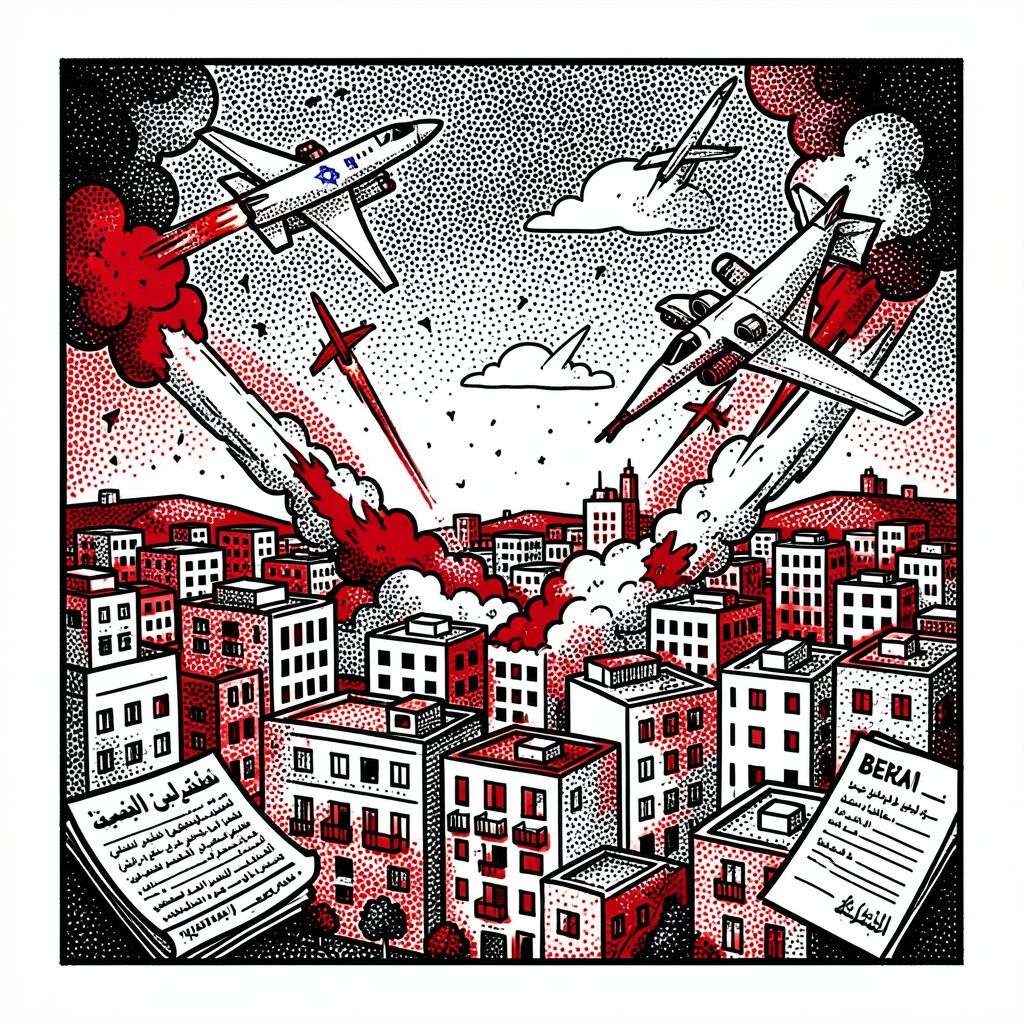
Beirut, Wednesday, 8 April 2026.
Despite a new US-Iran ceasefire prompting Hezbollah to pause operations, Israel launched its heaviest airstrikes on Beirut, claiming the diplomatic truce strictly excludes Lebanon.
A Fractured Ceasefire and Immediate Escalation
The diplomatic landscape of the Middle East fractured sharply on Tuesday, April 7, 2026, and into Wednesday, April 8, following the announcement of a two-week ceasefire between the United States and Iran [2][3][4]. While the agreement was intended to de-escalate a regional crisis that ignited on March 2, 2026, the Israeli government swiftly clarified that the truce did not extend to its operations in Lebanon [1][3][6]. Israeli Prime Minister Benjamin Netanyahu’s office emphasized support for the suspension of strikes against Iran but insisted the Lebanese theater remained active [4][6]. This aggressive posture was reportedly bolstered by a green light from U.S. President Donald Trump, who indicated Lebanon was excluded from the ceasefire parameters [8] [alert! ‘The claim of a direct green light from the U.S. President is sourced solely from Israeli media and lacks corroboration from the other provided international outlets’].
Humanitarian Toll and Urban Devastation
The human cost of the sudden escalation has been severe. The Lebanese Ministry of Health reported that the strikes on April 7 and 8 resulted in at least 112 fatalities and 837 injuries across the country [3][4]. To put the sheer lethality of this single wave of attacks into perspective, these 112 deaths account for approximately 7.32 percent of the more than 1,530 total fatalities recorded in Lebanon since the war broke out in early March [1][3]. The bombardment targeted not only traditional Hezbollah strongholds in the Bekaa Valley, the Hermel district, and the southern suburbs of Beirut known as Dahiyeh, but also central and coastal neighborhoods of the capital that had previously been spared [1][4][6].
Geopolitical Fallout and Market Tremors
The strategic decoupling of the Iranian and Lebanese fronts by Israel carries profound geopolitical and economic ramifications. Israeli Defense Minister Yisrael Katz articulated that the military’s objective is to separate the war with Iran from the conflict in Lebanon to permanently alter the security reality and remove threats facing northern Israel [4]. However, this strategy threatens the fragile U.S.-Iran truce. Reports indicate that Tehran is actively considering withdrawing from the ceasefire agreement in response to the massive bombardment of its Lebanese ally [4]. International consensus remains equally fractured; Pakistan’s Prime Minister Shehbaz Sharif publicly asserted that the diplomatic agreement mandates an immediate ceasefire on all fronts, including Lebanon [4].
The Path Forward Amidst Ongoing Hostilities
As diplomatic channels struggle to contain the fallout, the humanitarian crisis inside Lebanon continues to compound at an alarming rate. Since the outbreak of hostilities on March 2, 2026, Israeli evacuation orders have encompassed approximately 15 percent of Lebanese territory, displacing over 1.2 million citizens [3]. Haneed Sayed, Lebanon’s Minister of Social Affairs, warned that the strikes on central Beirut represent a “very dangerous turning point,” noting that half of the internally displaced persons taking shelter are located in the newly targeted areas [1]. Meanwhile, the Lebanese Armed Forces have explicitly warned citizens against returning to southern villages due to the persistent threat of unexploded ordnance and ongoing ground incursions [6].
Sources
- www.pbs.org
- www.washingtonpost.com
- www.reuters.com
- www.aljazeera.net
- arabic.cnn.com
- www.skynewsarabia.com
- www.instagram.com
- www.maariv.co.il