AI Investment Boom Diverts Critical Resources, Triggering Economy-Wide Shortages
San Francisco, Saturday, 7 February 2026.
A $700 billion AI spending spree is monopolizing essential resources, forcing data centers to deploy mobile gas turbines and triggering shortages in everything from electricians to memory chips.
The Crowding Out Effect: A $700 Billion Capital Vacuum
As of February 7, 2026, the global economy is witnessing a historic misallocation of resources driven by an unprecedented surge in artificial intelligence investment. Major technology companies are currently deploying hundreds of billions of dollars into AI initiatives, a spending spree totaling approximately $700 billion that is actively diverting critical resources from other economic sectors [1]. This phenomenon, known economically as “crowding out,” has moved beyond theoretical models and is now causing tangible shortages in physical infrastructure and labor. The intensity of this capital allocation is such that essential construction projects are being placed on hold, and finding skilled tradespeople, particularly electricians, has become increasingly difficult for non-tech businesses [1]. The scale of this investment is reshaping the American economy, creating deficits in fundamental materials like concrete, steel, and copper wiring, while testing the absolute limits of the nation’s physical infrastructure [8].
The Energy Crisis: Mobile Turbines and Private Grids
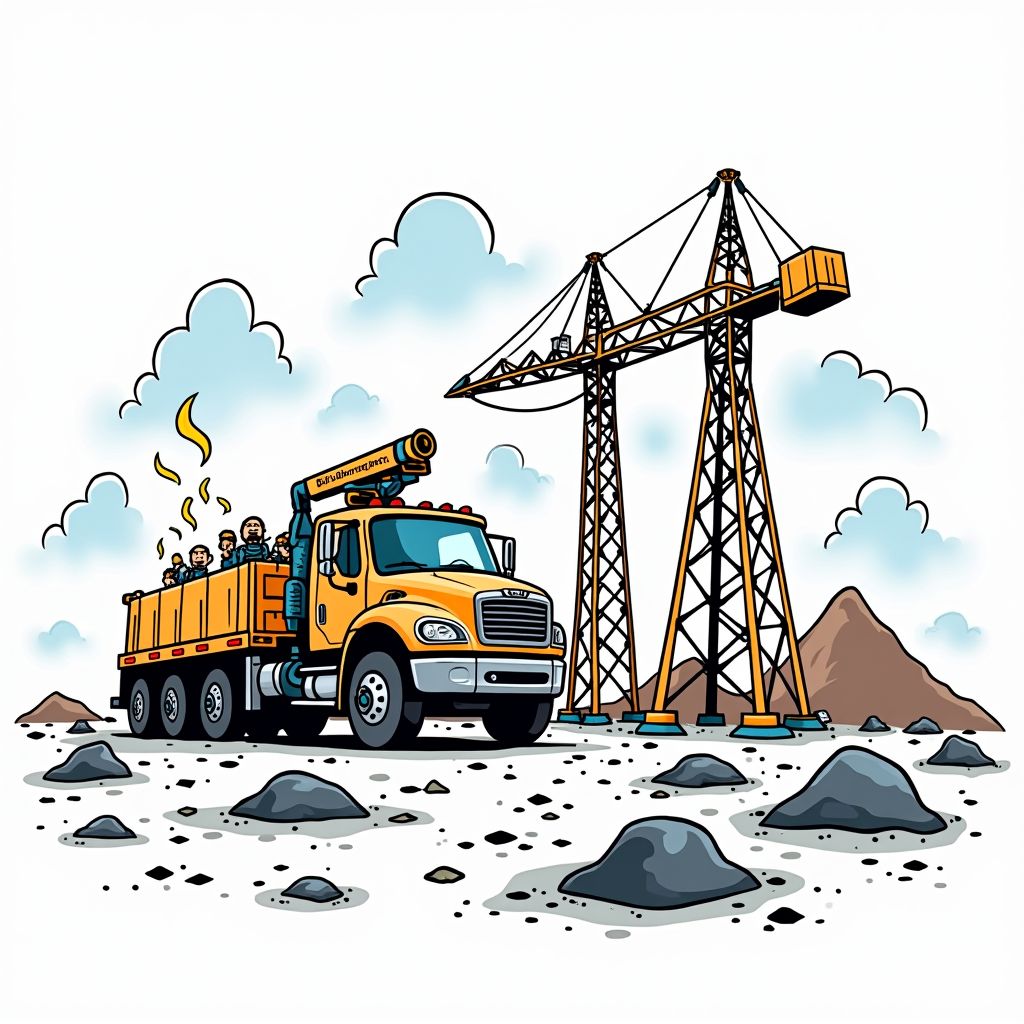
The most acute physical manifestation of this resource strain is occurring in the energy sector. Facing a backlog of standard utility connections and a shortage of natural gas turbines, data center developers have resorted to aggressive workarounds to secure power [3]. A recent analysis identified 46 data centers that plan to bypass utilities entirely by building their own “behind-the-meter” power generation, with a combined capacity of roughly 56 gigawatts—enough energy to power five Manhattan-sized cities [3]. In a move that highlights the desperation for immediate energy, developers are utilizing mobile gas generators strapped to semitrucks and repurposing turbines originally designed for aircraft or cruise ships [3]. This shift toward “Bring Your Own Generation” (BYOG) is largely fueled by natural gas, with 90% of these projects announced in the last year alone [3]. While renewable capacity is discussed, most significant renewable projects are not expected to come online until 2028 or later, forcing the industry to rely on fossil fuels to meet immediate demand [3].
The Silicon Squeeze: Consumer Electronics Pay the Price
Beyond energy, the insatiable demand for AI-grade computing is cannibalizing the supply of components needed for everyday consumer electronics. On February 4, 2026, Qualcomm shares fell 8% after the company issued a warning that memory shortages were hitting the entire industry [4]. Qualcomm CEO Cristiano Amon explicitly stated that the weakness was “100% related to memory,” as vendors have dedicated their capacity to data centers rather than consumer devices [4]. This prioritization of high-margin AI products, specifically High-Bandwidth Memory (HBM), is tightening the supply of standard DRAM used in smartphones and PCs [2][7]. Consequently, the mid-range smartphone segment, typically priced between $400 and $600, faces a severe squeeze, with analysts predicting price hikes and fewer compelling devices reaching the market [7]. Even major gaming hardware releases, such as the Nintendo Switch 2, are facing production hurdles as chipmakers like Samsung and SK Hynix shift wafer capacity toward AI infrastructure [2][7].
Economic Viability and Future Outlook
The financial sustainability of this infrastructure buildout remains a subject of intense debate among market analysts. To generate a reasonable investment return on this massive capital expenditure, the technology industry would need to collect an estimated extra $650 billion in annual revenue [5]. To put this figure in perspective, achieving a 10% return on these AI investments through 2030 would require revenue generation equivalent to charging every current iPhone user approximately $34.72 per month [5]. Despite these daunting financial requirements, the spending shows little sign of immediate abatement. Tech giants are planning to spend over $200 billion annually on AI-related capital expenditures, a rate that suggests supply chain constraints—particularly for memory chips—could persist well into 2027 [2][8]. While cloud and carrier capital spending is expected to expand through 2027, a deceleration in growth is projected after 2026 as the market transitions from rapid build-out to optimization [6].
Sources
- www.washingtonpost.com
- www.scientificamerican.com
- nam.org
- www.cnbc.com
- news.ycombinator.com
- drrobertcastellano.substack.com
- dig.watch
- www.webpronews.com