White House Proposes Sweeping Financial Reforms for College Athletics
Washington, Sunday, 10 May 2026.
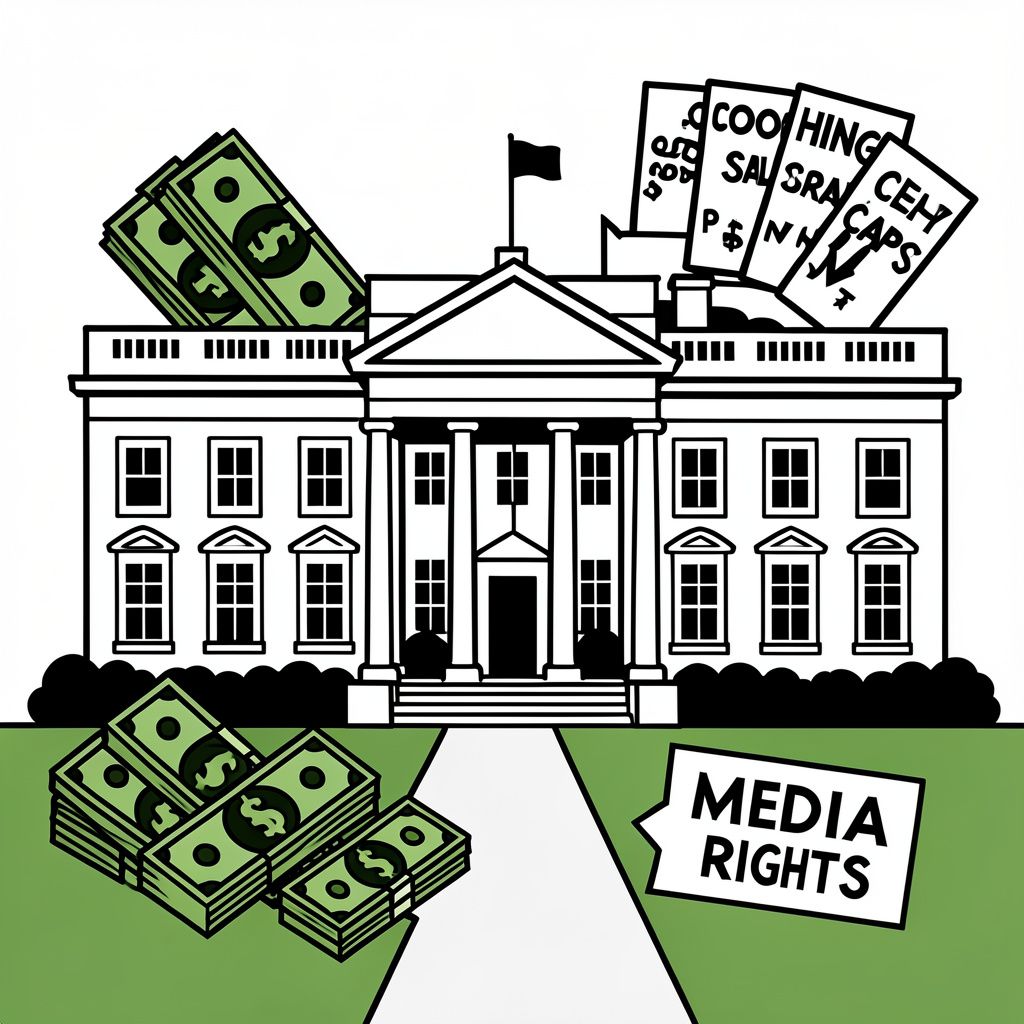
To stabilize a multi-billion-dollar industry, a new federal proposal aims to cap soaring coaching salaries and pool media rights, potentially unlocking $7 billion in new broadcasting value.
A Regulatory Overhaul for an ‘Arms Race’
On April 7, 2026, President Donald Trump issued an executive order characterizing the current state of collegiate athletics as an ‘out-of-control financial arms race’ [3]. Following a March 2026 White House summit where the President warned that the entire educational system was at risk, the administration has intensified its focus on the issue [2][3]. By early May 2026, a draft document from the President’s College Sports Reform Committee—vice-chaired by Randy Levine and Ron DeSantis—began circulating with concrete legislative proposals [1].
Reining in Costs and Restructuring Compensation
The first phase of the proposed reform specifically targets the spiraling operational costs within athletic departments, most notably coaching salaries [1]. The draft document highlights the necessity of salary caps for coaches and administrators, pointing out that at least 13 major college football coaches are projected to earn a minimum of $10 million in the upcoming season [1].
The Multibillion-Dollar Media Rights Puzzle
The second phase of the committee’s framework introduces a highly contentious strategy: the pooling of media rights [1]. Under this model, if 75 or more universities combine their broadcasting rights upon the expiration of their current contracts, they would be granted antitrust protection [1]. This consolidation could potentially inject an additional $7 billion in value into the collegiate broadcasting market [2].
The Escalating NIL Economy and Impending Deadlines
The urgency for federal intervention is underscored by the explosive growth of the NIL economy. Between March 1, 2026, and April 30, 2026, the College Sports Commission (CSC) approved over 5,500 NIL deals valued at $75.85 million [5]. In 2026 alone, total approved deals have reached $115.14 million, maintaining an average of $28.79 million per month [5]. Since the inception of the CSC and its NIL Go platform, $242.35 million has been disbursed across 26,556 transactions [5]. Amid this volume, administrative efficiency has slightly declined, with the pace of deal approval within seven days dropping from 70 percent to 66 percent, representing a relative decrease of -5.714 percent [5].