Proposed Federal Rule Threatens Food Assistance for Over Six Million Low-Income Americans
Washington, Wednesday, 11 November 2026.
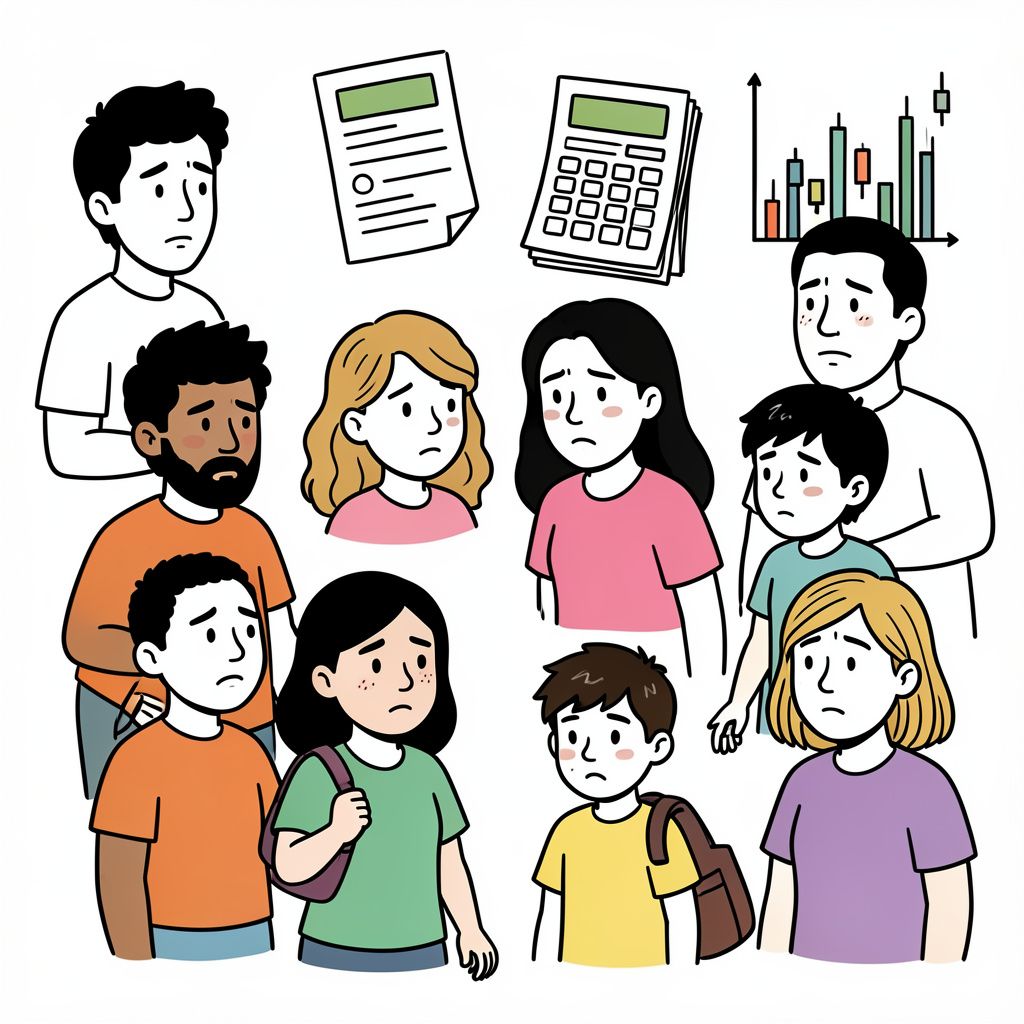
A newly proposed federal rule would eliminate food assistance for roughly 6.3 million Americans, inadvertently disqualifying 1.8 million children from free school lunch programs nationwide.
Trump Administration Unveils Controversial SNAP Cuts
On Tuesday, 10 November 2026, the Trump administration, through the U.S. Department of Agriculture (USDA), formally proposed a sweeping regulatory change to the Supplemental Nutrition Assistance Program (SNAP) that would strip food assistance from an estimated 6.3 million Americans [1][2][3]. The proposed rule, published in the Federal Register [4], targets the policy of broad-based categorical eligibility (BBCE), which currently allows states to automatically enroll households in SNAP if they qualify for other assistance programs such as Temporary Assistance for Needy Families (TANF) [5]. Under the new rule, eligibility would revert to stricter federal income thresholds, effectively disqualifying nearly 18% of current SNAP recipients [2][3][5].
Impact on Families and Children
The policy shift comes as SNAP enrollment has already declined by over 5.5 million people since July 2025, following earlier cuts enacted in the 2025 Republican reconciliation law [2][5][6]. The proposed changes would further reduce participation, with USDA estimates indicating that 1.8 million children would lose eligibility for free school lunch programs due to the loss of SNAP benefits [2][3]. Representative Angie Craig (D-MN), ranking member of the House Agriculture Committee, condemned the proposal as ‘heartless and cruel,’ emphasizing its disproportionate impact on the working poor—those holding two or three jobs but earning insufficient wages to meet basic needs [2][3][5].
Economic and Political Fallout
The proposed rule has ignited significant political backlash, with Democratic leaders in Congress signaling their intent to delay or roll back the cuts [2][6]. The USDA’s justification for the changes rests on the premise of ‘preserving benefits for the truly needy,’ a claim disputed by advocacy groups such as the Center on Budget and Policy Priorities (CBPP), which argues that BBCE has historically enabled working families, seniors, and people with disabilities to qualify for SNAP while building modest savings [3][6]. The CBPP further notes that the proposed rule would impose an additional $15 billion in annual cuts to SNAP, totaling $51 billion over the 2028-2031 period [3].
Public Comment Period and Future Implications
The public now has 30 days to submit comments on the proposed rule, with a final decision expected by early December 2026 [1][4][5]. If implemented, the rule would take full effect in fiscal year 2029, aligning with broader Trump administration efforts to overhaul federal safety-net programs [7]. Critics warn that the changes could exacerbate food insecurity in low-income communities, particularly in regions heavily reliant on SNAP for economic stability [3][6].
Sources
- abc13.com
- www.nytimes.com
- www.cnbc.com
- www.federalregister.gov
- thehill.com
- www.cbpp.org
- www.politico.com
- www.facebook.com
- www.facebook.com