How a Clean Technology Venture Plans to Transform Brick Making in Nepal
Kathmandu, Sunday, 15 November 2026.
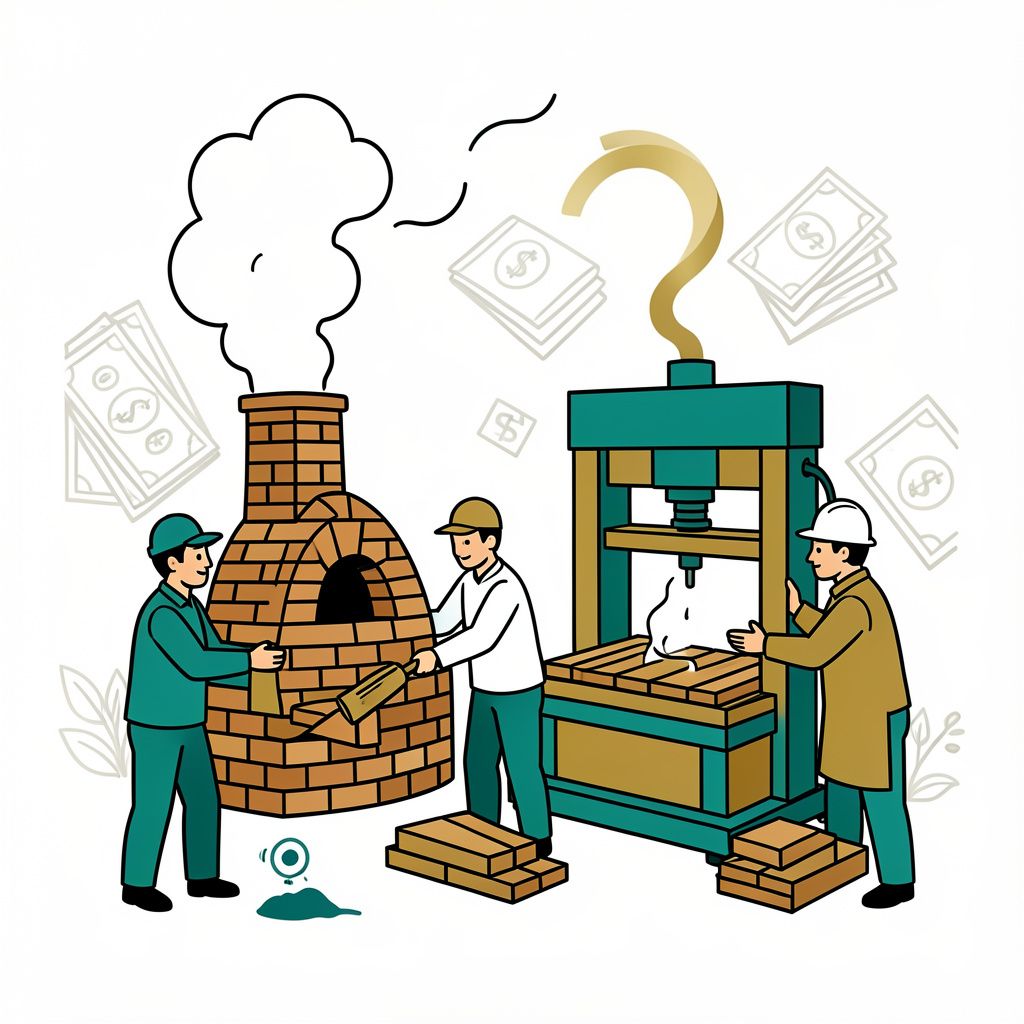
Nepal launched a $60 million initiative to replace polluting coal kilns across 300 sites, targeting the annual production of 3 billion nonfired bricks to eliminate 1.5 million metric tons of emissions.
A Landmark Carbon Financing Initiative for Nepal’s Brick Industry
On November 15, 2026, Good Bricks, in partnership with InnoCSR and Hulas Eco Bricks, launched a $60 million carbon financing initiative to modernize Nepal’s brick manufacturing sector. The program aims to transform 300 production sites by 2030, replacing high-emission coal-fired kilns with sustainable, kiln-free brick production technologies [1][4][5]. This initiative is part of a broader effort to decarbonize heavy industry in South Asia, leveraging structured voluntary carbon market mechanisms to fund large-scale industrial transitions [GPT].
Technology and Partnerships Driving the Transition
Central to the initiative is Good Bricks Technology, which utilizes locally available soil, cement, and InnoCSR’s proprietary Good Soil Stabilizer, compressed via hydraulic machinery to produce nonfired bricks [1][4]. The technology eliminates the need for coal-burning kilns, a major source of emissions in traditional brick manufacturing [5]. The project is led by Hulas Eco Bricks, with support from the Diwakar Golchha Organisation, which will oversee the nationwide expansion of production centers [1][4]. Sam Yoonsuk Lee, Founder and CEO of InnoCSR, emphasized the dual challenge of developing cleaner technology and making it commercially accessible to existing industries [1].
Environmental and Economic Impact Projections
By 2030, the initiative aims to establish 300 production centers across Nepal, each equipped with hydraulic brick-press machinery and market support valued at approximately $200,000 per site [1][4]. Once fully operational, the network is projected to produce 3 billion nonfired bricks annually, reducing CO₂ emissions by 1.5 million metric tons per year [1][4][5]. This aligns with Nepal’s broader climate goals and demonstrates the potential for carbon financing to drive industrial decarbonization in emerging markets [1][GPT].
Collaboration and Funding Behind the Initiative
The $60 million carbon financing for the project is provided by the Asian Development Bank, NH Investment and Securities, and Korea Western Power. This funding follows the Framework Agreement for Cooperation on Climate Change between South Korea and Nepal, signed to strengthen bilateral climate action [1]. The initiative was also highlighted at COP31, where it was recognized as a flagship project between Nepal and Korea, underscoring the importance of international partnerships in achieving sustainable industrial transitions [6].
Sources
- www.einpresswire.com
- www.facebook.com
- www.instagram.com
- www.linkedin.com
- www.facebook.com
- www.facebook.com