Why Experts Warn Global Inflation May Become a Permanent Economic Fixture
London, Sunday, 5 July 2026.
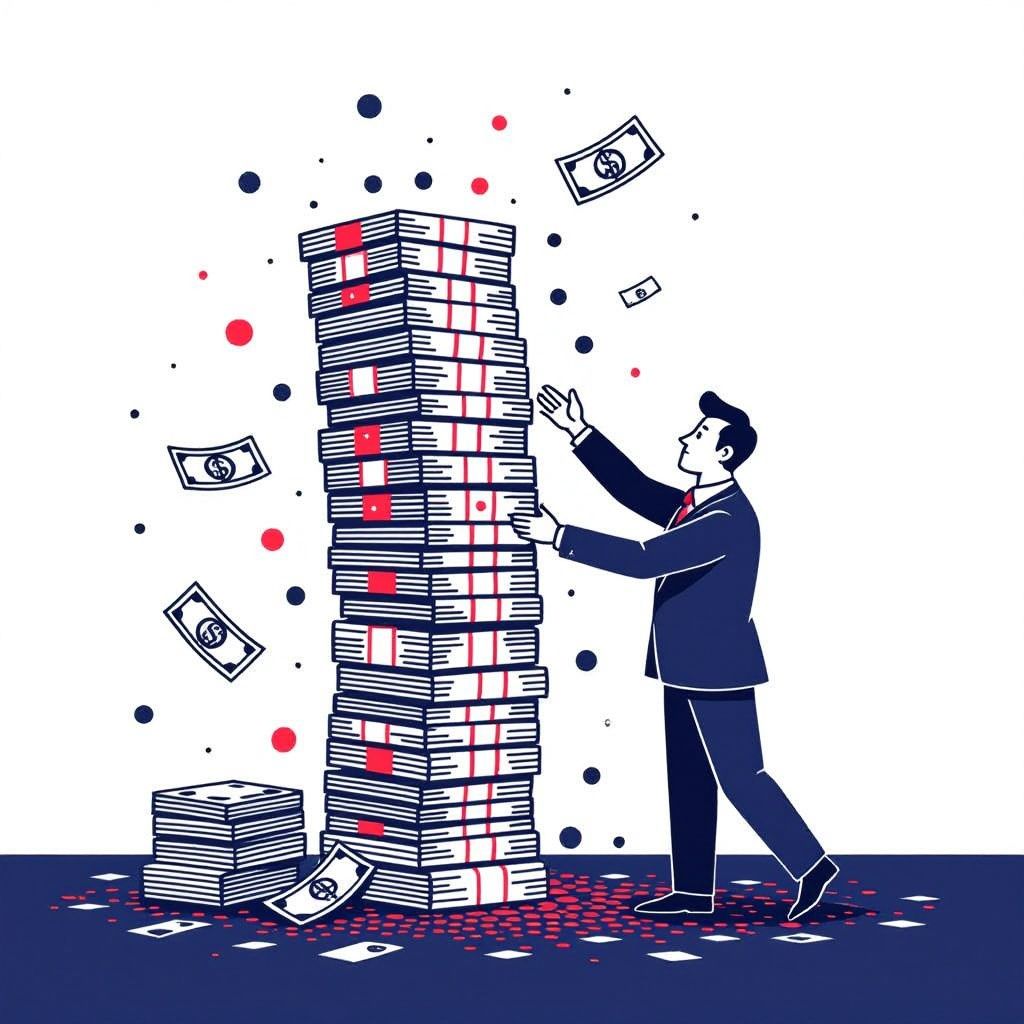
Analysts warn that skyrocketing national debt is forcing governments to embrace inflation as a deliberate, permanent policy tool rather than a temporary economic shock.
The Structural Transition of Global Inflation
The global macroeconomic landscape is undergoing a profound transformation as inflation transitions from a temporary geopolitical shock into a deeply embedded, policy-driven structural crisis [1]. While mainstream political discourse frequently attributes rising prices to short-term disruptions like the recent conflict in the Gulf, financial analysts Gerald Ashley and George Cooper of Equitile argue that the root cause is far more systemic [1]. They point out that modern monetary and fiscal frameworks are inherently designed to create inflation, serving as a highly convenient, non-legislated form of taxation that governments can deploy without passing new laws [1]. As structural policies in the United States, the United Kingdom, and other major economies continue to fuel this trend, corporate leaders must prepare for elevated input costs to become permanent fixtures of the economic environment [1].
The Sovereign Debt Rollover Trap
This permanent inflationary shift is closely linked to critically high sovereign debt levels, with the US debt-to-GDP ratio now exceeding 120%—a threshold historically associated with severe fiscal crises, such as the Greek debt emergency [1]. The fiscal strain is compounding rapidly as older, low-interest government debt matures and must be refinanced at significantly higher current market yields [1]. Reflecting this pressure, US 30-year bond yields have climbed above 5%, while UK 30-year bond yields are nearing 6% as of July 4, 2026 [1]. This debt rollover forces governments to reallocate a growing portion of tax revenues directly to bondholders, further straining national budgets and limiting fiscal flexibility [1].
The Sovereign Debt ‘Emerging Market’ Flip
According to Cooper, this unsustainable debt trajectory has effectively pushed major developed economies—including the US, the UK, Europe, and Japan—into what was traditionally considered the ‘emerging market’ zone [1]. In these markets, high bond yields no longer represent attractive investment opportunities but rather signal default risk, causing visible panic across global bond markets [1]. With inflation increasingly tolerated, and arguably targeted, as a deliberate government policy to erode the real value of public debt, traditional fixed-income investments are being dismissed by some analysts as ‘certificates of charitable giving’ [1]. If a projected ‘third wave’ of inflation materializes and peaks at 9% in the coming years, current government bond yields will guarantee real-term losses for investors [1].
Historical Waves and Domestic Policy Responses
The current economic trajectory draws stark parallels to the inflationary era of 1967 to 1982, which experienced three distinct inflationary waves, peaking at approximately 15% in the United States around 1980 [1]. Today’s inflationary pressures have been compounding over the last five to six years, driven by a combination of labor force reductions from emigration, the war in Ukraine, trade tariffs, and the reversal of immigration programs [1]. While some central banks, such as the Reserve Bank of Australia, have maintained a steady interest rate policy through early 2026 to manage domestic pressures—projecting average inflation of 2.5% in 2026 and planning two 25-basis-point cuts later in the year [3]—the broader global trend points to a structural shift that domestic monetary policy alone may struggle to contain.
Geopolitical Ceasefires vs. Long-Term Energy Realities
Although structural debt is the primary long-term driver, short-term geopolitical shocks have heavily influenced the path of inflation. The first half of 2026 was defined by the Middle East conflict, specifically the US-Iran war, which triggered an oil supply shock [1][2]. While immediate market pressures were temporarily cushioned by the release of strategic petroleum reserves and oil already in transit [1], a ceasefire agreement announced prior to July 1, 2026, between the US, Israel, and Iran has allowed tanker flows to resume through the Strait of Hormuz, easing forward energy prices [2]. Consequently, the European Central Bank signaled a potential halt to its policy rate hikes as of July 1, 2026 [2].
The Impending Agricultural Shock
However, analysts warn that as these temporary cushions fade, the real economic shock of the conflict will begin to manifest from July 2026 onward [1]. Beyond immediate energy costs, global agricultural output is expected to face severe disruptions due to shortages of oil-derived chemicals and fertilizers, with experts forecasting widespread food shortages by July 2027 [1]. This lag between geopolitical events and real-world supply chain impacts suggests that the inflation narrative is far from over, despite short-term market relief [1][2]. Even with long-term government investment plans, such as Japan’s deployment of over ¥370 trillion (€2 trillion) between July 1, 2026 and 2040 [2], the global economy remains highly vulnerable to supply-side vulnerabilities [5].
Tech Euphoria and the Physical Constraints of AI
Despite these macroeconomic headwinds, equity markets experienced a vertical climb in the weeks leading up to July 4, 2026, driven by intense market euphoria surrounding artificial intelligence (AI) and data center infrastructure [1]. This boom has created a stark divergence in equity performance. In the second quarter of 2026, tech hardware companies returned over 50%, whereas technology excluding hardware returned 8.9% and non-tech sectors returned just 5.9% [2]. This concentration of returns reflects massive capital expenditure, with hardware earnings expected to rise by 129% in Q2 2026 following a 100% surge in Q1 [2].
AI’s Immense Energy Barrier
Yet, investment experts warn that the rapid expansion of AI infrastructure faces a critical, physical barrier: energy capacity [1]. To fully realize the projected capabilities of these data centers, the industry requires approximately 1,000 times the amount of energy currently available [1]. As energy costs rise due to structural supply constraints, the underlying economics of data centers risk deteriorating significantly [1]. This mismatch highlights a growing concern that the AI boom may be forming a speculative bubble, where investors must balance technological optimism against intense competition, regulatory oversight, and physical resource limitations [5].
Shifting Capital and Private Asset Evolution
As public markets navigate these volatile dynamics, capital is increasingly shifting toward private markets, which are shaped by the long-term megatrends of digitization, demographics, and deglobalization [4]. A notable evolution is the rising involvement of wealth management clients, who are utilizing evergreen structures to access these markets [4]. In the United States alone, the capital managed within these structures grew from $250 billion at the end of 2022 to $450 billion by mid-2025 [4]—representing a massive growth of 80% in just under three years. This influx of capital is expected to continue throughout 2026, driving demand for highly specialized investment strategies rather than broad, generalist portfolios [4].
Political Polarization and Policy Deadlock
This economic instability is mirrored by deep shifts in the political landscape, which further complicate policy responses. In the United Kingdom, local elections held shortly before July 4, 2026, resulted in a significant surge in seats for the Reform Party [1]. Analysts suggest this political polarization is partly fueled by a broader decline in intellectual competition and policy ideas [1]. Citing the sociological analysis in The Death of the Left, experts argue that the modern political left has abandoned traditional economic and wealth inequality issues in favor of identity politics, leaving a vacuum that has stalled constructive debate and resulted in a ‘race to the bottom’ for policy solutions [1]. With governments facing structural debt traps, political gridlock, and physical resource limits, the era of low inflation and stable returns appears to have given way to a more volatile macroeconomic reality [1][5].
Sources
- www.equitileconversations.com
- viewpoint.bnpparibas-am.com
- rsmus.com
- www.hermes-investment.com
- www.troweprice.com