How George Johnson Turned a 250 Dollar Loan Into Wall Street History
Chicago, Sunday, 22 November 2026.
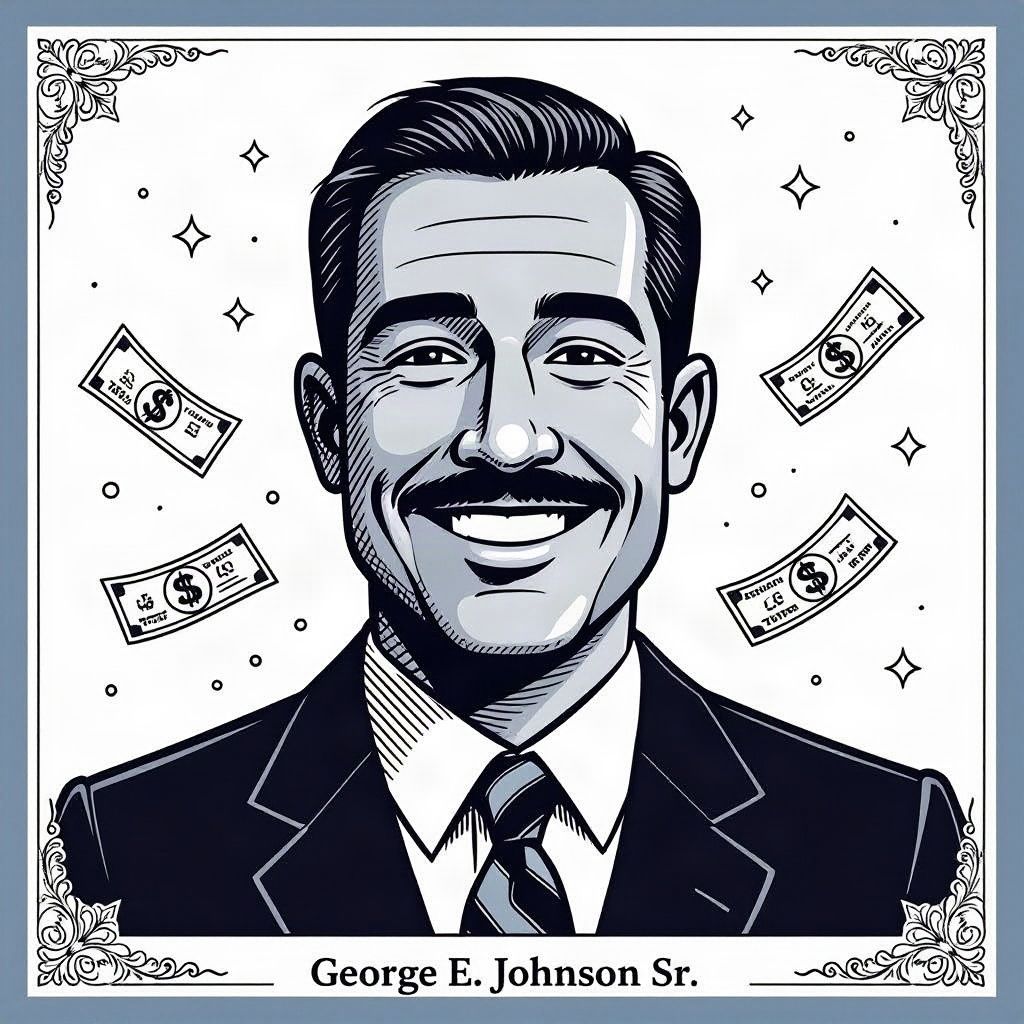
Pioneering entrepreneur George E. Johnson Sr. died at 99, leaving a legacy defined by launching iconic consumer brands and creating the first Black-owned company traded on the American Stock Exchange.
The Humble Beginnings of a Hair Care Empire
George E. Johnson Sr. laid the foundation for his business empire in 1954 with a mere $250 loan, co-founding Johnson Products Company (JPC) on Chicago’s South Side alongside his late wife, Joan [1]. This modest startup capital would eventually grow into a billion-dollar enterprise, transforming the hair care industry for Black consumers. Johnson’s vision was rooted in an ‘unshakable belief that opportunity should exist for everyone,’ a principle that guided the company’s mission from its inception [1]. The early years were marked by relentless hustle, with Johnson himself taking on multiple roles to ensure the fledgling company’s survival. His resilience mirrored the broader struggles of Black entrepreneurs during the mid-20th century, a period when systemic barriers made business ownership particularly challenging [1].
Revolutionizing Black Hair Care and Cultural Influence
By the late 1950s and early 1960s, Johnson Products had introduced groundbreaking hair care products such as Afro Sheen and Ultra Sheen, which quickly became staples in Black households and salons across America [1]. These products were more than just consumer goods; they were symbols of pride and self-expression for millions, particularly during the Civil Rights Movement and the rise of Black cultural consciousness [GPT]. Afro Sheen, in particular, gained iconic status, becoming synonymous with the natural hair movement and the broader fight for racial identity. The brand’s success was further cemented when Johnson Products secured a historic partnership as the first national sponsor of Soul Train, the trailblazing musical variety show that aired from 1971 to 2006 [1]. This collaboration not only boosted the company’s visibility but also embedded it in the fabric of Black pop culture.
Breaking the Wall Street Barrier
In 1971, Johnson Products made history by becoming the first Black-owned company to be listed and traded on the American Stock Exchange (now part of the NYSE American), a milestone that shattered long-standing racial barriers in corporate America [1]. This achievement was not merely symbolic; it opened doors for future generations of minority entrepreneurs, proving that financial markets were accessible to innovators regardless of race. The company’s initial public offering (IPO) was a testament to Johnson’s strategic acumen and his ability to navigate industries dominated by white leadership [1]. At the time of its listing, Johnson Products had already established itself as a leader in the hair care sector, with annual revenues exceeding $10 million—an impressive feat for a company that had started with a $250 loan [1]. The stock exchange listing also provided the capital needed for expansion, enabling Johnson to diversify its product line and invest in marketing campaigns that further solidified its market dominance.
A Legacy of Entrepreneurship and Philanthropy
George E. Johnson Sr. passed away at his home in Chicago on Monday, November 16, 2026, at the age of 99, leaving behind a legacy that transcends business [1]. His family described him as a ‘visionary business leader who built a haircare empire, broke barriers on Wall Street, and helped fuel the fight for civil rights’ [1]. Beyond his entrepreneurial success, Johnson was a devoted philanthropist, using his platform to support education, community development, and social justice initiatives. His commitment to the principle of ‘treating everyone with dignity and respect’ was a cornerstone of his personal and professional life, reflecting the values instilled in him during his childhood in Richton, Mississippi, where he worked as a shoeshine boy and busboy to support his family [1]. Johnson is survived by his second wife, Madeline Murphy Rabb, as well as his children, grandchildren, and great-grandchildren, who continue to carry forward his legacy of entrepreneurship and community leadership.
Sources
- abcnews.com
- www.facebook.com
- www.legacy.com
- www.instagram.com
- www.facebook.com
- www.instagram.com
- www.helgesonfuneralhome.com