US Senate Delays Key Vote on College Sports Reform Legislation
Washington, Saturday, 8 August 2026.
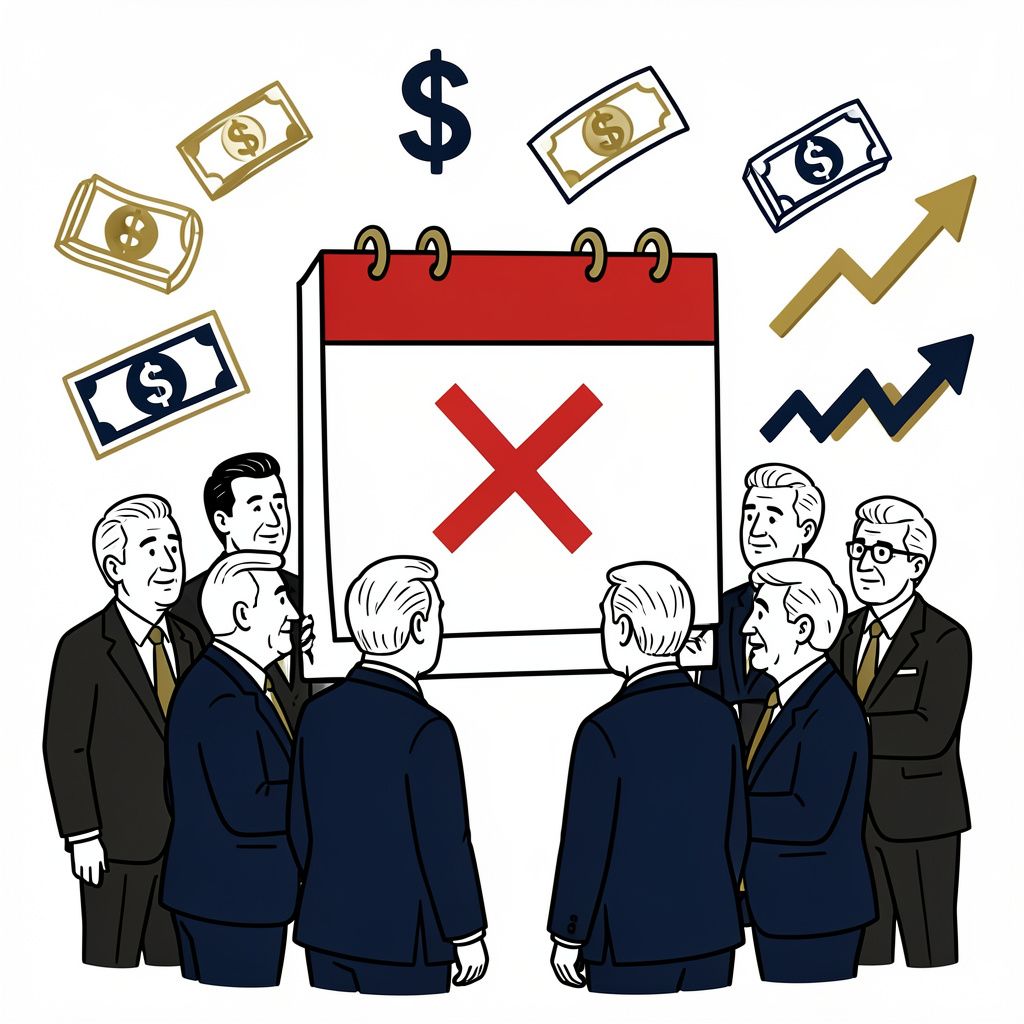
The U.S. Senate adjourned without voting on the Protect College Sports Act, delaying landmark legislation to standardise NIL rules, cap agent fees, and grant limited antitrust immunity until September 2026.
Legislative Deadlock and Timeline
The decision to delay the vote emerged after a chaotic evening of negotiations on Friday, 2026-08-07, where Senators faced a deadline to pass the bill before the August recess [2]. Despite a late-night push from President Donald Trump and bipartisan leaders, the legislation failed to secure the necessary 60 votes and lacked unanimous consent, resulting in a deadlock in the early morning hours of Saturday, 2026-08-08 [2]. Senate Majority Leader John Thune (R-S.D.) has since set a date certain in September to bring the legislation up for a vote, aiming to finalize the process before the Fall 2026 college game day [2][5].
The timeline for the Protect College Sports Act has been intensive since its introduction in the Senate on 06/02/2026 [4]. From introduction to the adjournment on 2026-08-08, the bill has been in legislative circulation for 67 days, reflecting the complexity of aligning stakeholders across collegiate conferences and political lines [1][4]. Proponents, including Senators Ted Cruz (R-Texas) and Eric Schmitt (R-Mo.), expressed disappointment but confirmed that a guaranteed vote is locked in for September, with the objective of having President Trump sign the legislation during the fall season [2].
Key Provisions and Financial Stakes
The proposed bipartisan bill seeks to establish federal standards for Name, Image, and Likeness (NIL) deals, grant limited antitrust immunity to the NCAA, and explicitly classify student-athletes as non-employees [1]. Key provisions include capping agent endorsement contract fees at 5% and establishing a $22.5 million retention fund for student athletes, which is expandable to $27.5 million if NIL is invested in women’s and Olympic sports [5]. Additionally, the bill mandates agent registration with a state and provides student athletes with one transfer without losing athletic eligibility, addressing long-standing instability in roster management [4][5].
Financial stability is a primary driver for the legislation, as statutory clarity is considered essential for stabilizing multi-billion-dollar corporate sponsorships and emerging revenue-sharing structures [1]. The bill also establishes a medical trust fund of up to $100 million per year for post-eligibility medical coverage, including chronic conditions like CTE, and guarantees scholarships for 10 years post-eligibility [5]. These measures aim to stabilize the arms race in college sports, where currently 50 different state NIL statutes lead to conflicting regulations and litigation [5][8].
Political Dynamics and Future Path
Political support has been bolstered by major collegiate conferences, with the SEC and Big Ten officially announcing their support for the bipartisan legislation on 2026-07-31 [2]. However, objections remain; on 2026-08-07, Senator John Kennedy (R-LA) criticized the legislation for potentially shielding the NCAA from liability, while the Congressional Black Caucus issued a statement declaring they cannot support the bill in its current form due to a lack of inclusion for Black athletes and HBCUs [2][7]. President Donald Trump has publicly pressured the Senate to pass the bill, stating on Truth Social that without it, programs will be canceled and universities will go broke [3][7].
Looking ahead, the legislative process for the PCSA is expected to extend into September and beyond, involving a lengthy amendment process and potential revisions in the House of Representatives if it passes the Senate [2]. Senators are scheduled to return to Capitol Hill after Labor Day (2026-09-07), where debate may continue if the vote is not completed immediately upon their return [7]. The outcome will significantly impact the classification of student-athletes and the financial framework of collegiate athletics for the foreseeable future [4][8].
Sources
- sports.yahoo.com
- www.foxnews.com
- www.foxnews.com
- www.congress.gov
- www.commerce.senate.gov
- www.texastribune.org
- www.nytimes.com