Tennessee Agriculture Chief Accused of Pressuring Farm Bureau to Endorse Marsha Blackburn
Nashville, Sunday, 19 July 2026.
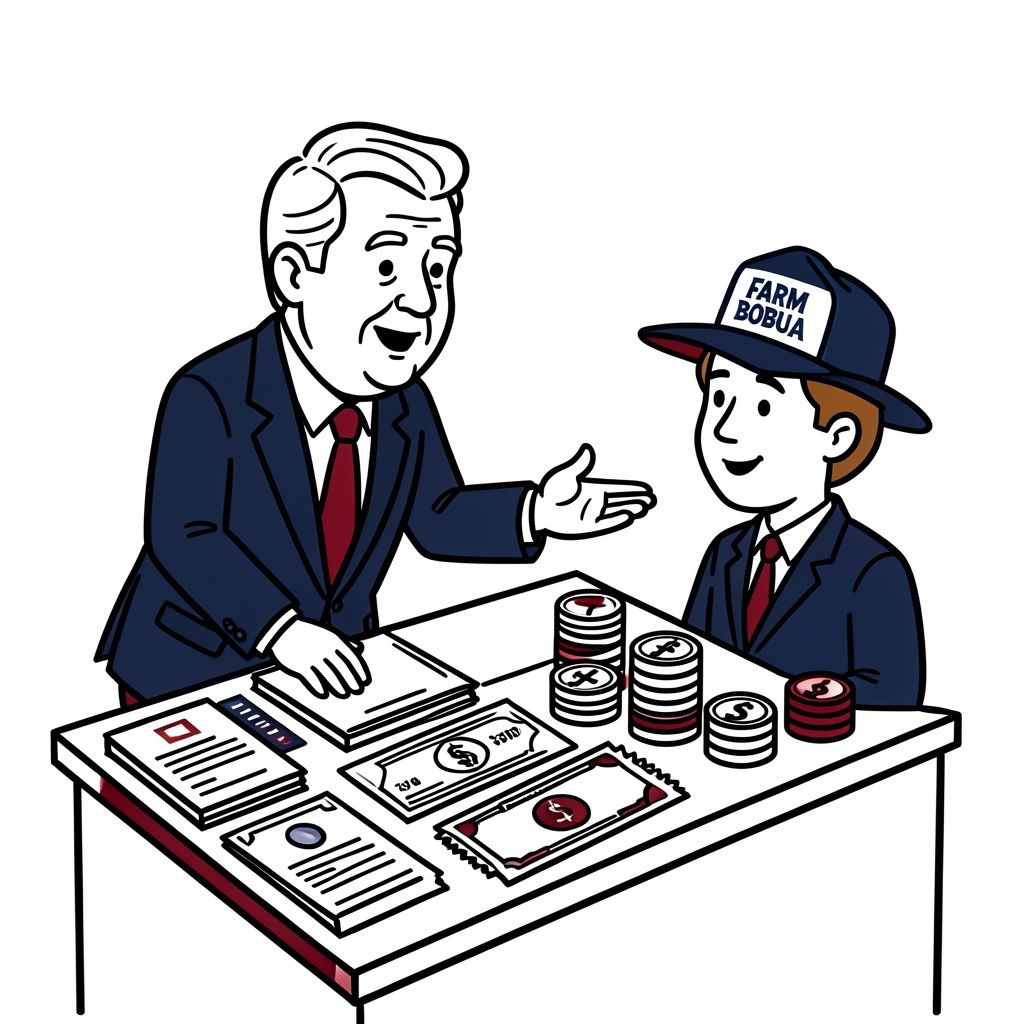
A lawsuit alleges Tennessee’s Agriculture Commissioner pressured the Farm Bureau to endorse Senator Marsha Blackburn’s gubernatorial campaign, raising serious questions about political influence within state agencies.
The Intersection of Regulatory Power and Electoral Politics
Tennessee’s upcoming Republican gubernatorial primary has been thrust into a sharp ethical debate following a lawsuit implicating the state’s top agricultural official [1][2]. Filed in mid-July 2026, the lawsuit alleges that Tennessee Agriculture Commissioner Andy Holt utilized his public office to pressure the Tennessee Farm Bureau—a highly influential agricultural advocacy and insurance organization—into endorsing U.S. Senator Marsha Blackburn for governor [1][2]. The legal challenge, brought forward by former Farm Bureau Insurance agent Bryant Rhodes (referred to as Bryan Rhodes in some records), highlights the growing tension between state regulatory bodies and private business entities over political endorsements in highly competitive election cycles [1][2][GPT].
A Disputed Auction and Allegations of Retaliation
The roots of the legal dispute trace back to an incident on April 25, 2026, during a property auction in Weakley County, Tennessee [2]. According to the complaint filed by Rhodes on July 13, 2026, in the Weakley County Circuit Court, Commissioner Holt and several associates allegedly engaged in a “coercive, unethical and fraudulent scheme” to artificially inflate property bids [2]. Rhodes claims that after he identified and challenged these practices, Holt embarked on a systematic campaign of misrepresenting the facts to punish him [2]. The lawsuit asserts that Holt, well aware of his substantial administrative influence over the Farm Bureau as Commissioner of Agriculture, pressured the organization to terminate Rhodes’ employment [1][2].
Corporate Compliance and Regulatory Leverage
The legal complaint further alleges that the Tennessee Farm Bureau prioritized its institutional relationship with Commissioner Holt over conducting a fair and objective investigation into the auction dispute [2]. Because the Farm Bureau had not yet endorsed Senator Blackburn’s gubernatorial campaign, the organization was reportedly highly sensitive about upsetting Holt, who was actively serving as a designated campaign spokesperson tasked with organizing support for Blackburn in Weakley County [1][2]. Rhodes claims he was terminated as an insurance agent to appease the commissioner and curry favor with key political actors [1][2]. Sued for defamation and lost wages, among other damages, Holt’s actions are presented in the lawsuit as a direct exploitation of regulatory power for political campaigning [1][2].
The Heated Campaign for Tennessee’s Governorship
This controversy arrives at a critical juncture for Tennessee voters, with the state’s gubernatorial primary scheduled for August 6, 2026, and early voting already underway [1]. The candidates are competing to succeed outgoing Governor Bill Lee, with the final election set to take place on November 3, 2026 [1]. The allegations have added significant friction to the Republican primary, where Senator Blackburn’s campaign is already facing intense scrutiny [1][2]. In a related development, fellow Republican gubernatorial candidate John Rose recently called on Blackburn to release the findings of an alleged Senate ethics probe into her office, intensifying the focus on ethical standards within the party [1].
Silence from State Officials and Next Steps
As of July 16, 2026, neither Commissioner Andy Holt nor the Tennessee Department of Agriculture had responded to public requests for comment regarding the lawsuit’s allegations [2]. This silence leaves agricultural stakeholders, industry leaders, and voters to navigate the implications of the lawsuit independently as the primary election approaches [GPT]. For Tennessee’s agricultural community, which represents a vital economic sector, the allegations raise serious concerns about whether state regulatory oversight is being compromised to serve partisan campaign goals [GPT].
Sources
- www.wsmv.com
- www.newschannel5.com
- www.facebook.com
- www.instagram.com
- x.com
- www.threads.com
- www.facebook.com
- x.com