New Winter Forecast Predicts Extreme Cold and Storms Across the United States
Lewiston, Monday, 10 August 2026.
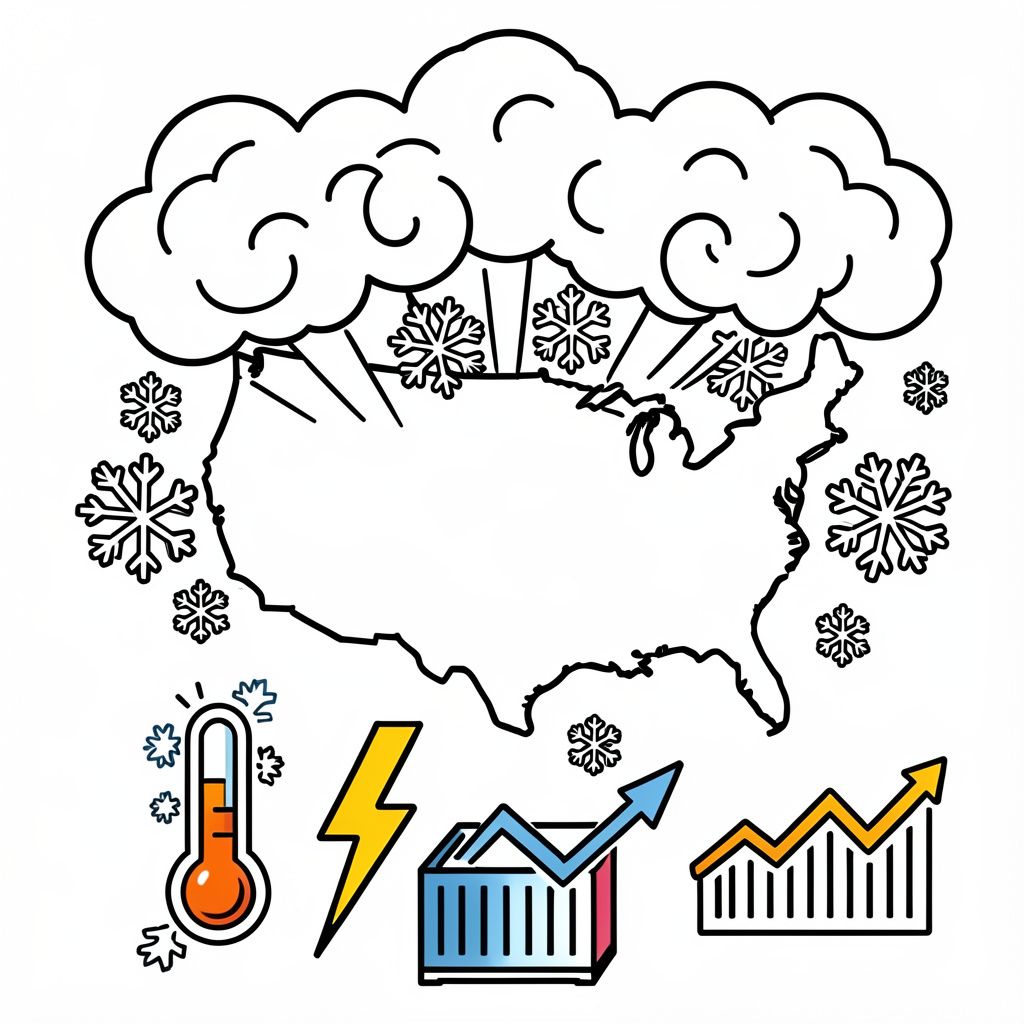
Driven by a strong El Niño pattern, the 2026–2027 Farmers’ Almanac forecast warns of heavy southern storms and severe cold snaps, prompting early supply chain and energy planning.
Forecast Release and El Niño Influence
On 9 August 2026, the Farmers’ Almanac released its long-range winter weather outlook for the 2026-2027 season, projecting a period of sharp contrasts across the United States [1][4]. The forecast, prepared by forecaster Caleb Weatherbee using a proprietary formula established in 1818, indicates that a strong El Niño climate pattern will significantly influence weather conditions [1][4]. This climate phenomenon, characterized by warmer-than-average water across the equatorial Pacific, is expected to drive an active storm track and create significant variations in temperature and precipitation throughout the winter months [3][4]. For corporate planners and logistics managers, this early release on 9 August 2026 provides a critical window to adjust seasonal strategies before the onset of meteorological winter on 1 December 2026 [5][6].
Regional Weather Patterns and Risks
Regional projections indicate distinct weather challenges, with the southern tier—including Southern California, Texas, and the Southeast—expected to experience wetter-than-normal conditions and frequent storms [2][3]. Conversely, northern regions such as the West, northern Plains, and Great Lakes are forecast to have near-normal average temperatures, though residents should anticipate fast-moving clippers and sudden cold snaps [1][4]. The Northeast faces a particularly complex pattern, with coastal areas likely to see more rain and mixed precipitation while inland areas face rounds of heavy, wet snow, specifically in January and February 2027 [2][4]. In the Pacific Northwest, the snow season may be less dependable, with El Niño typically bringing warmer temperatures and below-average mountain snowpack to the region [3][5].
Economic Implications and Forecast Accuracy
The forecast signals potential early spikes in heating fuel demand and heightened risks of transportation disruptions, necessitating adjustments for seasonal retail inventory strategies heading into the fourth quarter [1][6]. While the Farmers’ Almanac claims an accuracy rate of 80% to 85% for its long-range forecasts, independent meteorologists often cite figures closer to 50%, suggesting planners should use the data as one of multiple risk assessment tools [5][6]. The publication, which dates back to 1818, integrates traditional methods like lunar and solar cycles with modern computer modeling to develop its broad regional outlooks [4][6]. Stakeholders are advised to monitor local conditions closely, as small shifts in storm tracks could determine whether precipitation falls as rain, sleet, or accumulating snow [3][4].