South Korean Shipbuilders Hit Record $145 Billion Order Backlog
Seoul, Tuesday, 11 August 2026.
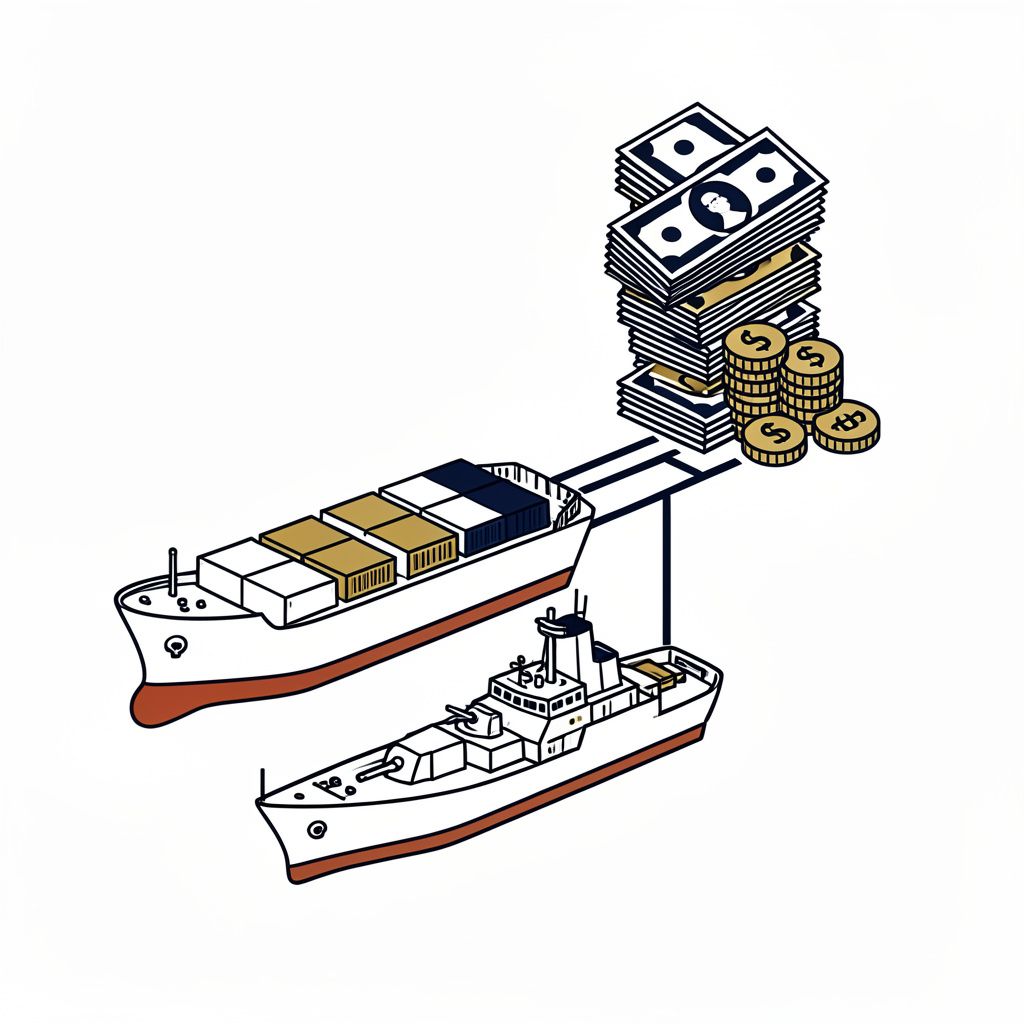
South Korea’s major shipbuilders reached a historic $145 billion order backlog, securing production through 2028 as global demand surges for gas carriers and naval defense projects.
Record-Breaking Order Backlog Secures Production
South Korea’s major shipbuilders have achieved a significant milestone, accumulating a combined order backlog exceeding 200 trillion won ($145 billion) for the first time in 12 years [1][3]. This historic accumulation involves HD Hyundai Heavy Industries, Samsung Heavy Industries, and Hanwha Ocean, guaranteeing stable high-value production through 2028 [1]. The surge is primarily driven by unprecedented demand in liquefied natural gas (LNG) carrier construction, offshore plant projects, and international naval defense requirements [1]. This volume highlights shifting global trade routes and rising energy security priorities that favor specialized marine engineering capabilities [1].
Competitive Landscape and China Challenge
Despite the record backlog, South Korean shipbuilders face intensifying competition from China, particularly in the LNG carrier market which was long considered a stronghold [2]. In the first half of 2026, Chinese shipbuilders captured a 34.5% global market share for LNG carrier orders, while South Korea maintained the lead with a 65.5% share [2]. The difference in market share between the two nations is 31 percentage points, indicating a narrowing gap compared to previous years [2]. Data from early July 2026 shows China’s LNG carrier order backlog reached 34 vessels, surpassing South Korea’s 32 vessels, marking a major shift from 2022 when South Korea held 113 orders compared to China’s 43 [2].
Competitive Landscape and China Challenge
Chinese competitive advantages include government-backed low-interest financing and labor costs that allow vessel pricing approximately 8% lower than South Korean equivalents [2]. Hudong-Zhonghua Shipbuilding invested 18 billion yuan in 2025 to expand annual construction capacity, while the number of Chinese shipyards capable of building LNG carriers has increased from one to five [2]. Conversely, South Korean shipyards face a capacity dilemma with production docks fully saturated through 2029, limiting their ability to expand LNG carrier order intake further [2]. Industry experts stress the need to maintain a super-gap in next-generation high-value sectors such as autonomous ships and AI to counter this pressure [2].
Strategic Pivot to Defense and US Markets
To mitigate commercial risks, South Korean shipbuilders are aggressively pivoting toward the US naval procurement market, targeting a sector estimated to exceed $1 trillion in value over the next 30 years [1]. On 26 October 2025, HD Hyundai Co. signed an agreement with Huntington Ingalls Industries to jointly design and build next-generation logistics support ships under the Maintenance, Repair, and Overhaul and Shipbuilding Agreement initiative [1]. Hanwha Ocean Co. established Busan and Philadelphia as twin hubs to support its related shipbuilding and maintenance projects [1]. On 6 August 2025, HD Hyundai Heavy Industries Co. secured its first-ever US Navy Maintenance, Repair, and Overhaul contract for the USNS Alan Shepard, marking a significant milestone in the framework [1].
Strategic Pivot to Defense and US Markets
This strategic alignment addresses the decline in US domestic shipbuilding capacity, where the number of major private shipyards has declined from 11 to 4 since the end of World War II [4]. The US fiscal year 2027 budget designates $1.85 billion for studies on foreign frigate and destroyer design and construction, specifically directing the Navy to consider Japanese and Korean shipyards [4]. South Korean firms Hanwha Ocean and Samsung Heavy Industries have secured US Navy ship-design contracts, partnering with VARD and General Dynamics NASSCO [4]. These partnerships aim to reinforce naval superiority amidst great power competition and ensure fleet expansion capabilities [4].
Financial Strategy and Margins
Financially, Korean yards in this cycle have generally been selective, prioritizing margin over volume in their order intake strategies [5]. Single orders tend to move shares only when they shift the full-year order intake trajectory or confirm pricing at the top of the range [5]. The distinction that matters for investors is vessel mix, as high-value gas carriers and large container vessels tend to carry better margins and signal tighter yard slots [5]. This approach ensures that the record backlog translates into sustainable profitability rather than just revenue volume [5].