Florida Declares Emergency as Mosquito-Borne Dengue Outbreak Reaches Record Highs
Miami, Monday, 5 October 2026.
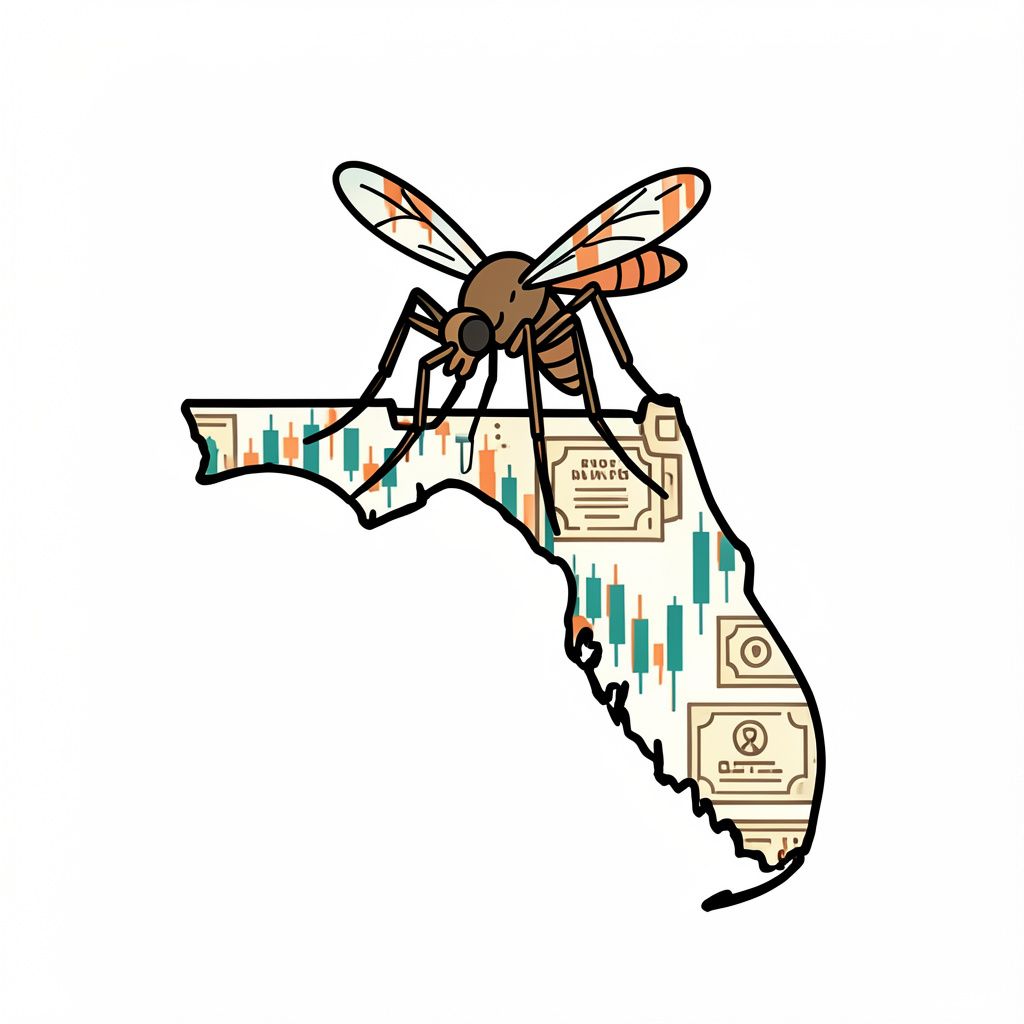
Florida faces its largest dengue outbreak in decades with over 250 local cases. Intriguingly, the U.S. currently has no available vaccine following Dengvaxia’s discontinuation in 2025.
Record-Breaking Outbreak Statistics
Florida is currently grappling with the largest dengue fever outbreak in the continental United States in decades, with health officials reporting 252 locally acquired cases in 2026 [1][8]. This figure surpasses the previous state record of 200 locally spread cases reported in 2023, representing a significant increase in transmission rates 26 [1]. Hillsborough County, which encompasses the Tampa area, accounts for the majority of these infections with 223 reported cases [1][8]. While dengue fever is rarely fatal, one death of an elderly woman in Tampa was confirmed in September 2026 [2][6]. The virus is transmitted through infected mosquito bites, and while most infected individuals do not experience symptoms, severe cases can lead to fever, joint pain, and nausea [1][3].
Emergency Declarations and Control Measures
In response to the surge, multiple Florida counties have declared local states of emergency, with Hillsborough County extending its order through October 8, 2026 [8]. County Administrator Bonnie Wise signed the extension as mosquito surveillance continued to show virus activity in multiple neighborhoods [8]. Control efforts include day-and-night mosquito spraying operations and property inspections to eliminate standing water breeding sites [2][6]. Residents are encouraged to drain stagnant water, wear protective clothing, and use bug spray to mitigate the spread [1]. The Florida Department of Health reported 62 locally acquired cases statewide during the week of September 20 through September 26, indicating ongoing transmission [8].
Economic Implications and Federal Response
The outbreak poses potential disruptions to tourism and hospitality sectors, which are critical to Florida’s economy, as vector-control measures deploy across affected regions [1][6]. Emergency healthcare funding is being rapidly deployed, with the Centers for Disease Control and Prevention providing $800,000 in assistance to the Florida Department of Health [2][6]. Despite this funding, Florida officials have not requested onsite CDC disease investigators to enter the state [2][6]. Local business leaders are monitoring the situation closely, as intensive spraying operations and health advisories may impact visitor confidence and labor availability in the Tampa region [2][8].
Vaccine Availability and Future Outlook
Compounding the public health challenge, the United States currently has no available dengue vaccine following the discontinuation of Dengvaxia by manufacturer Sanofi Pasteur in 2025 [4]. The previous vaccine was discontinued due to low demand and concerns regarding increased severity in individuals with no prior dengue exposure [4]. Experts suggest that climate change is expanding the geographic reach of warm-weather mosquitoes, contributing to the spread [2]. Tulane University expert Dawn Wesson noted that most people in the Tampa area lack prior immunity, stating there is a good chance this level of outbreak activity is the new normal [2][6].
National Context and Transmission Risks
Beyond Florida, CDC data reported rising dengue fever cases across at least 15 U.S. states as of October 4, 2026 [3]. While Florida experiences the largest outbreak, cases have increased in California, New York, Texas, and other states, often linked to international travel from tropical regions [3][4]. Transmission in the U.S. remains limited compared to global statistics, where over 2.2 million infections were reported in 2026 [2][6]. However, the presence of Aedes aegypti mosquitoes in southern Florida creates a persistent risk for local transmission chains when the virus is introduced by travelers [4][6].
Sources
- thehill.com
- apnews.com
- www.newsweek.com
- time.com
- www.facebook.com
- www.cbsnews.com
- www.instagram.com
- www.winknews.com