Tech Leaders and Policymakers Forge Responsible AI Frameworks at Jakarta Summit
Jakarta, Tuesday, 28 April 2026.
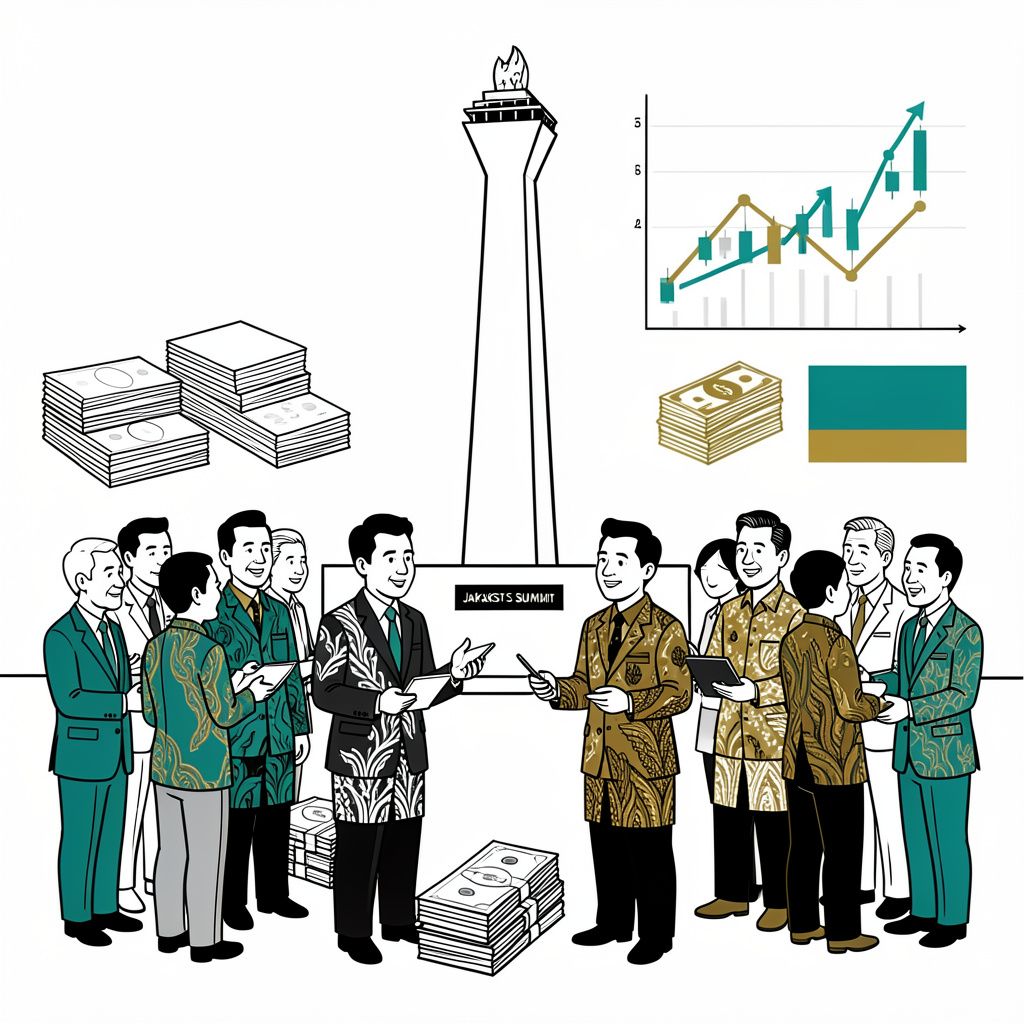
At Jakarta’s inaugural AI Forward Summit, tech giants and ASEAN policymakers united to establish cohesive AI governance frameworks, a move poised to directly shape future regional technology investments.
Fostering Regional AI Cooperation
On April 27 and 28, 2026, Jakarta hosted the inaugural AI Forward: Southeast Asia Policy Summit, an event co-organized by Grab Holdings Inc. (NASDAQ: GRAB) and the ASEAN Business Advisory Council [1]. The summit gathered senior policymakers, global technology leaders, and industry experts to discuss the integration of artificial intelligence across the region [1]. Among the notable attendees was Kong Chinang, Chief Growth Officer at IceKredit, who joined a panel featuring executives from McKinsey, Amazon, Google, and the Vietnam Chamber of Commerce and Industry [1]. Grab’s CEO and co-founder, Anthony Tan, was also present alongside Indonesian government ministers, underscoring a high level of cross-sector engagement [1].
Technological Innovations Driving Market Position
Grab’s leadership in regional AI policy is closely tied to its recent operational investments. Earlier this month, on April 8, 2026, the company hosted its GrabX product launch at the Shangri-La Jakarta, where it showcased several AI-driven innovations [1]. A centerpiece of this showcase was Carri, an autonomous delivery robot [1]. Over the past 12 months leading up to late April 2026, Grab has significantly stepped up its investments in autonomous and remote-driving technologies, as well as digital wealth management solutions [2].
Financial Resilience Amidst Global Headwinds
These technological advancements are supported by an increasingly robust financial foundation. On April 27, 2026, Moody’s Ratings upgraded Grab’s corporate family rating (CFR) from Ba3 to Ba2 and revised its outlook from positive to stable [2]. According to Moody’s Assistant Vice President and Analyst Yu Sheng Tay, this upgrade reflects a continued improvement in Grab’s credit quality, driven by stronger earnings and cash flow generation [2]. Moody’s projects that Grab’s adjusted earnings before interest, taxes, depreciation, and amortization (EBITDA) will reach approximately $590 million in 2026, up from $483 million in 2025—representing an annual growth of 22.153 percent [2]. By 2027, this figure is expected to climb further to approximately $740 million [2].
Strategic Expansion and Future Outlook
Looking ahead, Grab is balancing its technological investments with strategic geographic and sector expansions. Within the last year, the company completed a $600 million acquisition of a food delivery business in Taiwan, marking its first foray outside of the Southeast Asian market [2]. Moody’s assesses this merger and acquisition activity as broadly consistent with Grab’s strategy to strengthen its business lines without materially compromising its net cash position [2]. Furthermore, Grab’s financial services segment is targeting breakeven EBITDA by the end of 2026, with projections indicating its first full year of positive EBITDA in 2027 [2]. Through a combination of regional AI policy leadership and disciplined financial growth, Grab continues to shape the economic landscape of Southeast Asia [1][2].