Devastating Himalayan Glacial Flood Destroys Key China-Nepal Border Hub
Gyirong, Sunday, 6 September 2026.
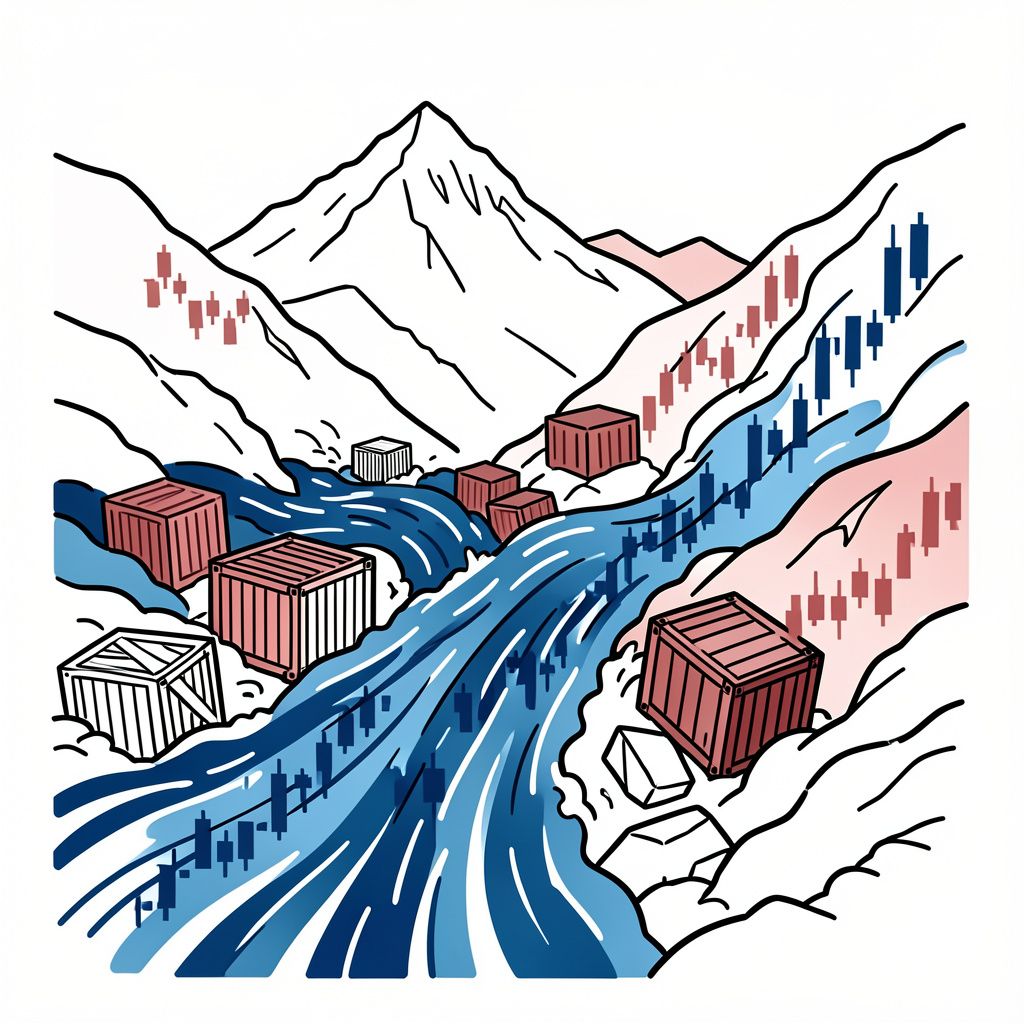
A massive glacial collapse along the China-Nepal border has obliterated the vital Gyirong trading port, leaving over 1,300 dead, thousands missing, and critical regional trade routes completely severed.
Rescue and Casualty Overview
As of Sunday, 6 September 2026, search and rescue operations remain active across seven designated zones at the Gyirong land port, with four zones already cleared [1]. Approximately 20 Chinese rescue workers are utilizing excavators, shovels, and ground-penetrating radar to locate survivors amidst the debris [1]. The catastrophic event has resulted in significant loss of life, with over 1,300 deaths confirmed across both sides of the border and more than 5,000 people reported missing [1]. Specific data indicates 1,290 deaths in Nepal and 43 in the Tibet region, totaling 1333 confirmed fatalities in the immediate disaster zone [5]. On the Chinese side alone, 31 deaths are confirmed, and 531 people remain missing, including 261 foreign nationals from 23 countries as of Friday, 4 September 2026 [1].
Infrastructure and Trade Disruption
The physical destruction at the site is extensive, with the five-storey Chinese customs building completely destroyed and a 20-meter-tall border gate obliterated, marked now only by a Chinese flag [1]. The only remaining structure is a portion of a water tower, highlighting the severity of the mudslide triggered by the glacial collapse [1]. This infrastructure damage halts major overland commercial flows between China and South Asia, severely disrupting regional supply chains and cross-border commerce [1]. The Gyirong port serves as a critical transit corridor for Chinese goods, including electric vehicles, and facilitates travel for thousands of Hindu pilgrims heading to Mount Kailash [1]. The sole land route to the crossing was restored by Wednesday, 2 September 2026, enabling the deployment of heavy equipment for recovery, but full trade normalization remains distant [1].
International Impact and Missing Persons
The disaster has had a profound international impact, with diplomats in Beijing confirming that many of the foreign nationals missing in Tibet were pilgrims with extended families in India [1]. There are 49 Indian citizens confirmed among the missing foreign nationals following the recent glacial collapse [1]. Broader estimates from the Nepal Tourism Board report nearly 400 foreign tourists missing, including 134 Indians, 47 Americans, 34 Australians, 34 British, 24 Canadians, and 19 Malaysians [5]. An Isha Foundation pilgrimage group containing 77 non-Indian members is among those missing at the Nepal-Tibet border [5]. Chinese leader Xi Jinping has ordered local authorities to make every effort to conduct search and rescue operations for the missing, with similar directives issued by other members of the Politburo’s Standing Committee [5].
Geological Context and History
The disaster originated on 26 August 2026, due to a glacier collapse and subsequent landslide impacting the Rasuwa district in Nepal and the Gyirong Port border crossing in Tibet [5]. A magnitude-5.2 seismic event triggered a high-altitude landslide and glacial collapse at approximately 5,182 meters elevation on Langtang Lirung [5]. Geologists note that the bottom of the affected area looks like a bomb exploded, consisting mostly of deposits from the broken-up glacier [5]. This is not the first time the region has faced such challenges; the Gyirong border crossing was previously closed between July 2025 and January 2026 due to an earlier glacial flood [1]. Workers are currently re-establishing the power grid in the affected area by installing temporary electric poles as part of the ongoing recovery efforts [1].
Sources
- ca.news.yahoo.com
- www.instagram.com
- www.facebook.com
- www.youtube.com
- www.nytimes.com
- www.facebook.com
- www.youtube.com
- www.youtube.com