Utah Democrats Propose Using Rainy Day Funds to Offset Federal SNAP Cuts
Salt Lake City, Saturday, 17 January 2026.
Senate Democrats urge a special session to utilize state rainy-day funds, aiming to cover federal funding gaps and protect food benefits for 89,000 Utah residents.
Fiscal Intervention Requested
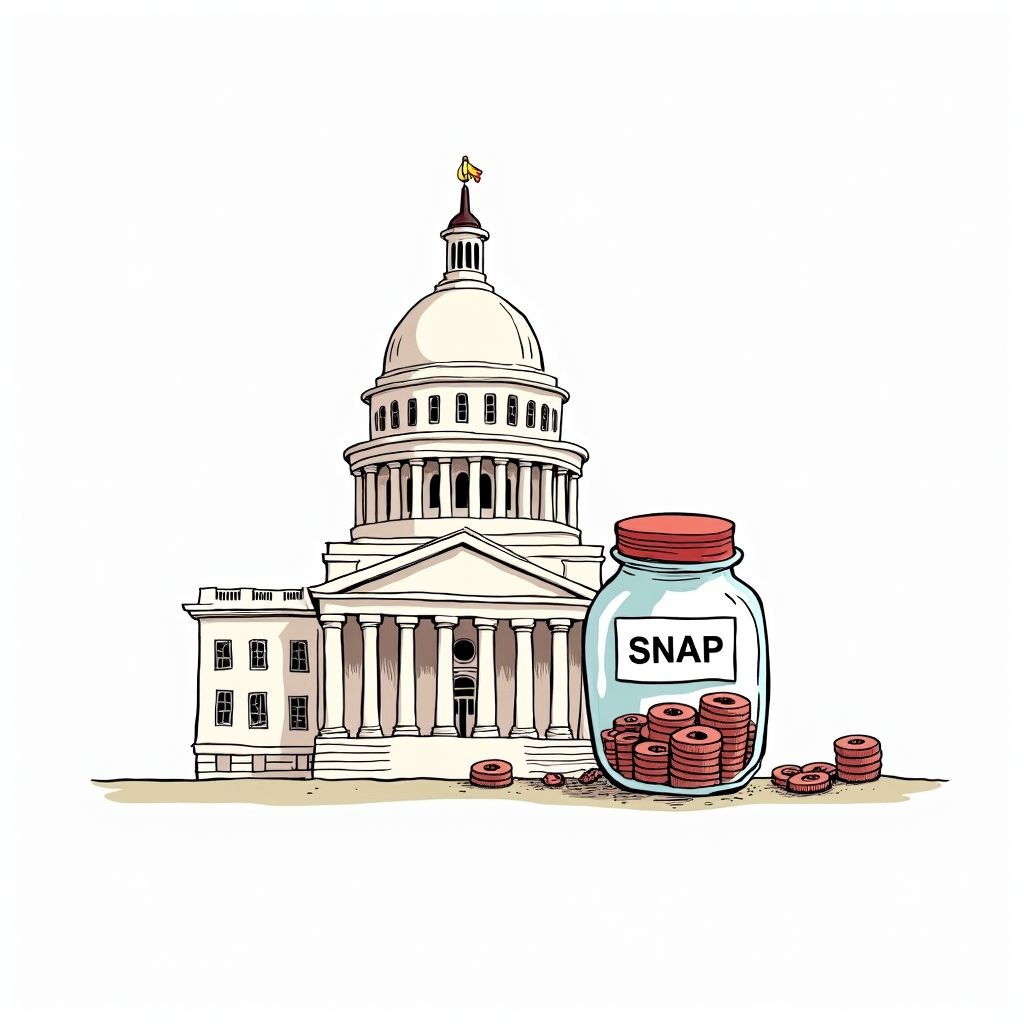
The Utah Senate Democratic Caucus has formally requested that Governor Spencer Cox and legislative leadership convene a special session to address a looming shortfall in federal food assistance. With the federal government confirming only partial funding for the Supplemental Nutrition Assistance Program (SNAP) for November, state Democrats are proposing the appropriation of Utah’s “rainy-day funds” to bridge the gap [1]. In a letter to state leaders, the caucus argued that immediate state intervention is necessary to ensure families receive uninterrupted support, asserting that the situation represents the exact financial emergency these reserve funds were designed to mitigate [1].
Impact on Vulnerable Residents
The proposed funding aims to protect approximately 89,000 Utah residents who currently rely on SNAP benefits, as well as those dependent on food banks due to federal furloughs [1]. Senate Minority Leader Luz Escamilla emphasized the moral imperative of the request, stating that food is a basic human right rather than a privilege [1]. The caucus further noted that direct assistance via existing Electronic Benefit Transfer (EBT) cards remains the most cost-effective and secure method to empower families to purchase goods from local businesses, thereby supporting the regional economy [1].
Federal Policy Shifts
This state-level fiscal pressure coincides with broader structural changes to federal nutrition policy. Under the upcoming H.R. 1 appropriation legislation, states face new requirements to cover a share of SNAP benefit costs and increased administrative expenses, a departure from the program’s traditional funding model [2]. This shift forces states to budget for funds they do not currently possess, potentially endangering food security for millions of Americans, including veterans, children, and older adults [2].
New Restrictions and Inflationary Pressures
Beyond funding disputes, the nature of allowable purchases is evolving under the influence of the “Make America Healthy Again” (MAHA) movement [3]. As of January 15, 2026, Utah has joined Indiana, Iowa, Nebraska, and West Virginia in implementing policies that allow the exclusion of sugary drinks, candy, and certain desserts from SNAP eligibility [4]. While proponents argue these measures align with public health objectives, critics warn that the varying definitions of “junk food” across states are creating confusion and loopholes that could decrease program participation [5]. Furthermore, these restrictions arrive as low-income consumers face significant inflation; over the last year, beef prices have risen by 16.4% and coffee by 19.8%, further straining household budgets [4].
Legislative Conflicts on the Horizon
As the Utah Legislature prepares to convene its general session on January 20, 2026, access to public assistance remains a contentious issue beyond the immediate funding shortfall [6]. Republican Representative Trevor Lee has filed HB88, a bill seeking to restrict undocumented immigrants from accessing publicly funded services, including food stamps and the Women, Infants, and Children (WIC) program [6]. Modeled after similar legislation in Idaho, the bill aims to cut off resources to encourage self-deportation, drawing sharp criticism from advocacy groups who argue it will divert limited resources away from care [6]. With Senate President Stuart Adams yet to take a position on the bill, the upcoming session promises rigorous debate over the scope and administration of the state’s social safety net [6].
Sources
- www.einpresswire.com
- www.instagram.com
- www.multistate.us
- foodfix.co
- www.blackenterprise.com
- www.standard.net