China Launches World's Largest Air Energy Storage Plant to Power 600,000 Homes
Nanjing, Tuesday, 27 January 2026.
This record-breaking 2.4 GWh facility utilizes underground salt caverns to power 600,000 households, marking a pivotal shift beyond traditional batteries for massive-scale renewable energy management.
Operational Scale and Technical Specifications
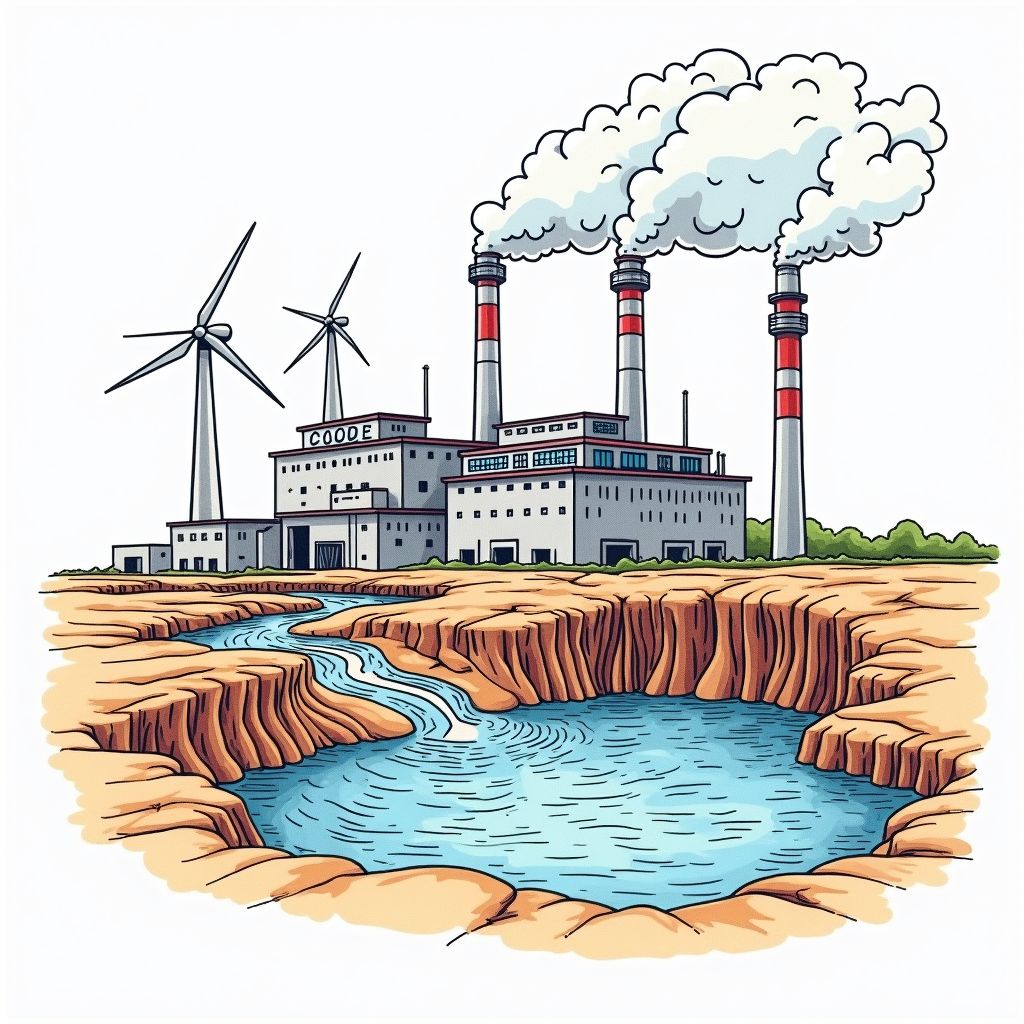
As of January 27, 2026, the Guoxin Suyan Huai’an Salt Cavern Compressed Air Energy Storage Demonstration Project is fully operational in central Jiangsu province [1][3]. The facility features a substantial storage capacity of 2,400 megawatt-hours (2.4 GWh) and generates electricity through two 300 MW non-combustion units, bringing the total installed capacity to 600 MW [1][7]. Developed with equipment from Harbin Electric Corporation, the plant utilizes an advanced adiabatic process that captures heat generated during air compression using molten salt and pressurized thermal water [1][4]. This thermal management system allows the facility to achieve a conversion efficiency of 71 percent, storing energy without the need to burn fossil fuels [1].
Grid Integration and Economic Impact
The plant functions as a massive grid stabilizer by engaging in energy arbitrage: it utilizes surplus electricity, typically generated during off-peak night hours, to compress air into underground salt caverns [2]. During periods of peak demand, this high-pressure air is released to drive turbines [2]. Harbin Electric projects the facility will generate 792 GWh of electricity annually [1], a volume sufficient to meet the power requirements of approximately 600,000 households [2][7]. This capability is critical for balancing the intermittency of renewable sources like wind and solar, ensuring a stable power supply even when generation fluctuates [2].
Strategic Shift in Energy Infrastructure
This development represents a strategic pivot in China’s approach to energy security, moving beyond conventional lithium-ion batteries which currently dominate the short-duration storage market [2]. The Chinese government has set an ambitious target to commission over 180 gigawatts (GW) of new energy storage capacity by 2027 [2][5]. By exploiting the geological advantages of salt caverns, China is validating Compressed Air Energy Storage (CAES) as a cost-effective, long-duration solution that avoids the supply chain constraints often associated with battery raw materials [2][6].
Global Storage Context
The commissioning of the Jiangsu facility aligns with a broader global surge in energy storage deployment. The Volta Foundation’s 2025 Battery Report indicates that global battery energy storage system (BESS) deployments grew by 104 GW in 2025, pushing the total global cumulative capacity to 267 GW [8]. This represents a year-over-year capacity increase of approximately 63.804 percent. While the battery sector expands, analysts at Wood Mackenzie note that supply chain strains emerged in late 2025, prompting a diversification of technologies such as the CAES systems now coming online in Hubei and Jiangsu [6].
Sources
- www.ess-news.com
- www.gktoday.in
- www.jagranjosh.com
- www.linkedin.com
- constructionreviewonline.com
- www.ess-news.com
- www.bloomberg.com
- www.pv-magazine.com