Diverted Humanitarian Aid Funds Finance Security for Budget Director Vought
Washington D.C., Sunday, 15 February 2026.
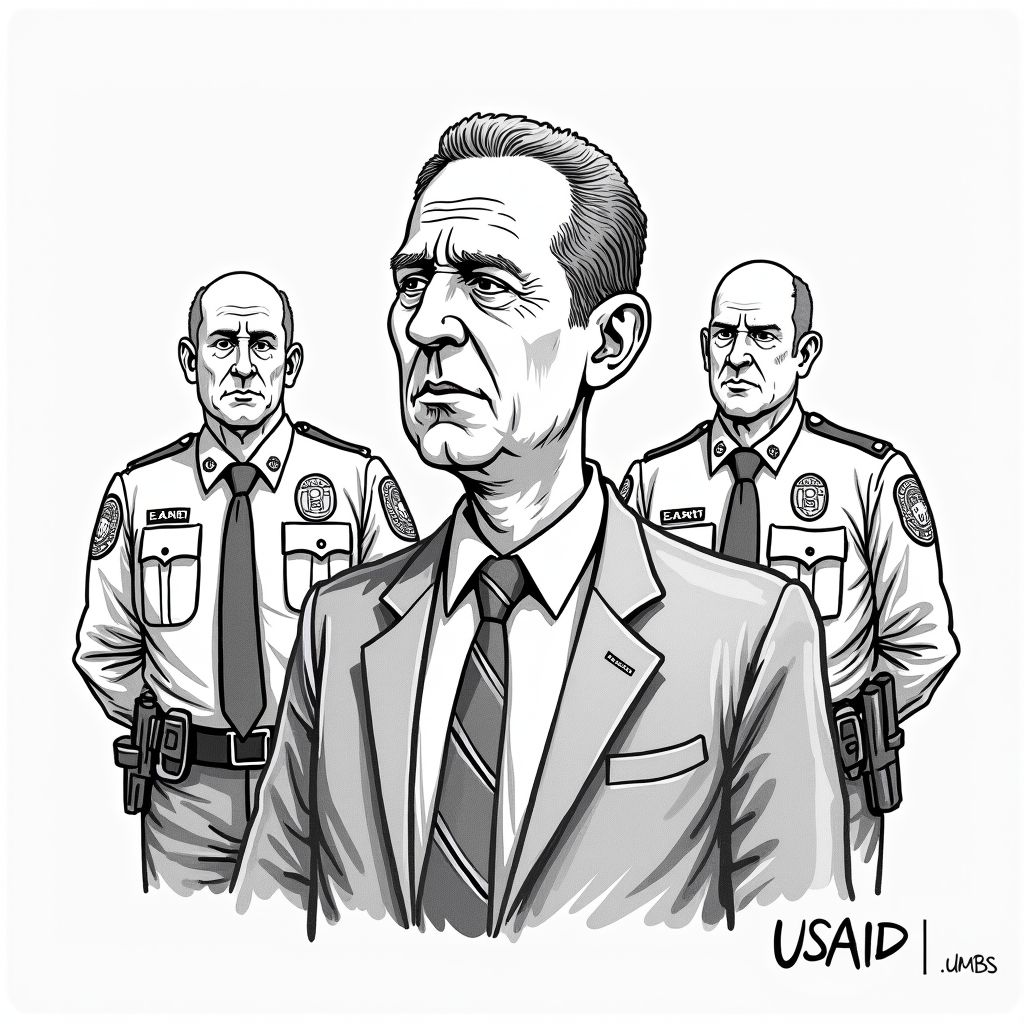
Documents confirm that $15 million from the dismantling of the U.S. Agency for International Development (USAID) has been reallocated to fund a U.S. Marshals security detail for OMB Director Russell Vought. This diversion of humanitarian aid—authorized just months before the agency’s final scheduled closure in September 2026—highlights a critical lapse in standard budgetary governance. The decision to utilize residual funds from a gutted foreign aid agency to protect the official responsible for its dissolution raises sharp questions about the limits of executive discretion over congressional appropriations.
Anatomy of the Fund Diversion
The reallocation of funds appears to have been structured through specific inter-agency agreements rather than a single transfer. According to documents reviewed by Reuters on February 13, 2026, the Office of Management and Budget (OMB) signed an initial agreement with USAID on September 11, 2025 [2]. This arrangement utilized $1.6 million in residual operating expenses to cover the costs of Vought’s security detail through November 2025 [1][2]. Following this initial period, the OMB budgeted an additional $13.5 million drawn from USAID funds to underwrite protection services provided by the U.S. Marshals Service through the end of 2026 [1][2]. Vought, who served as the acting director of USAID for nearly 90 days before transitioning to a senior advisory role, is simultaneously the director of the OMB and the Consumer Financial Protection Bureau [1][2].
Security Justifications and Political Tensions
The administration defends the high cost of this protection by citing elevated threat levels against executive branch officials. On February 5, 2026, police in Northern Virginia announced the arrest of 26-year-old Colin Demarco, who was charged with attempted murder after allegedly appearing at Vought’s home [2][4]. Reports indicate the suspect was equipped with rubber gloves and a surgical mask at the time of the incident [3]. In response to inquiries regarding the use of humanitarian funds for domestic security, OMB spokesperson Rachel Cauley stated that the agency would “continue to use available funds at the three agencies overseen by the director to protect him” [1][2]. Cauley further attributed the security risks to political rhetoric, claiming that opponents are fueling an “assassination culture against public officials” [2][4].
Human Costs of Administrative Dismantling
The liquidation of USAID has drawn sharp criticism from public health experts regarding its global ramifications. A professor at the Harvard T.H. Chan School of Public Health estimated that the cessation of the agency’s operations contributes to hundreds of thousands of deaths globally due to the disruption of support for infectious diseases and malnutrition [1][3]. While the administration has transferred some foreign assistance responsibilities to the State Department [2], the operational gap left by USAID’s closure remains significant. Furthermore, legislative battles continue over foreign aid appropriations; on February 3, 2026, President Trump signed the fiscal year 2026 National Security, Department of State, and Related Programs appropriations bill, which maintained flat funding for international family planning programs despite the executive branch’s hostility toward such expenditures [5].