China’s Solar Capacity Set to Overtake Coal in 2026 Energy Milestone
Beijing, Tuesday, 3 February 2026.
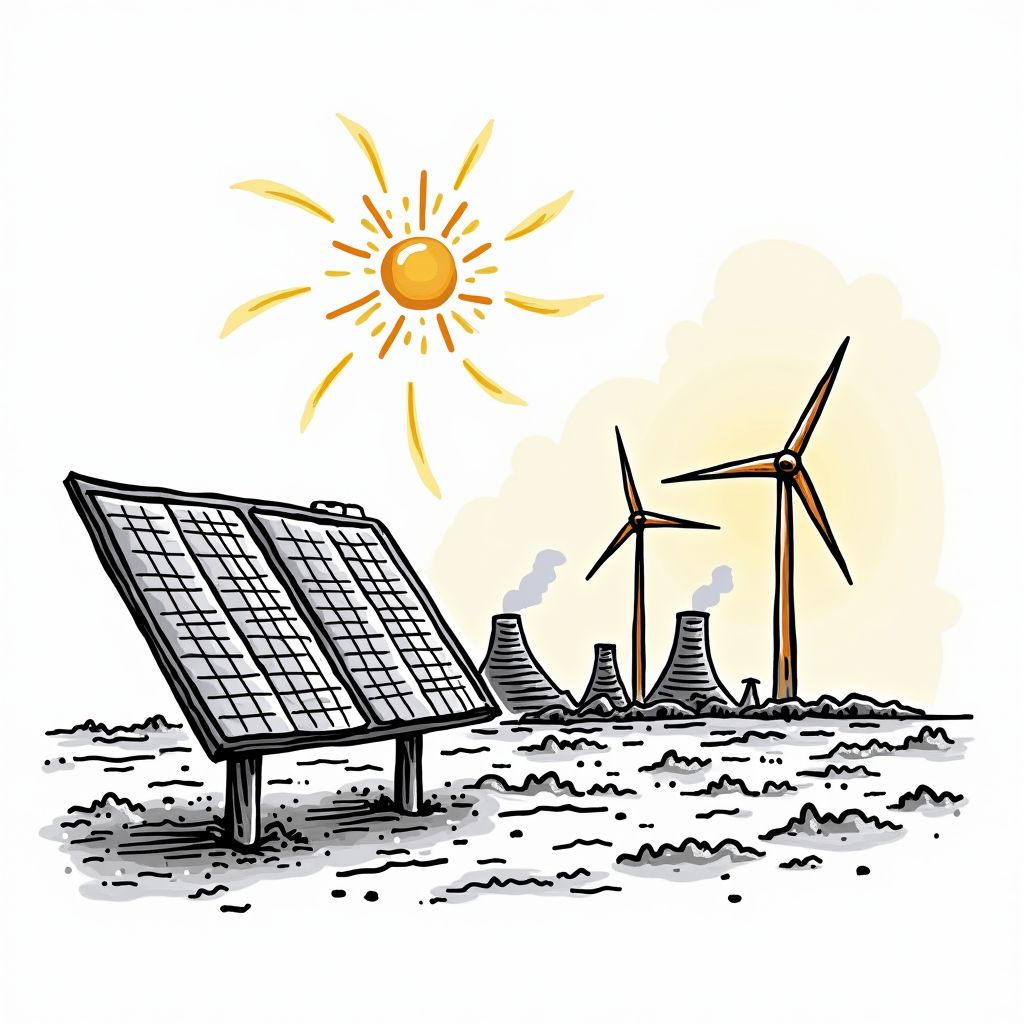
In a historic turning point for global energy markets, China is projected to see its solar power capacity surpass coal for the first time in 2026. The China Electricity Council reports that by year-end, wind and solar will comprise nearly half of the nation’s installed generating capacity, while coal’s share shrinks to approximately one-third. This transition underscores the sheer scale of Beijing’s renewable infrastructure push, which now operates at double the size of the U.S. grid. However, a critical distinction remains: while solar dominates capacity, coal still accounts for roughly half of actual power generation. This creates a complex economic dynamic where many coal plants face operating losses against cheaper renewables, despite a recent surge in new coal project proposals. As China navigates this paradox, the shift signals a definitive long-term structural decline for thermal coal demand within the world’s largest energy consumer.
Capacity Versus Output: A Critical Distinction
The China Electricity Council’s report, released on Monday, indicates that by the end of 2026, clean energy sources—including hydro and nuclear power—will constitute nearly two-thirds of the country’s total power capacity [1][2]. Specifically, wind and solar are on track to account for about half of the installed generating capacity [1][2]. While coal’s share of total capacity is expected to slide to approximately one-third, it remains the dominant fuel source for actual electricity generation, currently accounting for about half of all power produced in China [2]. This disparity highlights a crucial metric for investors: while the infrastructure for green energy is scaling rapidly, the reliance on thermal coal for baseload power persists.
The Profitability Paradox
This divergence between capacity and generation is driving significant economic friction within the sector. Despite the country running on some of the world’s cheapest electricity [1], many coal plants are currently operating at a loss due to stiff competition from lower-cost solar and wind power [2]. Paradoxically, developers submitted a record number of proposals to build or reactivate coal power plants in 2025, creating a scenario where infrastructure expansion appears to contradict immediate market signals [2]. This suggests a strategic hedging by state planners or local governments prioritizing energy security over immediate profitability.
Summary
In 2026, China’s energy landscape is defined by a massive expansion of renewables where solar capacity finally outstrips coal [1][2]. However, the persistence of coal in actual power generation and the recent surge in plant proposals highlight the complex economic and political challenges remaining in the nation’s transition to a cleaner power system [2].