Friendly Fire Downs US F-15s in Kuwait as Regional Conflict Intensifies
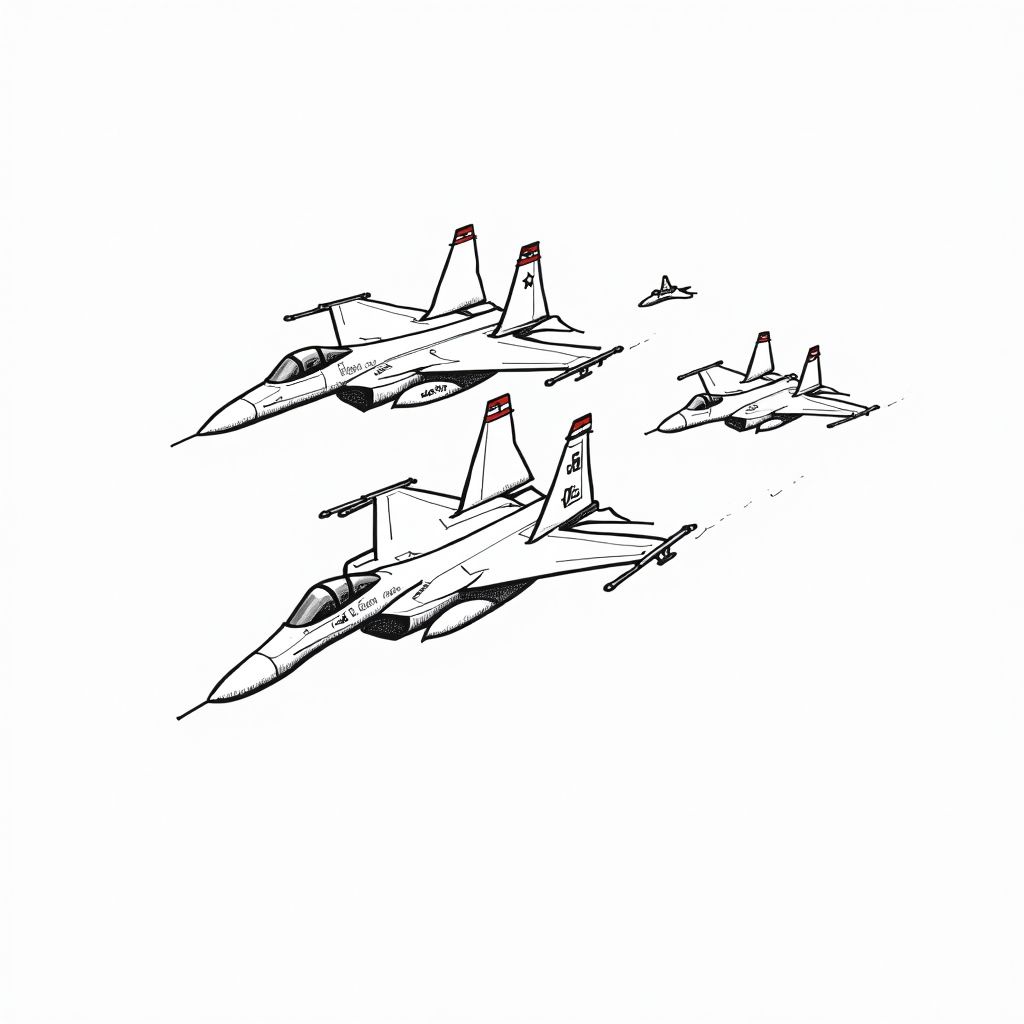
Kuwait City, Monday, 2 March 2026.
In a chaotic friendly fire incident today, Kuwaiti air defenses mistakenly shot down three US F-15s during an Iranian barrage, though all crew members miraculously ejected safely.
Operational Miscalculation Amidst Rising Tensions
The downing of three U.S. F-15E Strike Eagles by Kuwaiti allies marks a perilous turn in the rapidly expanding conflict, occurring just 24 hours after U.S. Central Command (CENTCOM) confirmed the first American combat deaths of the campaign. While yesterday’s report on Operation Epic Fury detailed the loss of three service members during a direct offensive against Iran, today’s incident underscores the volatility of the airspace over the Persian Gulf [1][3]. According to CENTCOM, the aircraft were flying in support of the joint Israeli-American operation when they were engaged by Kuwaiti air defense systems in an “apparent friendly fire incident” [1][3]. The crashes took place late Sunday evening Eastern Time—Monday morning in Kuwait—amidst a chaotic environment where allied forces were simultaneously repelling a barrage of Iranian ballistic missiles and drones [3][8].
Crew Survival and Conflicting Narratives
Despite the catastrophic loss of airframes, the U.S. military confirmed that all six crew members—two per aircraft—successfully ejected and were recovered in stable condition [1][2][8]. Search-and-rescue operations were immediately initiated by relevant authorities, with video footage geolocated to the Al Jahra area, approximately 30 kilometers from the Ali Al Salem Air Base, showing the pilots descending by parachute [2][3][6]. While the United States and Kuwait have aligned on the friendly fire explanation, citing the “fog of war” during active combat, Iranian state media has opportunistically claimed responsibility for the incident, asserting their forces downed a “hostile” fighter jet near the border [8]. This counter-narrative highlights the information warfare parallel to the kinetic strikes.
The Fog of War: Embassy Alerts and Airspace Saturation
The incident occurred against a backdrop of intense aerial bombardment, complicating identification protocols for air defense operators. Kuwait’s Interior Ministry reported intercepting hostile drones at dawn, and sirens sounded across Kuwait City as explosions reverberated through the capital [1]. Simultaneously, the U.S. Embassy in Kuwait City issued a stark security alert, advising personnel to shelter in place due to the continuing threat of Unmanned Aerial Vehicles (UAVs) and missiles [1]. Observers noted black smoke rising from the embassy compound on March 2, further signaling the deterioration of local security conditions as the diplomatic mission suspended normal operations [1][3].
Strategic Implications for Regional Defense
This friendly fire incident reveals significant coordination challenges within the coalition’s integrated air and missile defense architecture. Since the offensive began on February 29, allied forces have struck over 1,000 targets, including Iranian Navy vessels and Islamic Revolutionary Guard Corps headquarters [3]. However, the saturation of the airspace with allied fighters, coupled with incoming Iranian projectiles targeting facilities like the Ali Al Salem Air Base—which hosts coalition activities—has stressed defensive identification systems to their breaking point [3][5]. As the conflict widens, with impacts reported from Kuwait to the UAE, maintaining the integrity of allied communication channels will be critical to preventing further fratricide while countering Iran’s expanding missile capabilities [1].
Sources
- www.timesofisrael.com
- www.bbc.com
- www.cnn.com
- www.instagram.com
- defence-blog.com
- en.wikipedia.org
- www.aljazeera.net