Trump and Zelensky Negotiate 20-Point Peace Framework Following Record Russian Drone Strikes
Palm Beach, Sunday, 28 December 2025.
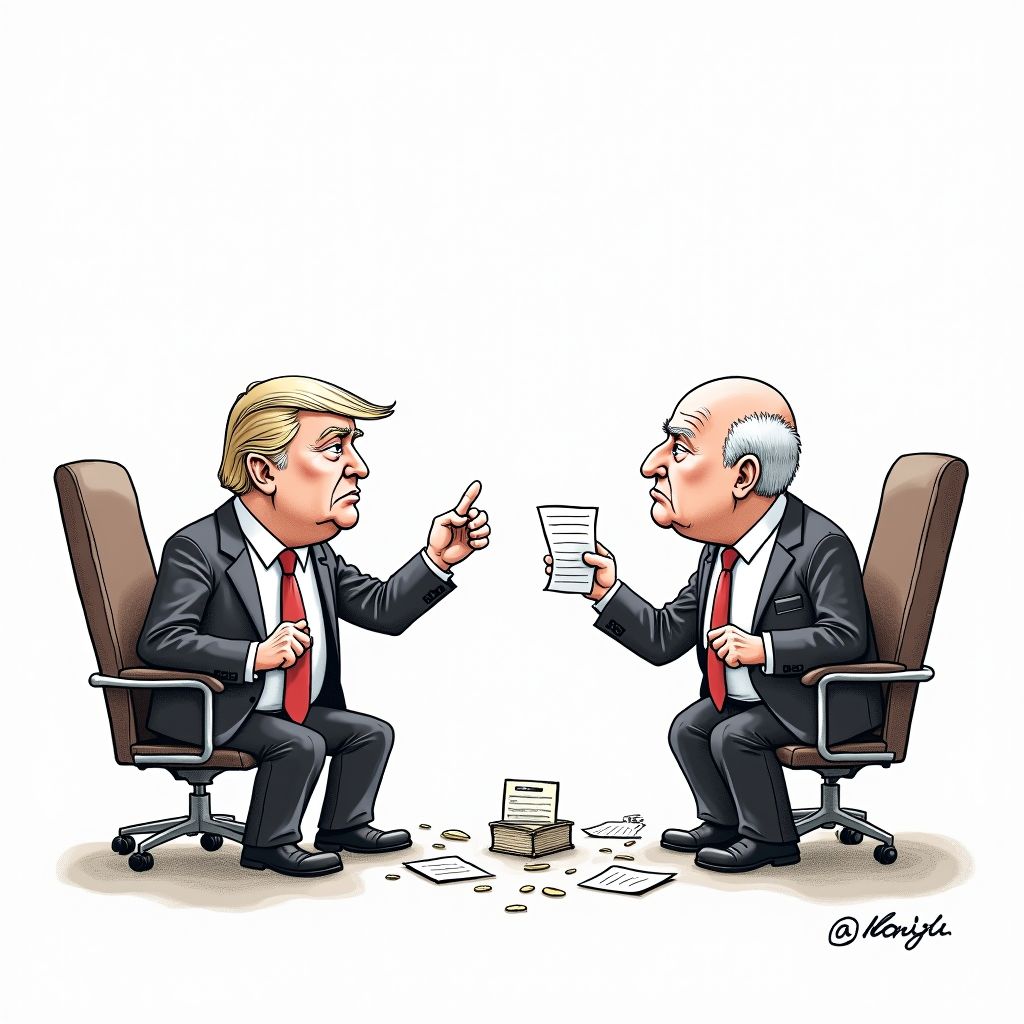
Amidst a record barrage of nearly 500 Russian drones targeting Kyiv, President Zelensky convened with Donald Trump at Mar-a-Lago to finalize a revised 20-point peace roadmap. The critical talks center on US security guarantees and a proposed “free economic zone” for the Donbas, attempting to bridge the gap between escalating military aggression and diplomatic resolution.
Diplomacy Under Fire
Building upon earlier preliminary talks with US envoys regarding a Donetsk economic zone, President Volodymyr Zelensky met with President Donald Trump at Mar-a-Lago on Sunday, December 28, 2025, to finalize the broader architecture of a peace treaty [1][2]. The summit occurred against a backdrop of severe escalation; over the weekend leading up to the talks, Russia launched a massive aerial assault involving nearly 500 drones and 40 missiles aimed at Kyiv’s energy and civilian infrastructure [1][3]. The bombardment, which continued into Sunday, resulted in at least two deaths, dozens of injuries, and left approximately 40% of residential buildings in the capital without heating [1][4]. Zelensky characterized these strikes as Russia’s direct “answer” to peace efforts, underscoring the urgency of the negotiations in Florida [1][4].
The Revised 20-Point Framework
The discussions in Palm Beach focused on a revised 20-point peace plan—streamlined from an earlier 28-point draft—which Zelensky indicated was “90%” agreed upon prior to the Sunday meeting [1][2]. Central to this framework is the establishment of a demilitarized “free economic zone” in the Donbas region, a concession Zelensky is willing to accept provided the invasion halts [1][5]. The proposal also includes rigorous security arrangements; the United States is reportedly prepared to send a security guarantee based on NATO’s Article 5 to the Senate for ratification, offering Kyiv protection similar to that of alliance members [2]. Furthermore, the plan outlines a peacetime cap of 800,000 personnel for Ukraine’s military, guarantees regarding European Union membership, and separate free trade agreements with the US [5].
Geopolitical Maneuvering and Security Guarantees
While the framework appears robust, significant hurdles remain regarding implementation timelines and territorial control. Ukraine has proposed a 60-day truce to facilitate a referendum on the deal, though Russian negotiators are pushing for a shorter timeframe and demand control over the entirety of the Donbas region, of which they currently occupy approximately 75% of Donetsk and 99% of Luhansk [1][2]. Following his meeting with Zelensky, President Trump initiated a telephone call with Russian President Vladimir Putin on Sunday, which lasted over an hour [3]. Trump described the conversation as “good and very productive,” asserting that the makings of a deal are present, despite Putin’s public assertion on Saturday that Ukraine is “in no hurry” to resolve the conflict [1][3].
International Support and Reconstruction
Beyond the bilateral US-Ukraine talks, the economic dimensions of the post-war landscape are taking shape. Prior to arriving in Florida, Zelensky met with Canadian Prime Minister Mark Carney on Saturday, securing an additional $2.5 billion in economic assistance [4]. This aid is a component of a larger recovery roadmap extending to 2040, with reconstruction costs estimated between $700 billion and $800 billion [4]. As negotiations continue, the immediate focus remains on whether the proposed security guarantees and economic zones can withstand the reality of ongoing hostilities, with Polish forces recently placing fighter jets and radar systems on high alert in response to the proximity of the Russian bombardment [1].