Mississippi River Closed to Commercial Traffic After Tanker Strikes Docked Cruise Ship
New Orleans, Friday, 13 November 2026.
Emergency crews are rescuing passengers after an asphalt tanker struck a docked cruise ship in New Orleans, prompting a vital Mississippi River shipping shutdown affecting key American export corridors.
Critical Incident Unfolds on Mississippi River
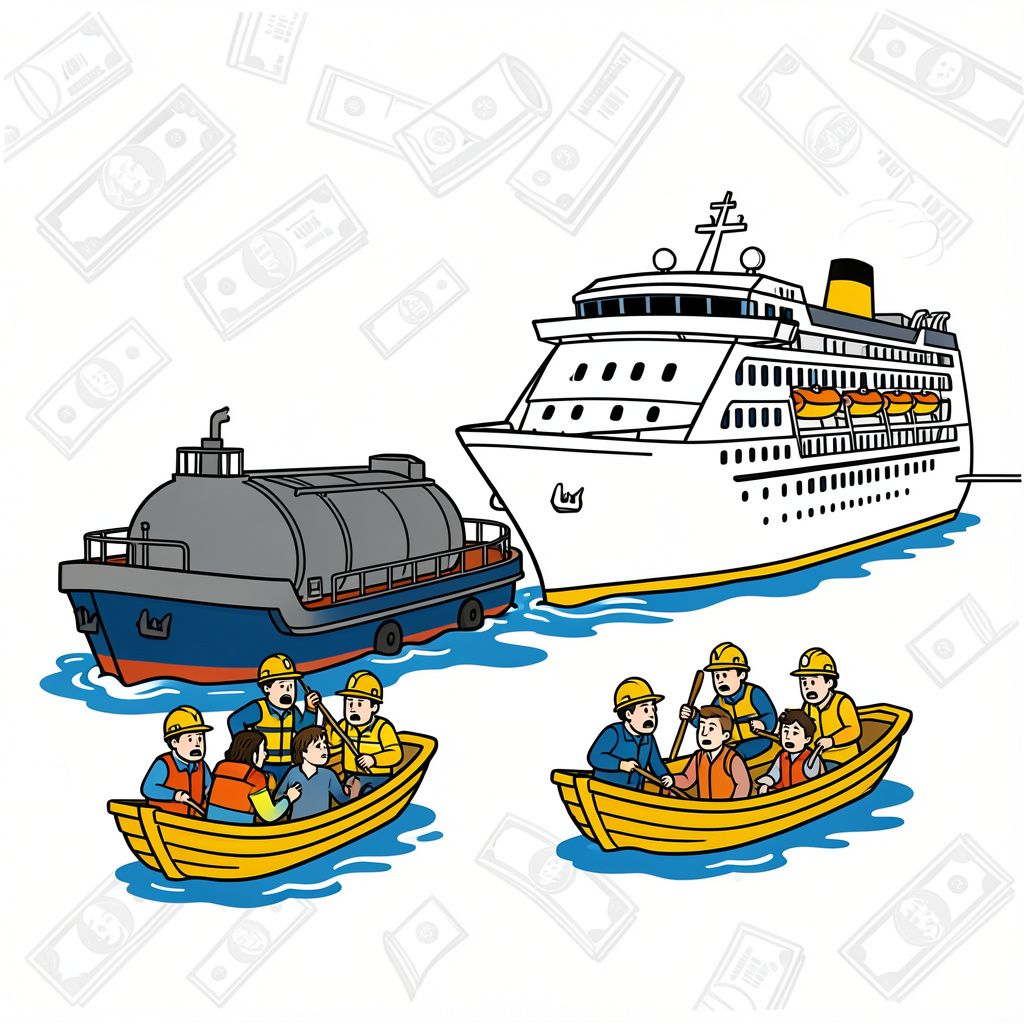
A maritime disaster unfolded on the Mississippi River near the Port of New Orleans on Friday, November 13, 2026, when a tanker vessel collided with a docked river cruise ship, the American Heritage, owned by American Cruise Lines. The incident occurred at approximately 12:30 p.m. local time while the cruise ship was docked outside 1350 Port of New Orleans Place, facilitating passenger disembarkation. The tanker, identified as the Atlantic Asphalt, struck the cruise ship with such force that it tipped the vessel onto its side, partially submerging it and sending passengers and crew into the water. [1][2][3][6][9]
Emergency Response Mobilizes Amid Disruption
Emergency response teams from multiple agencies converged on the scene within minutes of the collision. The Port NOLA Harbor Police, New Orleans Fire Department, New Orleans Police Department, U.S. Coast Guard, and emergency medical services personnel conducted immediate rescue operations. Passengers and crew were evacuated to the Port of New Orleans Administration Building for medical assessments and shelter. New Orleans Mayor Helena Moreno’s office confirmed that multiple individuals had been rescued, though the number of casualties and injuries remained unconfirmed as of late afternoon. [2][3][6][9]
River Closure Threatens Economic Ripple Effects
The U.S. Coast Guard declared the Mississippi River closed to all vessel traffic between mile markers 93 and 96, encompassing the crash site, to facilitate rescue and recovery efforts. This closure poses significant disruptions to commercial shipping along the lower Mississippi River, a critical corridor for U.S. agricultural exports, energy logistics, and regional tourism. The river handles approximately 500 million tons of cargo annually, with agricultural products such as soybeans, corn, and wheat representing a substantial portion of exports transported via barge. [3][GPT]
Economic Impact of Maritime Disruptions
The temporary closure of the Mississippi River threatens to create bottlenecks in supply chains, particularly for agricultural commodities destined for export markets. The Port of New Orleans ranks among the top U.S. ports for agricultural exports, handling roughly 10% of the nation’s grain shipments. Delays in barge traffic could lead to increased storage costs for farmers and exporters, while downstream industries reliant on just-in-time deliveries may face production disruptions. The tourism sector, already grappling with the aftermath of Hurricane Ida in 2021, could also suffer as river cruises face cancellations or rerouting. [3][GPT]
Investigations Underway as Officials Assess Damage
The cause of the collision remains under investigation, with theories including mechanical failure or loss of power on the tanker. Louisiana Governor Jeff Landry confirmed his awareness of the incident and announced his travel to New Orleans to oversee the response. The Port of New Orleans described the situation as an active and evolving incident, with officials planning a news conference at 3:00 p.m. ET to provide further updates. As of the latest reports, the number of injured individuals and the full extent of damage to both vessels had not been disclosed. [1][2][3][6][9]
Sources
- www.cnn.com
- www.fox8live.com
- www.theguardian.com
- www.facebook.com
- www.facebook.com
- www.facebook.com
- www.instagram.com
- www.tiktok.com
- www.wdsu.com