Severe Weather in Chile Cuts Copper Supply at BHP and Anglo American
Santiago, Tuesday, 20 October 2026.
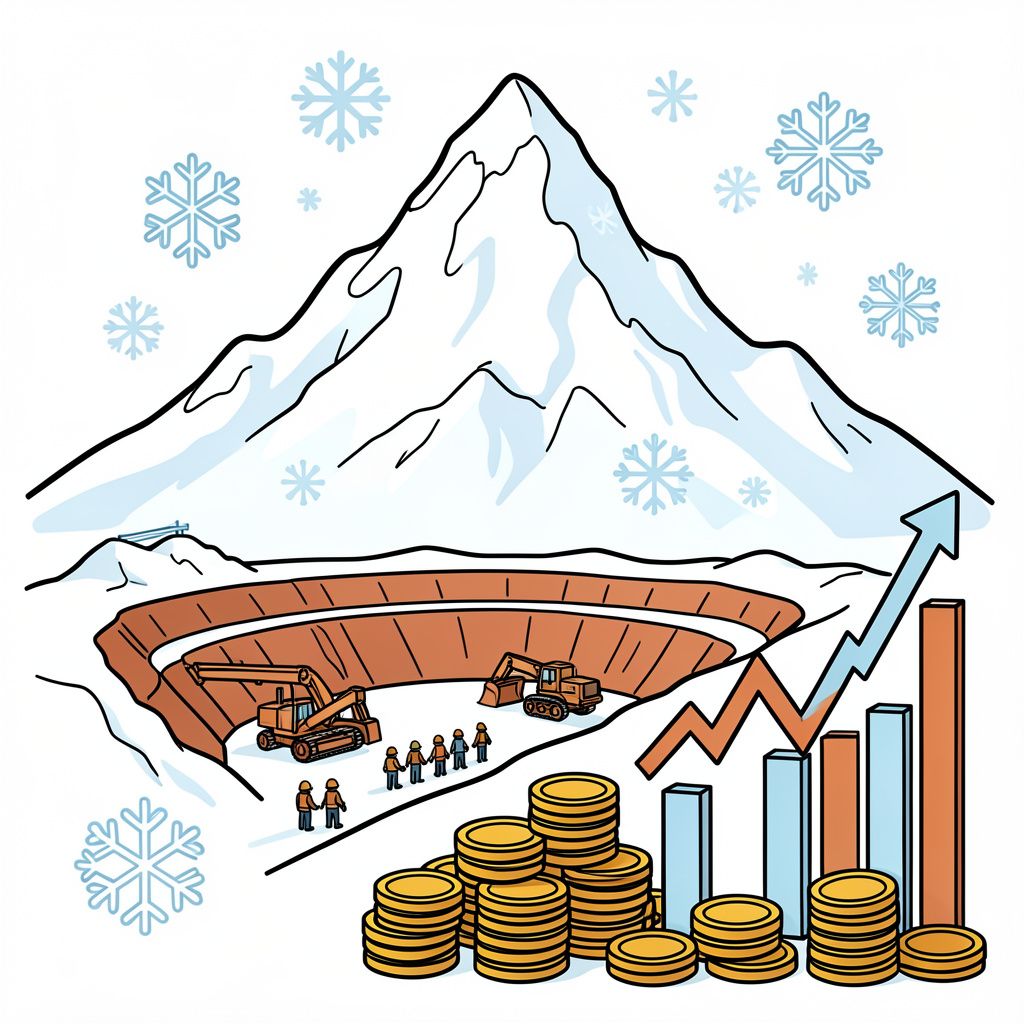
Mining heavyweights BHP Group and Anglo American reported significant declines in third-quarter copper production through September 2026, driven by unprecedented winter weather conditions in Chile, operational stoppages, and declining ore grades. BHP’s copper output dropped 19% year-over-year to 400,700 metric tons, while Anglo American recorded a 5% drop to 174,900 metric tons. Despite these operational setbacks, both corporations maintained their full-year production guidance. The operational disruptions were cushioned financially by a 40% to 50% year-over-year surge in global copper prices, driven by booming demand from artificial intelligence data centers and global power infrastructure. Copper has now overtaken iron ore as BHP’s largest contributor to operating earnings, reaching $18.19 billion for 2026. However, these weather-related shortfalls highlight critical supply-side vulnerabilities in the global energy transition market.
BHP Operational Disruptions and Safety Incidents
BHP Group reported that copper production for the quarter ended 30 September 2026 totaled 400,700 tonnes, a significant decrease from the 494,000 tonnes produced in the same period the previous year [1][2]. This represents a year-over-year decline of approximately -18.887 percent [1][6]. The mining giant attributed the shortfall to a combination of factors, including planned grade declines, scheduled maintenance, and severe weather disruptions in Chile [1][5]. Additionally, safety-related stoppages impacted operations, including a fatal accident at the Escondida mine in late September which forced temporary halts [2][5]. Production was further affected by a conveyor failure at the Carrapateena mine in South Australia, which caused disruptions for several weeks [2][5]. Despite the volume decline, copper became BHP’s main profit driver for the year, generating $18.19 billion in operating earnings, surpassing iron ore [2]. The company maintained its full-year guidance for FY 2027, ranging from 1.7 million to 1.8 million tonnes of copper [1][6].
Anglo American Production and Strategic Updates
Anglo American reported a more moderate decline in copper output, with production falling 5% to 174,900 tonnes in the third quarter [1][4]. The company cited unprecedented weather events in Chile and the processing of lower-grade ore at Collahuasi as primary drivers for the decrease [1][6]. Over the first nine months of the year, production fell 1% to 519,000 tonnes [1][4]. Chilean output specifically fell 6% to 94,200 tonnes due to record snowfall and unplanned maintenance at Los Bronces [6]. However, the company confirmed its annual target of 700,000 to 760,000 tonnes, expecting improvements in ore grades in the fourth quarter [1][6]. Anglo American also lowered its cost guidance to around 139 cents per pound from 145 cents previously, aided by improved unit costs in Peru [1][6]. In corporate developments, the merger with Teck Resources remains subject to approval from China’s competition authority, with completion expected by March 2027 [1][6].
Market Dynamics and Future Outlook
Despite the production declines, financial performance was bolstered by rising metal prices, with copper prices approximately 50% higher than levels a year ago [1][5]. At Anglo American, the realized price over nine months reached 623 cents per pound, compared with 446 cents a year earlier [1]. On the London Metal Exchange, 3-month copper was trading at $14,339.50 per tonne on Tuesday [1]. Goldman Sachs raised its end-2026 forecast to $14,700 per tonne and its 2027 average to $15,400, anticipating deficits outside the United States [1]. Demand for copper continues to surge, driven by artificial intelligence data centers and global power infrastructure projects [2][5]. BHP noted that demand remains resilient, supported by industrialisation in China and India, alongside unprecedented investment in data centres [5]. These market conditions highlight the critical role of copper in the global energy transition, even as supply-side vulnerabilities persist [2][5].