President Trump Targets Birth Tourism Industry Through New Executive Orders
Washington, Thursday, 6 August 2026.
Following a Supreme Court defeat, President Trump signed executive orders framing deceptive birth tourism as fraudulent misrepresentation to restrict citizenship, potentially triggering civil visa enforcement and corporate compliance shifts.
Executive Action Targets Birth Tourism and Citizenship Protocols
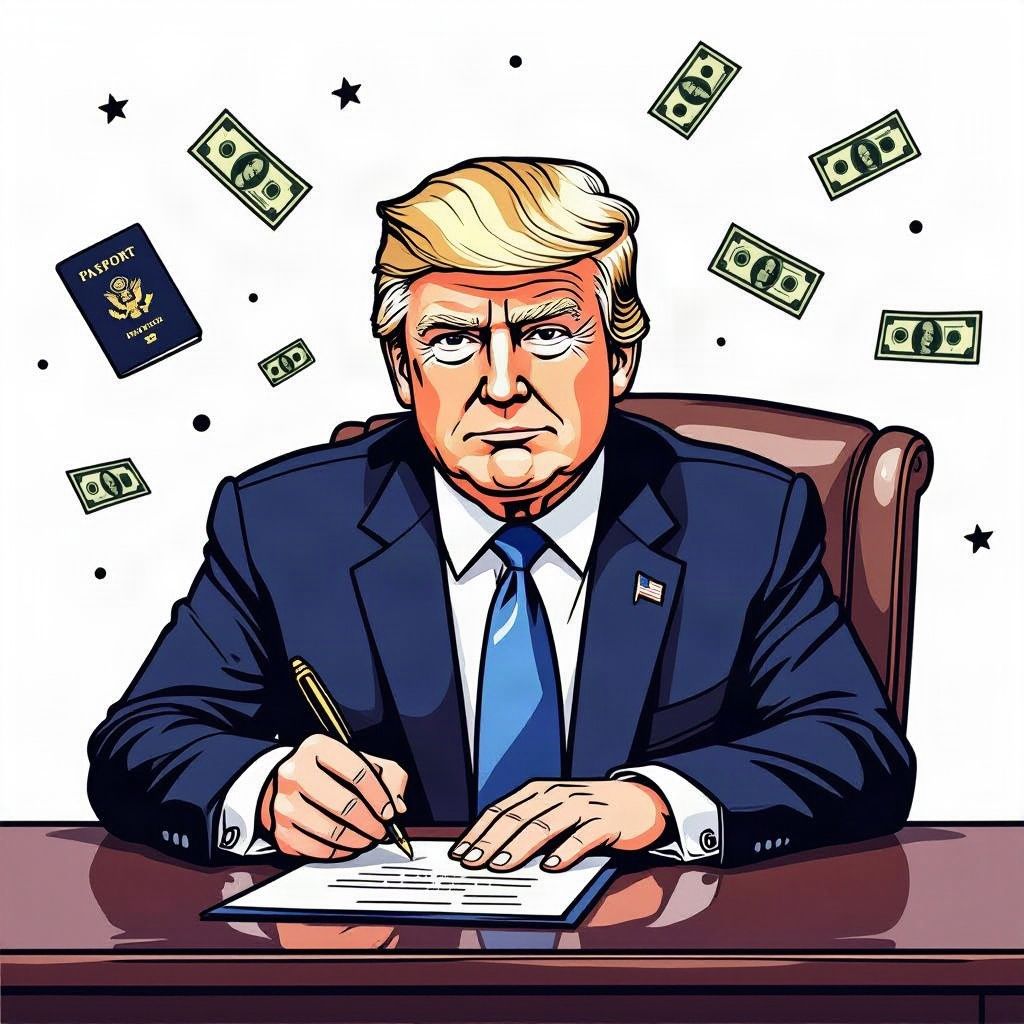
On August 6, 2026, President Donald Trump signed a new series of executive orders aimed at restricting birthright citizenship and tightening regulations on birth tourism [1][2]. This executive action signals a significant shift in U.S. immigration enforcement policy following a pivotal Supreme Court ruling earlier in the summer [2]. The administration claims authority to revoke citizenship naturalized by fraud, applying this specifically to mothers who deceptively engage in the commercial practice of birth tourism [1]. A second executive order mandates that the Secretary of State and the Secretary of Homeland Security establish rules to combat the birth tourism industry domestically and internationally [1]. These measures are designed to categorize deceptive birth tourism practices as fraudulent misrepresentation, potentially allowing for the revocation of citizenship for those naturalized through such fraud [1].
Legal Context and Constitutional Challenges
The legal backdrop for this action involves a June 30, 2026, Supreme Court decision in Trump v. Barbara, which struck down a previous executive order from January 2025 [3]. In that 6-3 decision, the Court ruled that an earlier attempt to deny automatic citizenship to children born to noncitizens was unlawful regarding the 14th Amendment [2]. The 14th Amendment, ratified in 1868, establishes that all persons born or naturalized in the United States and subject to its jurisdiction are citizens [2]. Despite the ruling, the administration argues that the original intent of the amendment was solely for the children of enslaved people [2]. Administration officials, including White House Deputy Chief of Staff Stephen Miller, have stated that the new orders adjust for what they describe as an unfortunate Supreme Court decision regarding birthright citizenship [2].
Legislative Alternatives and Political Strategy
Alongside executive actions, Republican lawmakers are considering legislative paths to restrict birthright citizenship, including pursuing a constitutional amendment [3]. Senator Jim Banks introduced legislation in July 2026 to codify restrictions originally attempted by the executive order, calling the Supreme Court decision an assault on American sovereignty [3]. Representative Morgan Griffith introduced the End Birthright Citizenship for Territories Act, aiming to terminate automatic U.S. citizenship for children born in Puerto Rico and other territories unless one parent is a citizen [3]. However, legal experts suggest that a constitutional amendment is the most direct legal path to ending birthright citizenship rather than through legislation [3]. The administration missed the deadline to petition the Supreme Court for a rehearing of the Trump v. Barbara decision on August 5, 2026, signaling an end to that specific judicial route [3].
Enforcement Priorities and Future Implications
Following the Supreme Court ruling, the Justice Department has directed federal prosecutors to prioritize the investigation and prosecution of birth tourism schemes [3]. The administration is targeting birthright citizenship for four specific categories, including children of foreign diplomatic staff and children of classified alien enemies [1]. Estimates regarding the number of children born via birth tourism range from the low thousands to tens of thousands, according to a 2022 Senate Homeland Security Committee report [1]. The House Oversight Committee launched an investigation into birth tourism centers in May 2026, citing concerns regarding national security and election integrity [1]. These developments indicate a continued focus on immigration enforcement through both regulatory guidance and legislative proposals throughout the remainder of 2026 [1][3].