Nine Killed as Iranian Missile Strikes Residential Area in Central Israel
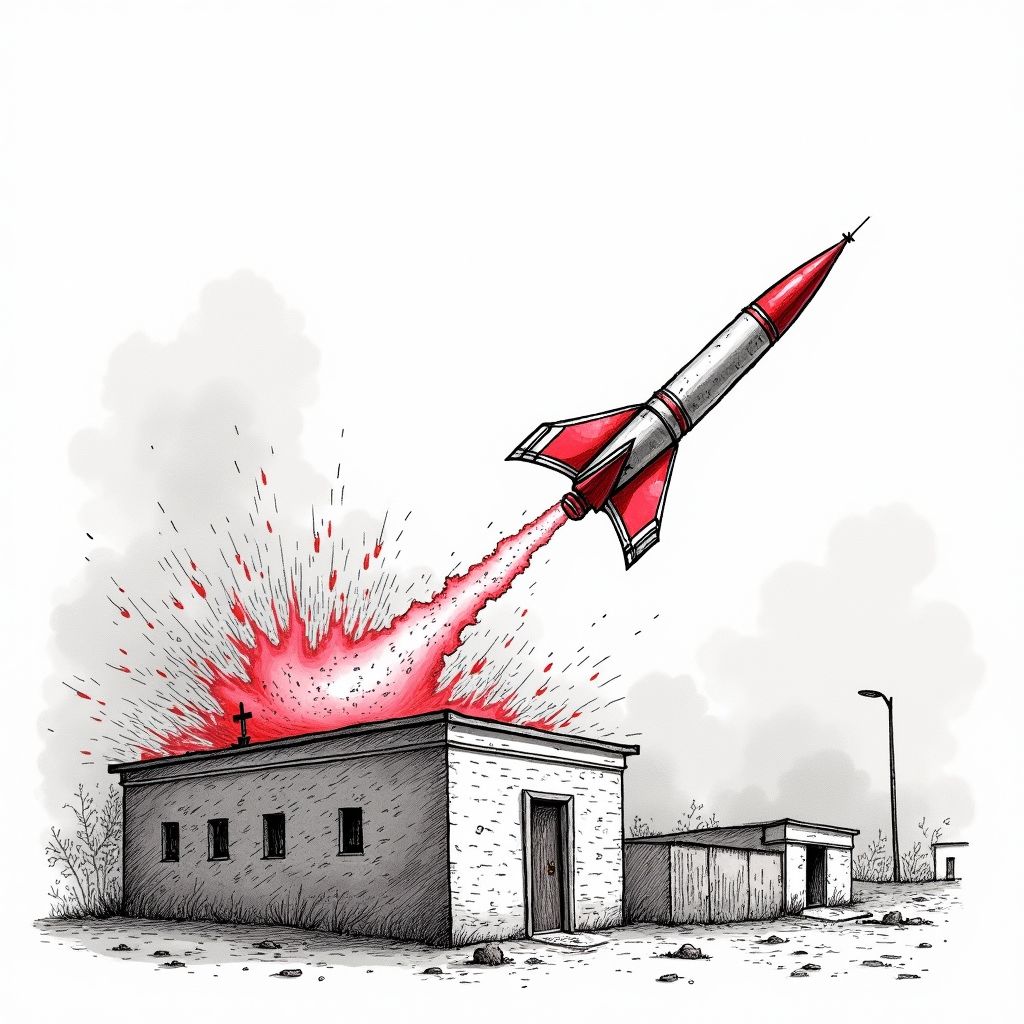
Beit Shemesh, Sunday, 1 March 2026.
Marking the conflict’s highest casualty count, this retaliatory strike hit a synagogue and shelter just one day after US-Israeli forces killed Supreme Leader Ayatollah Ali Khamenei.
Escalation Following Targeted Assassination
In a severe escalation of hostilities less than 24 hours after US and Israeli forces launched a decapitation strike against Tehran’s leadership, an Iranian ballistic missile has struck a residential district in Beit Shemesh, Israel. This attack, occurring on Sunday, March 1, 2026, serves as a direct retaliation to the joint operation that resulted in the death of Supreme Leader Ayatollah Ali Khamenei on Saturday [1]. While the previous phase of the conflict focused on military assets and leadership targets—as detailed in our prior coverage of the US and Israel Launch Joint Strikes on Iran—this latest barrage suggests a shift toward high-impact civilian centers.
Casualties and Infrastructure Damage in Beit Shemesh
The strike on Beit Shemesh, a city located approximately 30 kilometers west of Jerusalem [3], has resulted in at least nine fatalities, marking the single deadliest incident for Israel since the onset of the current war [1][7]. Emergency services reported a scene of devastation where a missile struck a residential area, destroying a synagogue and penetrating a public bomb shelter [2][4]. At least four apartment buildings were destroyed by the impact [4]. Magen David Adom (MDA) confirmed that in addition to the fatalities, 28 individuals were transported to hospitals, with two listed in serious condition [1][2]. The Jerusalem Post reports that nearly 50 people in total were wounded, including several children, while police have indicated that 11 people remain missing as search-and-rescue teams operate amidst the rubble [4].
Unrestricted Warfare Doctrine
The geopolitical risk premium attached to the region has spiked following Tehran’s declaration of a new, unrestricted phase of engagement. Iranian Foreign Minister Abbas Araghchi, speaking to Al Jazeera on Sunday, stated that the killing of Khamenei has removed all operational constraints, asserting, “We have no restrictions or limits in defending ourselves” [1]. While Iranian state media claimed the strikes targeted an army headquarters and a weapons manufacturing complex [3], the physical impact on civilian infrastructure in Beit Shemesh contradicts these assertions [2]. This rhetoric was reinforced by President Masoud Pezeshkian, who declared in a televised address that Iran would continue in Khamenei’s footsteps, leaving enemies “hopeless” [1].
Regional Spillover and Economic Disruption
The conflict’s footprint has expanded beyond the Israel-Iran axis, threatening critical global trade and travel hubs in the Gulf. In a coordinated wave of attacks, Iranian drones and missiles targeted the United Arab Emirates, resulting in one fatality and 11 injuries across Dubai and Abu Dhabi airports [5]. Authorities confirmed that falling debris from an intercepted drone at Zayed International Airport (AUH) killed one person and injured seven others [5]. Furthermore, debris from an aerial interception ignited a fire at a berth in Jebel Ali port, the world’s ninth-busiest deep-sea port, signaling a direct threat to global supply chains [5]. These strikes have triggered the grounding of thousands of flights, representing one of the most severe disruptions to global travel since the Covid-19 pandemic [5].
Tactical Analysis and Operational Response
Domestically, Israel has activated “Operation Roaring Lion,” with the Health Ministry reporting that 456 individuals have been evacuated to hospitals since the operation commenced [4]. However, the efficacy of defensive measures is under scrutiny following the Beit Shemesh incident. Reports indicate that the missile successfully penetrated a local shelter, and questions have been raised regarding whether warning sirens functioned correctly in the specific impact zone [1][4]. The Israeli military stated that the circumstances of the impact are currently under review [1]. Meanwhile, rescue operations remain complex; an AFP photographer on the scene noted that heavy equipment is being utilized to locate victims still trapped under mangled concrete and twisted iron [7].