Supreme Court Limits Executive Tariff Power, Triggering Global Trade Strategy Shift
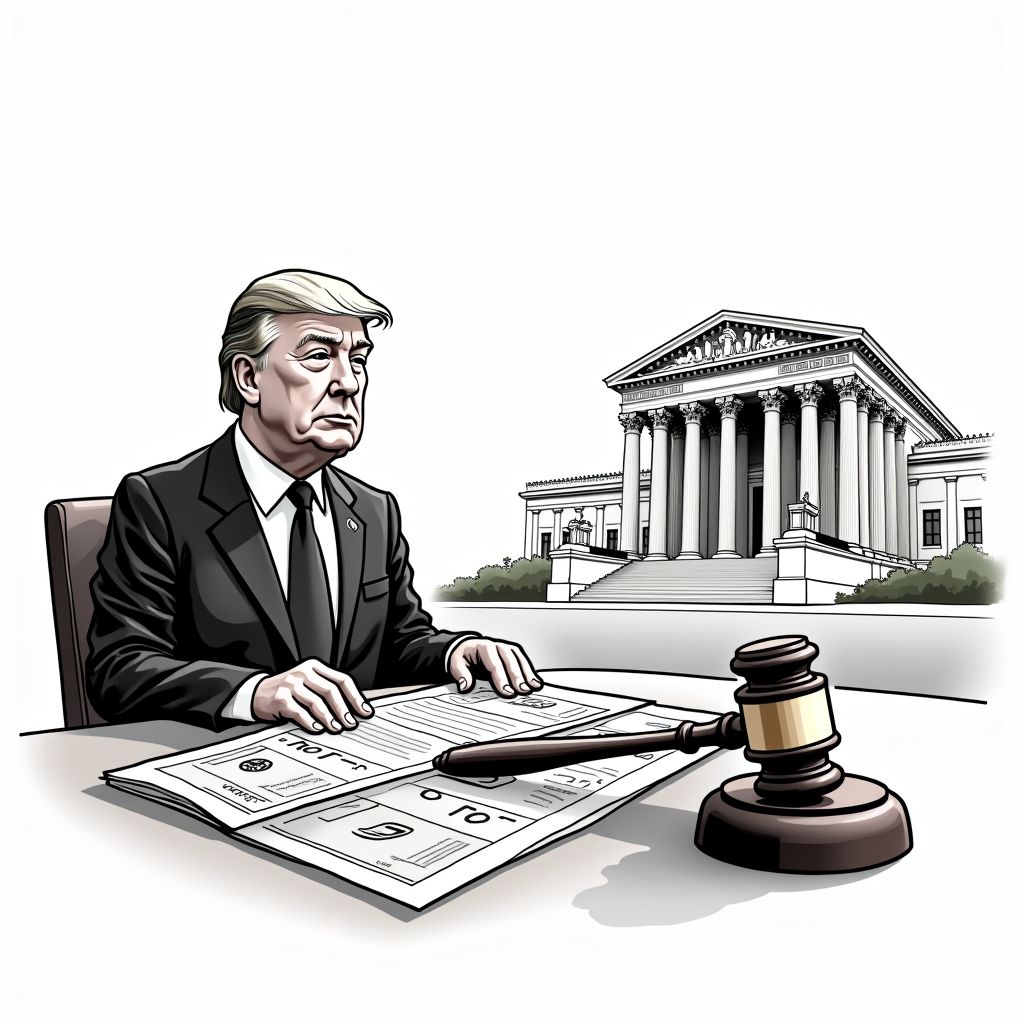
Washington D.C., Saturday, 28 February 2026.
As the administration rushes to salvage trade pacts following the Supreme Court’s restriction on presidential authority, a massive financial liability looms. The ruling invalidates years of levies, potentially exposing the U.S. government to $175 billion in refunds while forcing a pivot to temporary statutory measures.
Statutory Pivot and Fiscal Fallout
The Supreme Court’s 6-3 decision on February 20, 2026, in Learning Resources v. Trump, explicitly stated that the International Emergency Economic Powers Act (IEEPA) does not grant the President the authority to impose tariffs, classifying them instead as taxes under Congressional purview [3][4][5]. In a swift countermeasure to maintain economic pressure, President Trump invoked Section 122 of the Trade Act of 1974 just hours after the ruling, citing “fundamental international payments problems” [3][7]. This move replaced the invalidated levies with a new 10 percent global tariff that took effect on February 24, 2026, which the President has since signaled will increase to the statutory maximum of 15 percent [4][7].
Diplomatic Fallout and Market Uncertainty
The legal defeat in Washington has sent shockwaves through international negotiations, prompting immediate “damage control” by White House officials [1]. Following the announcement of the new tariff regime, the European Parliament suspended a vote on a pending trade deal with the U.S. on February 23, 2026, citing the need for clarity regarding the new levies [1][4]. Similarly, in Taiwan, the main opposition party has threatened to stall the approval of its own trade agreement, arguing that the court’s decision has “completely overturned” the pact’s legal basis [1].
A Temporary Fix with Long-Term Risks
The pivot to Section 122 offers only a temporary reprieve for the executive branch. Unlike the broad powers claimed under IEEPA, this statute limits tariffs to a duration of 150 days unless extended by Congress, and requires specific findings related to balance-of-payments deficits [3][8]. This strict timeline creates a ticking clock for the administration, adding pressure as the nation approaches the midterm elections in November 2026, where control of Congress—and arguably the future of these trade policies—will be contested [6]. With the refund process expected to take 12 to 18 months and litigation likely to drag on, the economic landscape remains fraught with uncertainty for global supply chain leaders [8].
Sources
- www.politico.com
- www.fraserinstitute.org
- www.aoshearman.com
- www.wr.no
- www.bu.edu
- carleton.ca
- www.mltaikins.com
- www.gtreview.com